AI Was the Main Topic at the Annual Reception
Succeeding in Difficult Times
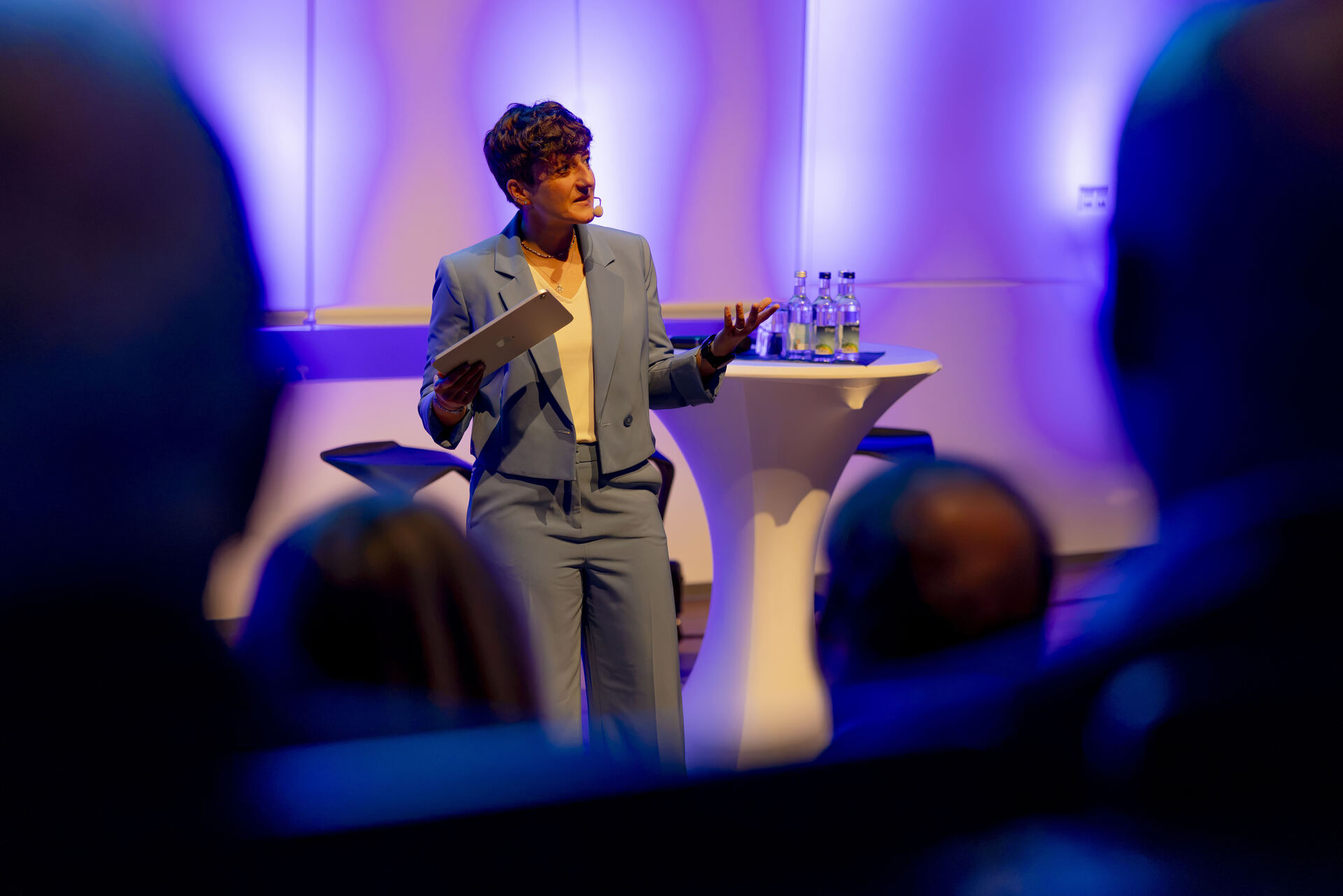
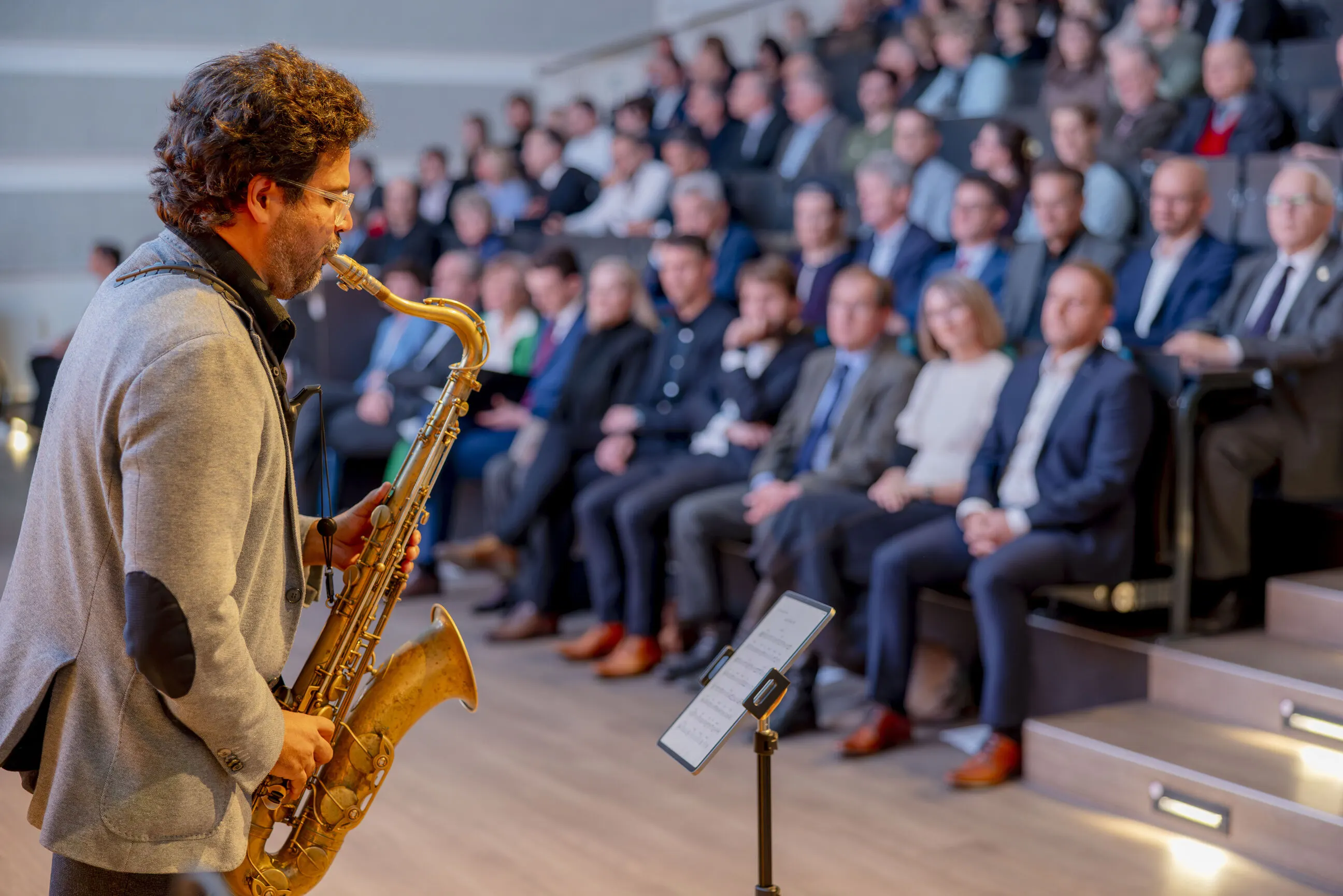
The rows of seats are well filled. In the lecture hall, the last bits of conversation die down and the music sets the pace. The Com Felipe Quartet opens the University of Siegen’s annual reception with jazz music. “This is being played live, and you quickly realize: AI can’t give us an experience like this,” said host Stefanie Müsse. This sets the thematic focus for the afternoon. After all, artificial intelligence is not only the subject of diverse research at the University of Siegen. Its impact on life and social coexistence is also being critically examined here. “Opportunities and Risks of AI” was therefore the theme of the ceremony, which drew nearly 500 guests to the Unteres Schloss campus.
In her welcoming remarks, Rector Prof. Dr. Stefanie Reese reflected on the university, noting that it is making positive strides not only in research projects, the amount of external funding secured, and the number of degrees awarded. “We can hold our own against the competition,” the rector emphasized. “Even this winter semester—in which a decline in student numbers was expected due to the so-called ‘missing’ high school graduating class—the University of Siegen is holding its own: First-time and new enrollments declined by only 10.1 percent—a very moderate decline compared to the rest of North Rhine-Westphalia. The trend among international students is particularly encouraging, with their numbers rising by 17.3 percent.”
The fact that the University of Siegen continues to achieve success despite the financial pressures facing the entire country demonstrates how well-positioned the University of Siegen is. The Cluster of Excellence in Physics, the Collaborative Research Centers, the Center for Interdisciplinary Health Research, the Green Factory, and the INCYTE Research Center are representative of many important projects, Stefanie Reese noted. The researchers, students, and technical and administrative staff are the people who shape the university. “I would like to take this opportunity to thank you all very sincerely.”
In his speech, Siegen’s Mayor Tristan Vitt emphasized the close collaboration between the city and the University of Siegen. This takes place not only in specific projects but also on cultural and structural levels. And especially now, as the issue of structural change has become acute due to the impending closure of the steel mill, the university’s expertise, startups, and spin-offs represent significant potential for the region.
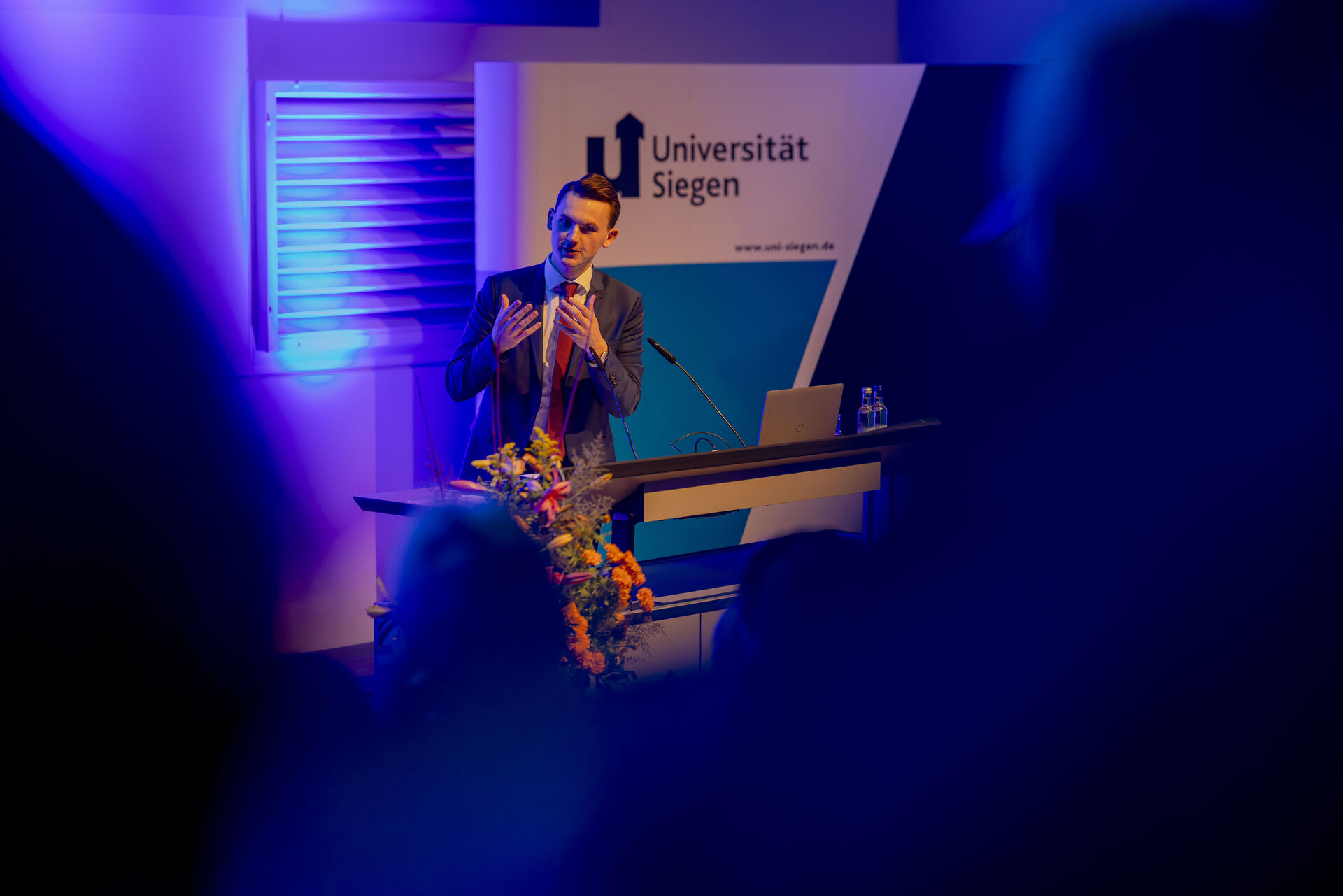
Of course, artificial intelligence also plays a role in this. Keynote speaker Prof. Dr. Christian Bauckhage shed light on how far development has progressed and what changes lie ahead. His central question: “Why will everything change in 2026?” The professor of computer science at the University of Bonn, scientific director of the Fraunhofer Institute for Intelligent Analysis and Information Systems, and co-director of the Lamarr Institute is one of the most prominent voices in German AI research. Much of what was considered impossible just a few years ago has become reality this summer: swarms of AI agents acting like massive neural networks. “And these agents are getting better at an unbelievable pace,” Bauckhage demonstrated with a few figures and graphs that left the audience completely silent. Fascinating and frightening at the same time. If AI is capable of “superhuman” feats, in which professions and fields will there even be a place left for humans? And how will companies protect their data if a “plague of cybercrime” strikes, as Bauckhage predicted?
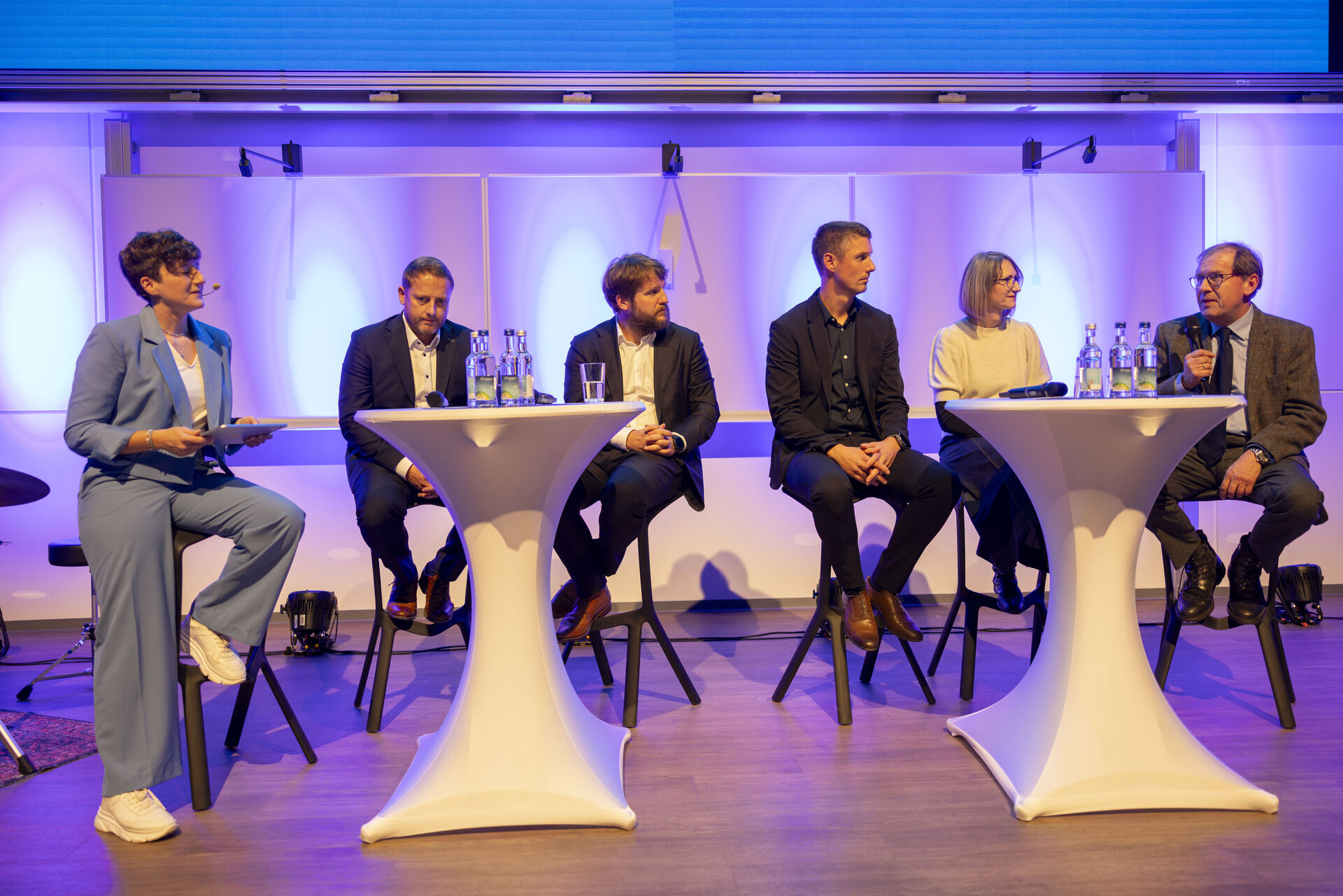
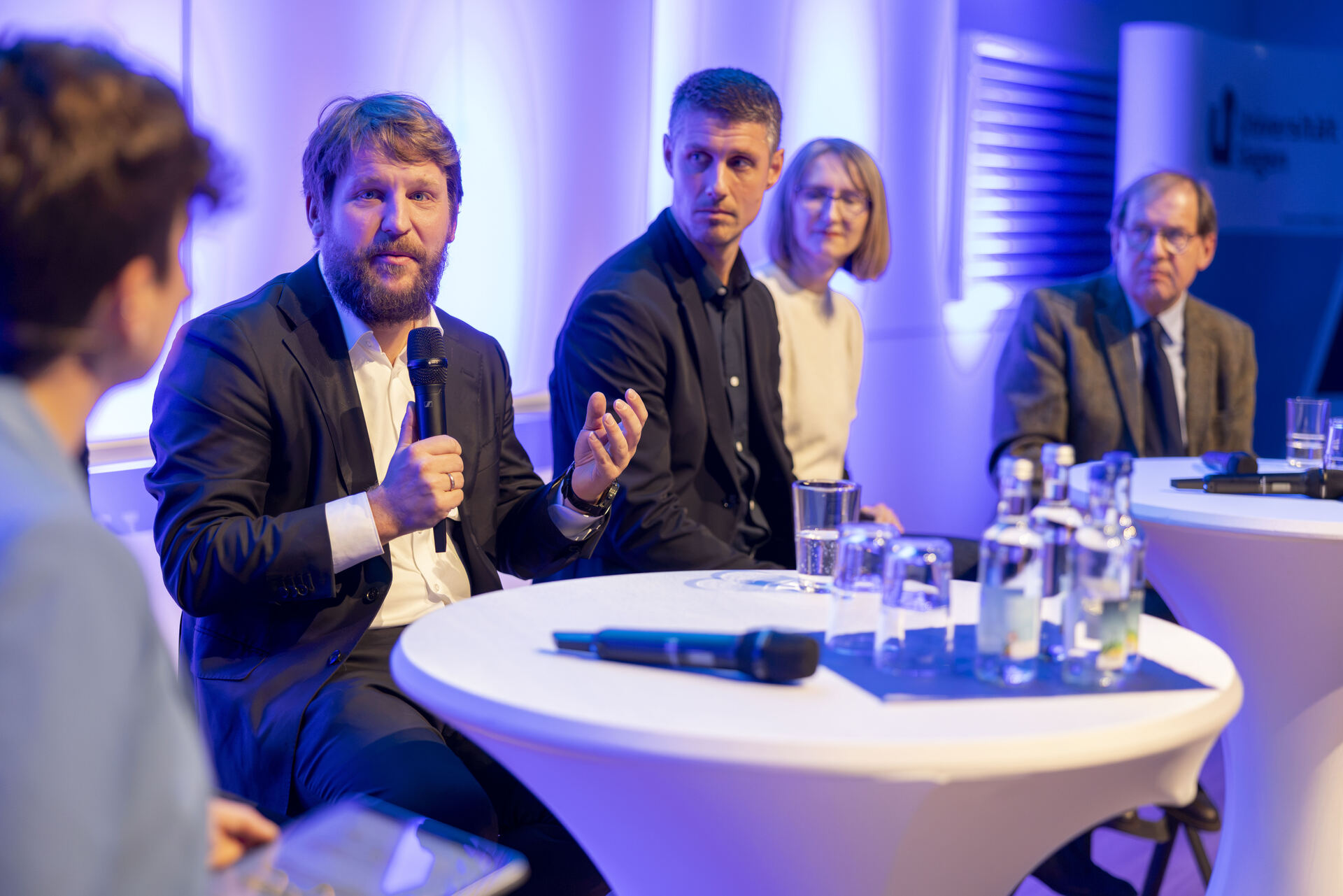
Moderator Stefanie Müsse addressed these questions and led into the subsequent panel discussion. Under the title “AI Made in NRW: How Science, Business, and Politics Can Jointly Strengthen the Region,” experts discussed specific areas of application and challenges. While Bauckhage had previously focused on the big picture of AI development, the discussion now turned to individual building blocks: the use of AI in everyday life, in education, and in businesses.
The panel included Monika Löber from the KI.NRW competence platform, Christian F. Kocherscheidt from EJOT, as well as Prof. Dr. Peter Burggräf (International Production Engineering and Management, University of Siegen), Prof. Dr. Dirk Hecker (Data Analytics, University of Siegen), and Prof. Dr. Thomas Ludwig (Human-Centered Information Systems, University of Siegen).
The panelists agreed on one point: it is important to inspire confidence and actively seize the opportunities offered by AI. Germany is in a race to catch up. This makes it all the more important to develop digital sovereignty and build our own models. Prof. Burggräf summed up the spirit of optimism: “We are living in an immensely exciting time in which problems that were once considered unsolvable may now become solvable.”
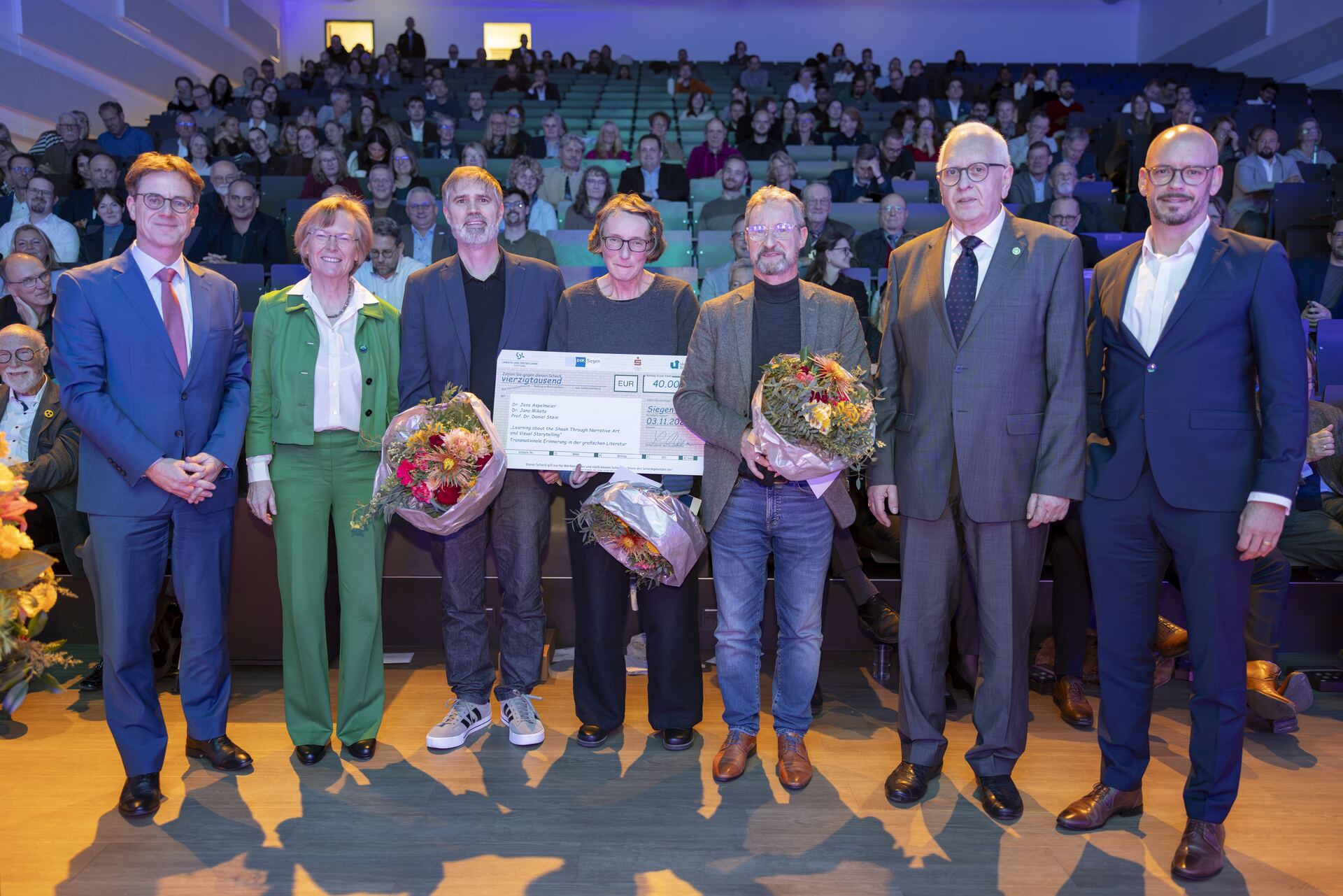
At the annual reception, the Science and Innovation Award was presented for the first time. The recipients are Dr. Jana Mikota, Dr. Jens Aspelmeier, and Dr. Daniel Stein. They were honored for the project “Learning about the Shoah Through Narrative Art and Visual Storytelling” – Transnational Memory in Graphic Literature.” The prize money amounts to 40,000 euros and was donated by the Siegen Chamber of Industry and Commerce, Sparkasse Siegen, the Christa and Dieter Lange Foundation, and the University of Siegen.
In addition, the “Prize for International Engagement” from the Society of Friends and Supporters of the University of Siegen was awarded for the years 2025 and 2026. Chairman Jörg Dienenthal presided over the award ceremony. The 2025 award goes to Dr. Marcel Hartwig, a research assistant in the Department of English. The 2026 award goes to Khan-Duc Kuttig, a lecturer for special assignments in the Department of English. Both are actively involved in supporting international students and in establishing and maintaining international university partnerships. Through their dedication, they have distinguished themselves as tireless “bridge builders.”