The University of Siegen Develops Solutions for Flood Emergencies
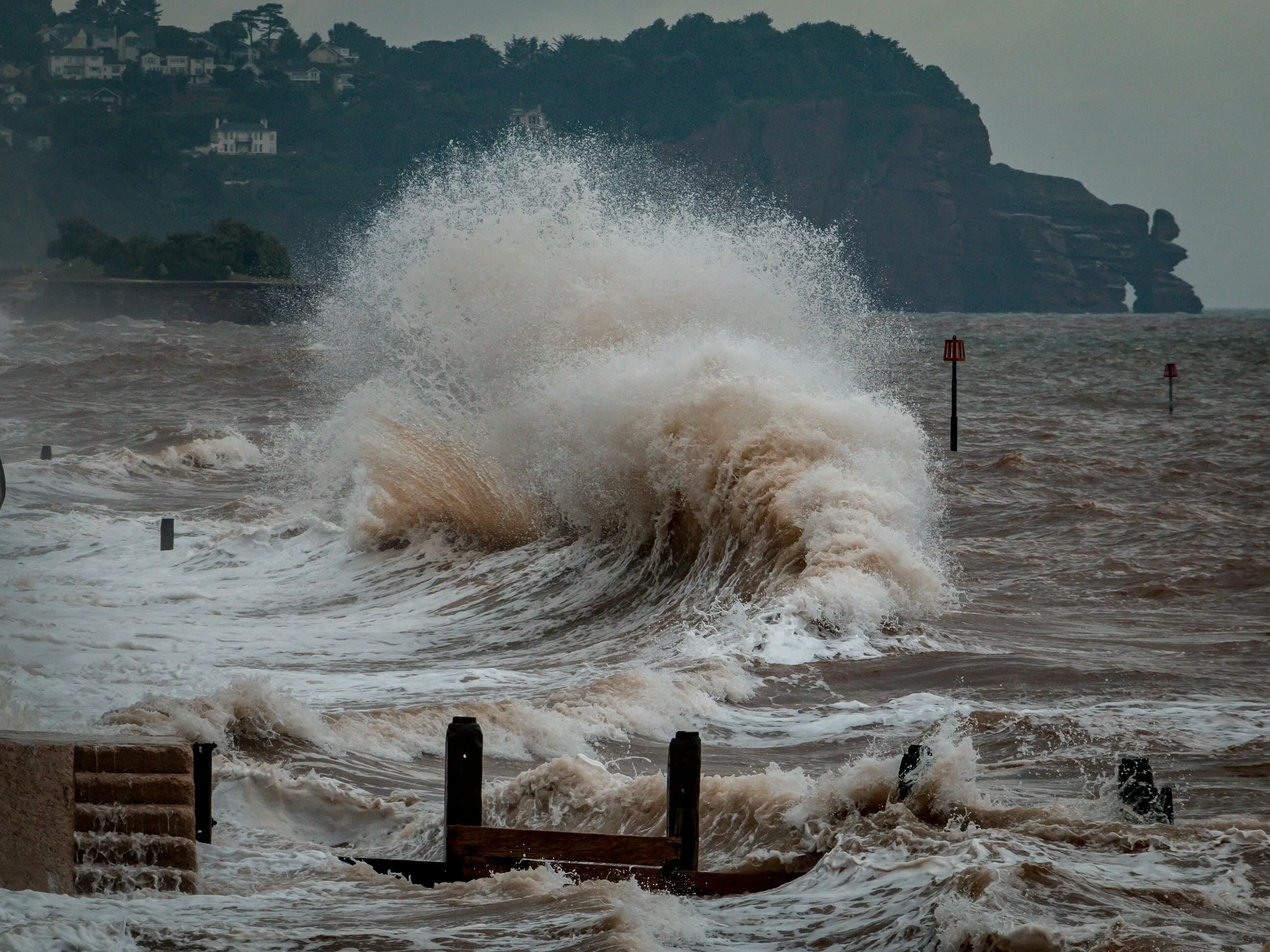
When rivers overflow their banks or storm surges hit the coast, every minute and every decision often counts. Authorities and emergency responders must quickly identify where the water is spreading, which buildings and transportation routes are particularly at risk, and how protective measures can prevent the most damage. In the BONSAI research project, the University of Siegen, together with 16 international partners, is simulating future scenarios that are likely to occur in the near future due to climate change. The goal is to make protection systems more resilient, ensure that disaster management is future-proof, and strengthen the training of specialized personnel. A total of 10.7 million euros has been allocated to the project. Of this amount, approximately 6.42 million euros comes from European Union funds (Interreg North-West Europe). The University of Siegen will receive 634,000 euros for its work on the project.

“Climate change is leading to an increase in heavy rainfall, storm surges, and sea-level rise. As a result, dikes, floodgates, and other flood protection structures are coming under greater pressure—especially in areas around river estuaries,” explains Dr. Evangelos Rozos, head of the Siegen research group. “We need to develop robust, physically sound methods to assess future flood risks and translate this knowledge into practical, reliable, and adaptable flood protection strategies.”
Tool for Emergency and Disaster Response Services
This is precisely what the BONSAI project aims to achieve. On behalf of the University of Siegen, the Research Institute for Water and the Environment (FWU) at the Chair of Hydromechanics and Hydraulic Engineering, led by Prof. Dr. Jorge Leandro, is participating in the project. The scientists in Siegen simulate and model flood flows. Using mathematical and numerical methods, they calculate how water spreads across a terrain during a flood event. Among other factors, they take into account the topography, the characteristics of the terrain, and the respective boundary conditions.
In collaboration with the University of Lille in France, the University of Siegen is developing an interactive online decision-support system that combines hydrodynamic modeling, spatial analysis, and optimization methods. The tool is designed to help emergency and disaster response services, both before and during an emergency, identify at-risk areas, protect critical infrastructure—such as hospitals and power plants—and optimize the use of temporary protective measures, such as mobile flood barriers. The system will initially be tested at a pilot site in the East Frisian town of Norden in Lower Saxony, in collaboration with Prof. Thorenz of the Lower Saxony State Agency for Water Management, Coastal Protection and Nature Conservation. At the same time, the researchers aim to demonstrate how such tools can be further developed for practical use in flood management. The research findings could also be of interest to regions far from the coast. Although BONSAI focuses on coastal and estuarine areas, many of the methods developed can also be applied to inland regions such as South Westphalia.
From Research to Practice
To present the knowledge, methods, and tools developed in the project directly to professionals, the participating universities regularly organize Flood Academies. In September 2027, the event will take place at Lake Bigge near Olpe, hosted by the University of Siegen. The event is primarily aimed at stakeholders who are directly responsible for the management of flood protection measures, disaster response, and the maintenance and operation of dikes.
An international group of experts will deliver presentations and lead discussions. Participants will have the opportunity to learn about the current state of research as well as modern approaches to flood protection from various regions and perspectives around the world. The overarching goal is to broaden understanding of flood risks and to examine both well-known and less frequently considered threats to flood protection infrastructure. This includes, for example, how burrowing animals affect the stability of dikes and how dikes can be reinforced using environmentally friendly methods, such as by selectively planting suitable plant species.
The BONSAI research project brings together 17 partners from Belgium, the Netherlands, France, and Germany and will run from 2025 to 2029.


