Welcome to our Science Forum
School Groups at the Science Forum
The Science Forum is the University of Siegen’s chemistry student lab. Founded over 25 years ago, it is one of the first student labs of its kind. It is a unique extracurricular learning center for school groups from the region. In an authentic laboratory setting, they can complete over twenty different hands-on experiments. They receive close supervision, learn about laboratory work, and experience a motivating approach to scientific inquiry.
Students at the Science Forum
The Science Forum is also an integral part of teacher training at the University of Siegen. All students studying to become chemistry teachers supervise learning groups in the student lab for at least one semester. In this way, they gain their first practical experience in conducting experimental chemistry lessons and directly apply the theoretical knowledge they have acquired during their studies.
Schedule of the Lab Day
The student groups are registered by their teacher for a suitable topic and visit the student lab one morning. After a brief theoretical introduction and a safety briefing, the lab day begins with a themed demonstration experiment conducted by a faculty member. Afterward, with support from the student instructors, the students work largely independently at the experimental stations. The lab day concludes with a group discussion of the experiments conducted.


Through simple, illustrative experiments (e.g., the formation of gases during chemical reactions, separation of a mixture of three solids, combustion of various substances in air or in pure oxygen, and color changes during chemical reactions), students experience a wide variety of chemical phenomena.
This lab is suitable for students in grades 7 through 8.

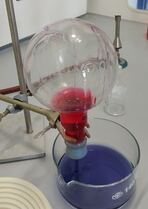
The fundamentals of acid-base chemistry are explored through engaging experiments (e.g., investigating the properties of acidic and basic solutions, the red cabbage indicator challenge, the reaction of hydrochloric acid with sodium hydroxide solution, and the reaction of hydrogen chloride and ammonia).
This lab is suitable for students in grades 8 through 10; however, it is helpful if students are generally familiar with the terms “acid,” “base,” and “neutralization,” as well as the associated chemical principles.
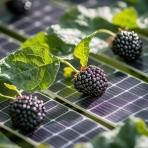
The Grätzel cell, a plant-pigment-based solar cell, impressively demonstrates how chemical energy can be converted into electrical energy. The students build their own solar cells based on Grätzel’s principle and investigate various plant pigments and light sources in terms of their handling and efficiency.
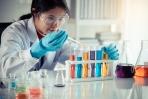
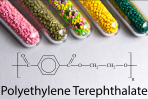
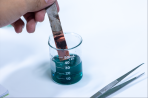

Through exciting experiments, students explore the fascinating world of acid-base chemistry. They identify unknown solutions, examine the properties of acids and bases, assess the acidity of various citrus fruits, and use calorimetric methods to identify different acids and bases.
The learning units in the “Gamify your Lab” section are experimental hands-on activities that focus on students conducting experiments on their own. Unlike traditional lab sessions, however, these formats were developed with game-like elements integrated to varying degrees. These elements can positively support students’ motivation, sense of flow, and learning process. And, of course, they’re a lot of fun!
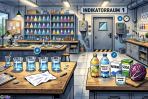
An exciting digital learning environment opens up new ways to explore chemistry: In an interactive escape game, students follow in the footsteps of the mysterious researcher Dr. Acidus.
In four rooms, they solve tricky puzzles, conduct experiments, and must apply key concepts of acid-base chemistry—from indicators and reaction behavior to neutralization. Technical knowledge is applied and reinforced in a playful way. The experiments themselves take center stage: There are no additional puzzles or external tools—experimentation is the key to progress.
Will they succeed in unraveling the Nobel laureate’s secret? Only those who observe carefully, think logically, and apply their chemical knowledge strategically will make progress step by step.
Note: The chemistry of acids and bases must have been covered in class beforehand!

In a fictional competition, students tackle exciting experiments centered on the four “elements”: fire (e.g., flame color), water (acids and bases), air (gases), and earth (including electrochemistry). Through clever combinations, solving puzzles, and successfully conducting lab experiments, they earn codes and keys that allow them to continue the game. The focus is on hands-on lab work—the digitally supported escape game provides a motivating framework and offers helpful guidance.
This escape game is particularly well-suited for a playful review of key concepts from lower secondary school. A basic understanding of acid-base chemistry and electrochemistry is required!
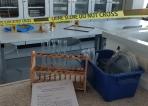
In this hands-on workshop, students take on the role of forensic scientists: They are tasked with solving a fictional painting theft at a local art gallery. To do this, they use chemical methods to analyze various traces left by the perpetrator at the crime scene. Step by step, they track down the real culprit.