From Darwinism to Social Darwinism
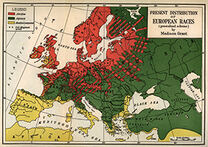
In the second half of the 19th century, Darwinism established itself as one of the central scientific movements of its time. At the same time, attempts began to apply the processes of natural selection identified by Charles Darwin—which the researcher had always limited to biology—to the social conditions of human coexistence. These efforts were not necessarily based on Darwin’s work but stemmed from the desire to find a general formula that could serve as a universal explanation for all phenomena in nature and society. The more widely Darwin’s theory was accepted, the more it seemed to lend itself as the foundation for such a “world formula.” As a result of the theory of evolution, biology was thus able to rise to become the leading science of the 19th century, a development that entailed a “biologization” of society’s thinking as a whole, with corresponding support from public opinion in many countries.
The fact that Herbert Spencer had already begun his search for what would later be called social Darwinism before Darwin published his most important work shows that the development of categories of social order was not triggered by the theory of evolution, but was at most facilitated by it. In this process, the theory was by no means adopted in its entirety; rather, it was always only individual elements that took on significance in the respective context. In addition to Spencer, numerous other individuals and groups drew on elements from Darwin’s work to provide biological justifications for diverse and sometimes contradictory positions in social debates, thereby endowing them with a quasi-natural-law legitimacy and enhancing their standing.
The success of such Social Darwinist ideas stemmed in large part from the fact that many people perceived the turn of the 19th to the 20th century as a time of great crises, in which the—bourgeois lives of countless groups—perceived as marginalized—seemed to be under threat. With its clear categories of people (and groups of people), Social Darwinism appeared to be a useful tool for strengthening one’s own position in society and finding ways out of the crisis as it was perceived. As with Darwin’s theory itself, photography also served as an important medium in the case of social Darwinism for creating social types, visibly classifying people into categories based on external characteristics, and thereby—from the perspective of those involved—bringing order to a modern world that had become increasingly confusing.
Contents of the section in the book:
- Herbert Spencer and his reception as a social Darwinist
Michael Beetz - Pioneers of Social Darwinism in Great Britain,
France, and the United States
Mike Hawkins - Fear of Decline and Degeneration: A Breeding Ground for
Social Darwinist Ideas in the Late 19th Century
Peter Becker - Written All Over Their Faces:
Social Darwinism and the Photographic Documentation
and Categorization of People
Leesa Rittelmann - Social Darwinism as a Political Tool in the 20th Century
Thomas Adam
Image source: Madison Grant, *The Passing of the Great Race or the Racial Basis of European History*, New York, NY, 1916, p. 272.