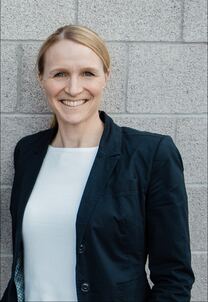
Prof. Dr. sc. ETH Mareike Heinzen
The economist is researching how innovation arises in companies. She asks: What can companies do to prepare for disruptive changes, rather than simply reacting once a crisis hits? In doing so, she works closely with industry.
My professorship is called:
Innovation and Transformation Management (Faculty III)
What are you currently researching? Why is this topic important?
I’m interested in what enables companies to innovate and transform. How do new ideas—or even innovations—emerge? How does collaboration across boundaries succeed? How do organizations manage to learn new things and question the status quo? I explore these questions in the context of digitalization, sustainability, and crises, for example. Today companies must not only react to change, but also proactively shape their future.
What question has long been on your mind in your research?
How can companies “prepare” for upheavals instead of merely reacting once a crisis hits? I’m interested in how they anticipate change, try new things, and learn to let go of the familiar—so that innovation with a long-term impact emerges.
What fascinates you most about your field?
Innovation rarely happens in isolation. I’m fascinated by what happens when people with different perspectives come together, challenge the status quo, and create something new—and by how organizations can foster this kind of collaboration.
Was there a moment in your academic career that had a particularly profound impact on you?
I’ve been shaped by the constant shift in perspectives between business and technology, academia and industry. It has shown me that the most exciting ideas often emerge precisely at these intersections.
What do students learn in your courses?
Students learn to “take initiative” and “shape the future” for themselves: They get to examine real-world problems from various perspectives, develop ideas, make scientifically sound decisions, and collaboratively implement solutions—all while discussing them with exciting entrepreneurs and managers.
Whati s a typical phrase students often hear from you in seminars?
“What does that mean in practice?”
What’s your favorite spot on campus?
I’m still discovering that—recommendations are welcome!
What are you currently working on with particular enthusiasm outside of research and teaching?
I’m building new connections: between the university and businesses, between different disciplines, and internationally. I find it especially exciting when unexpected ideas and projects emerge from these connections.
What do you do when you’re not thinking about the university?
Then I spend time with my kids, read, or exercise (preferably on the tartan track or in the woods).