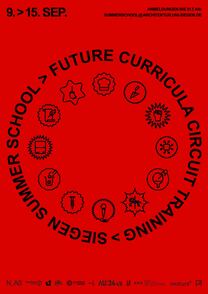
N_AS Summer School

Future Curricula Circuit Training
Negotiating How We Learn Together
Event Dates: September 9, 2026 – September 15, 2026
Venue: Druckhaus, Häutebachweg 17, 57072 Siegen
Workshops
Rotating workshops on September 10 and 11, and a plenary session on September 12
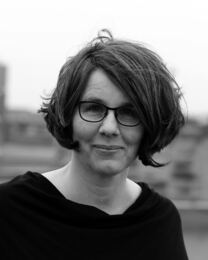
Saskia Hebert, subsolar* architecture & urban research
Saskia Hebert is an architect and, together with Matthias Lohmann, runs the firm subsolar* architecture & urban research in Berlin. Through subsolar* (since 2000), at the lived space lab at the UDK Berlin (2012–2015), in the Transformations Design program at the HBK Braunschweig (2015–2020), at the Eberswalde University for Sustainable Development, and at the “Transformation Fitness Studio” (since 2018), she collaborates with others to design sustainable “urban imaginaries” and desirable futures.
Prof. Dr. Thorsten Erl
Thorsten Erl has been a professor of urban planning in the Department of Architecture at the New School of Architecture in Siegen since 2019. He directs the Fusion Lab, the Siegen Urban and Regional Laboratory; is a member of the interdisciplinary Center for Educational Spaces (IZBR); and serves as associate dean for spatial studies and artistic disciplines in the School of Education, Architecture and the Arts.
Negotiation skills create spaces of vulnerability and safety for collaborative reflection on sustainable curricula. The workshop offers a hands-on experience of facilitation as a means of shaping collaborative change processes that enable participants to recognize, contextualize, and negotiate differing positions and interests. In this context, disagreement is understood as a productive resource for exploring deep democracy and empathy as forms of community building for resilient shared learning processes. Using embodiment techniques, we begin mindfully with the question: “What no longer applies in architecture education?” and together develop positive ‘rabbit holes’—unexpected spaces for thought and action that open up new possibilities and viabilities for the future of architecture education.
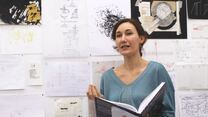
Dr. Lidia Gasperoni
Lidia Gasperoni is an associate professor, co-director of design, and co-director of the MArch program in Design for Performance and Interaction at the Bartlett School of Architecture, University College London. Her research at the intersection of architecture, philosophy, and design-based research explores how media, ecological, and aesthetic conditions shape architectural design. Her publications include *Media Agency* (with Christophe Barlieb, transcript, 2020), *Construction and Design Manual: Experimental Diagrams in Architecture* (DOM publishers, 2022), and *Epistemic Artefacts* (with Matthias Ballestrem, AADR, 2023).
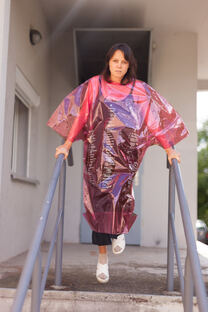
Diana Lucas Drogan
Diana Lucas-Drogan (Critical Planning Practice, Mapping Artist) is an architect working at the intersection of critical education, art, feminist planning culture, and curation. She headed the Office for Urban Planning, Economic Development, and Building Regulations in Waren (Müritz) and develops projects on learning environments and action-oriented teaching formats at HNE Eberswalde. As a member of metroZones, she researches and produces urban discourse through publications, exhibitions, and public formats. Her textile mappings have been exhibited at venues including the ngbK, the HKW, HAU, and as part of the Venice Biennale. She also curated the project “WERTstadt – performative Urbanism” at the Kunstverein Ludwigshafen.
A professional profile from head to toe. Inspired by the surrealist game “Cadavre exquis,” we’re creating new and different professional profiles for architects in the form of collaborative collages. In doing so, we’d like to reflect on and discuss, in particular, the diversity and perspectives of different areas of work, the ways various skills can be combined and the synergies they create, as well as the harmony between action, heart, and mind.
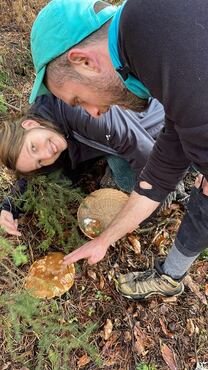
Dr.-Ing. Matthew Crabbe
Dr. Matthew Crabbe is an architect and research associate at the Natural Building Lab at TU Berlin, as well as co-founder and managing director of NBL Studio gGmbH. In his dissertation, “Change Now, Architecture Later” (TU Berlin, 2025), he examines how architecture graduates navigate the conflicting expectations of academia, the profession, and society in the context of the climate crisis. His research combines practice-based methods, DesignBuild pedagogy, and the question of professional identity in the context of the construction transition.
Selina Schlez
Selina Schlez is an architect and research associate at the Natural Building Lab at TU Berlin. Her research focuses on resource-efficient renovation strategies and a planning culture oriented toward the common good. She leads the “Transfor:Mathe” real-world lab, which develops minimally invasive renovation strategies for the old mathematics building at TU Berlin and explores these as a transferable model for science buildings.
nexture+
The nexture+ association for emerging professionals connects students and early-career professionals in architecture, interior design, landscape architecture, and urban planning across Germany. The goal is to pool energy, knowledge, and contacts to promote a culture of construction and renovation that is sustainable, created under dignified conditions, and valuable and enriching for the environment and the common good.
For the 2026 Summer School, the Architecture Student Council and AU:34 e.V. are collaborating on a joint design-build project. In this project, we will expand a mobile kitchen that was originally created in a previous student seminar. The goal is to develop the kitchen into a space for informal and social gatherings, while sparking conversations about the future of learning and teaching. Built from reused materials, it will become the Summer School’s infrastructural gathering place. For us, this process of further development represents a way of appropriating the space, and through cooking together, we collectively project our care work outward.
AU:34
AU:34 e.V. is a self-organized association that emerged from a student working group at the Department of Architecture at the University of Siegen. Born out of a lack of workspaces and the desire for a place for student life, AU today sees itself as a platform for exchange, teaching, and experimentation. Through AU, the association organizes the central lecture series of the New School of Architecture in Siegen, supplemented by workshops and design-build projects. As a self-managed initiative, AU sees itself as a case study in collective, flexible, and future-oriented architectural education.
What if, instead of reinventing the curriculum, we restructure it? Where can the existing curriculum be repurposed, adapted, altered, shifted, subverted, broken down, redirected, or reinterpreted? Just like in Jenga, we’ll pull building blocks from the gray mass and stack them on top!
What do we need for this “hack”—knowledge, strategies, and courage? What do we need to learn, what formats do we need, and where do they already fit into the curriculum?
In a fast-paced workshop, we’ll develop concrete ideas for interventions in teaching. This way, we can harness what already exists for the construction transition and get started right away.
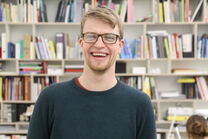
Torsten Klafft, born in 1987, is an architect, sociologist, passionate bike mechanic, and active in urban politics. He has many years of experience in various architecture firms and in participatory urban development with the nonconform ideenwerkstatt, as well as in teaching at the Technical University of Berlin and Leibniz University Hannover. As part of the social and ecological transformation of construction, he focuses, for example, on the future of single-family homes, the role of architects in the construction transition, and the development of convivial spaces within the existing building stock.
Baunetz Campus supports students during their first few days with a podcast studio and offers a glimpse into the vast world of academic architectural discourse.
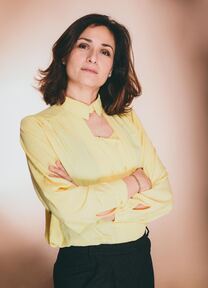
Dr. Sorana Radulescu (born 1982 in Bucharest) heads the editorial team at BauNetz CAMPUS, BauNetz’s online platform for academic architectural discourse. She studied architecture at UAUIM in Bucharest and ETSAB in Barcelona and earned her Ph.D. from Graz University of Technology. After several years as a project manager and partner at architecture firms in Barcelona and Bucharest, she worked as a university assistant at Graz University of Technology from 2012 to 2019. She then established the Art and Architecture Communications Department at De Gruyter Publishing. Today, she focuses on architectural communication and writes, teaches, and conducts research at the intersection of architecture and urban planning.
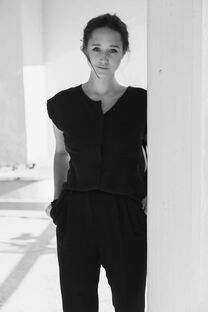
Katharina Lux ( born 1992, Munich) is an editor at BauNetz CAMPUS, the platform for academic discourse on architecture. She studied architecture at the Technical University of Berlin, where she earned her master’s degree in 2018. After gaining experience at various architectural firms, she has been working at BauNetz CAMPUS since 2019, where she played a key role in developing the platform. Her work lies at the intersection of education, research, and interdisciplinary practice. She conceives and oversees editorial formats such as thematic series, interviews, and podcast series, and is involved in the development of publication and teaching formats. She also teaches in Berlin, focusing on spatial practices.
Seismograph: Architecture Studies
As an editorial platform, BauNetz CAMPUS occupies a unique position in academic architectural discourse: Through continuous exchange with faculty, researchers, and students, it provides a comprehensive overview of the German-speaking higher education landscape—covering teaching formats, methods, fields of study, and their transformation. This perspective makes it possible to highlight developments, critically examine methods, and trace shifts in the discipline’s self-understanding. In this lecture, we will therefore ask ourselves: How is the “Bauwende” shaping teaching? How is architecture already changing in educational settings? What should academic architectural communication look like? Combining an assessment of the current state with a discussion, we aim to explore the attitudes and competencies required to achieve this.
Highlights from Recent Summer Schools


Talks & Panels
Lectures and Panel Discussions as Part of the Summer School
Thursday, September 10, 2026, starting at 7:00 p.m.
- Seismograph: Architecture Studies with Dr. Sorana Radulescu & Katharina Lux, Baunetz Campus
- Cement, Growth, Greenwashing—A Reality Check on Climate Strategies Dr.-Ing. Rosalie Arendt, Assistant Professor at the University of Twente, Netherlands
Friday, September 11, 2026, starting at 7:00 p.m.
Panel: Structures and Organizations in Flux
- Prof. Mario Tvrtković /DASL, Chair of Urban Planning and Design, Coburg University of Applied Sciences. Member of the Executive Board and Scientific Secretary of the German Academy for Urban Planning and Regional Planning (DASL)
- Prof. Max Wasserkampf /BDA, Naumann Wasserkampf Architects, Chair of Design and Building Construction at HTWK Leipzig, Member of the Executive Board of the Association of German Architects (BDA Bund)
- Katja Domschky /AKNW, President of the North Rhine-Westphalia Chamber of Architects
- Leon Beck /A4F. Board Member of Architects for Future Deutschland e.V.
Saturday, September 12, 2026, 3:00–6:00 p.m.
- The Common Good in the Curriculum Johanna Debik—Architect, former Board Member of the Montag Foundation for Urban Spaces gAG
- The Curriculum as a Political Issue Angelika Hinterbrandner – Bauwende Allianz/ProjectTogether, Kontextur
- Singularities of the Present: Tectonic Shifts in the Tasks, Methods, and Goals of Contemporary Architectural Education
Prof. Dr. Norbert Palz – Berlin University of the Arts, Digital and Experimental Design
Friday, September 11, 2026, starting at 7:00 p.m.
- Inside N_AS
Pecha Kucha featuring N_AS projects and initiatives

Management and Coordination
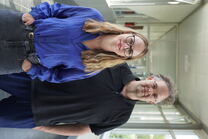
Hannah Schiefer (Dr. phil.), born in 1989, is an art historian specializing in architectural history and theory. She serves as a lecturer in the Department of Architecture at the University of Siegen and previously worked as a research assistant at Heinrich Heine University Düsseldorf. Her teaching and research focus on the history and theory of craftsmanship since the early 20th century, as well as topics in 20th- and 21st-century aesthetic theory at the intersection of architecture and design. Her current research focuses on the significance of transcultural architectural genealogies for the constitution of architectural spaces and landscapes, as well as for the production of memories.
Jan Kampshoff ( Prof. M.A.), born in 1975, is an architect, co-founder of the firm modulorbeat, and professor of spatial conception and design in the Department of Architecture at the University of Siegen. Previously, he served as a visiting professor at the Technical University of Berlin and as an adjunct professor at the Peter Behrens School of Arts in Düsseldorf. His work has been nominated for the Mies van der Rohe Award and has received the Bauwelt Prize and the German Architecture Prize, among other honors. His teaching and research focus on experimental design practices at the intersection of architecture, the city, and art, as well as questions of spatial strategies and the transformation of the existing built environment. As a co-initiator of the university network “Gemeinsam für die Bauwende” ( Together for the Construction Transition ) at Architects for Future, he is also committed to promoting sustainable and transformative architectural education.