Information Technology and New Media
Hardware and Software
Innovative teaching and research involve the provision and use of software and, to an increasing extent, the application of new media. It begins with standard software (word processing, spreadsheets, image/video editing), followed by engineering and drafting software (CAD and GIS). More specialized software is used in the fields of wastewater and waste management, as well as water supply. Model simulations facilitate engineering calculations and verifications. They are used in projects, exercises, term papers, and theses. In the future, modern technologies, mobile apps, and AI, among other things, will offer further solutions.
Modern Engineering
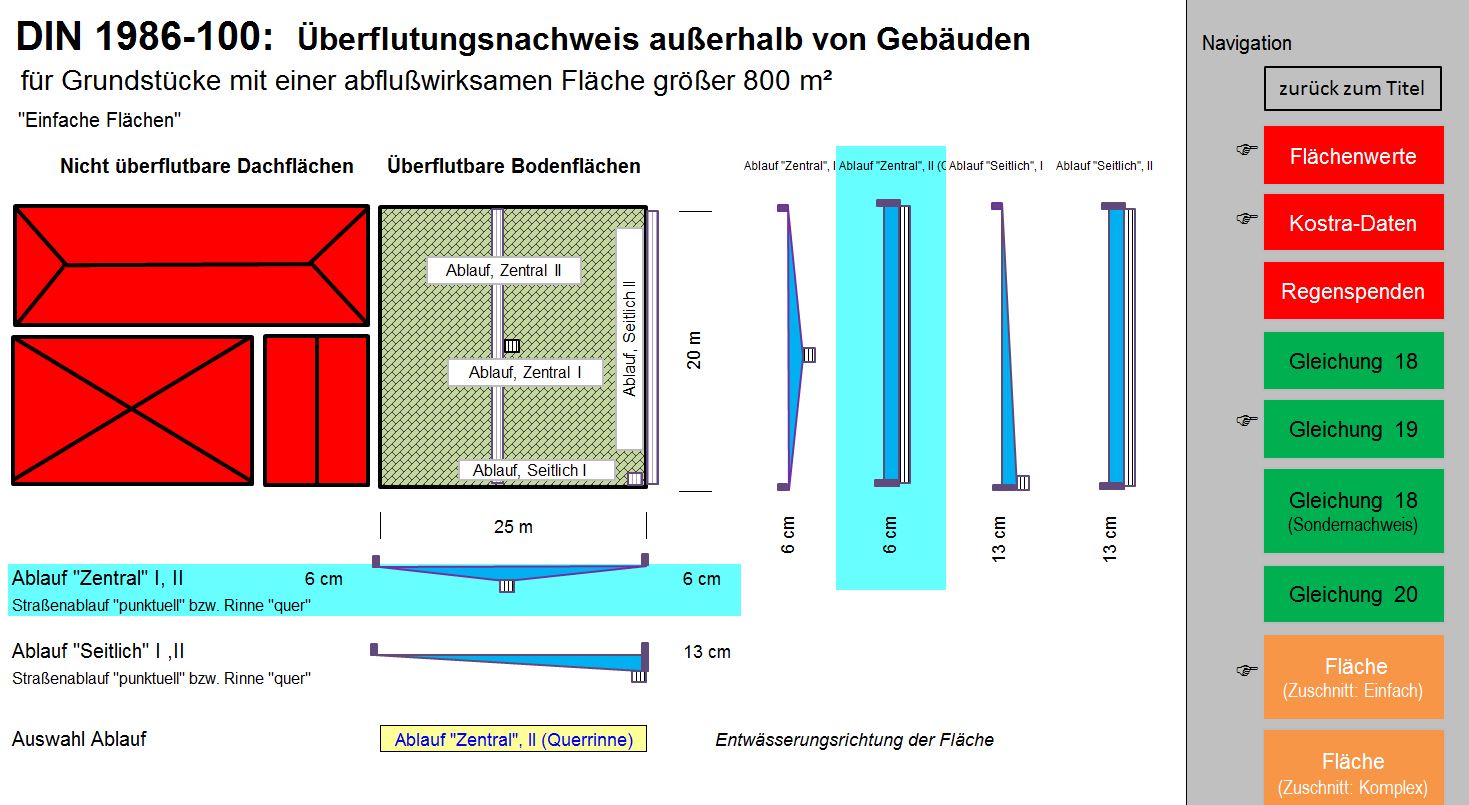
Design and flood analysis in accordance with DIN 1986-100.
with Excel/PDF
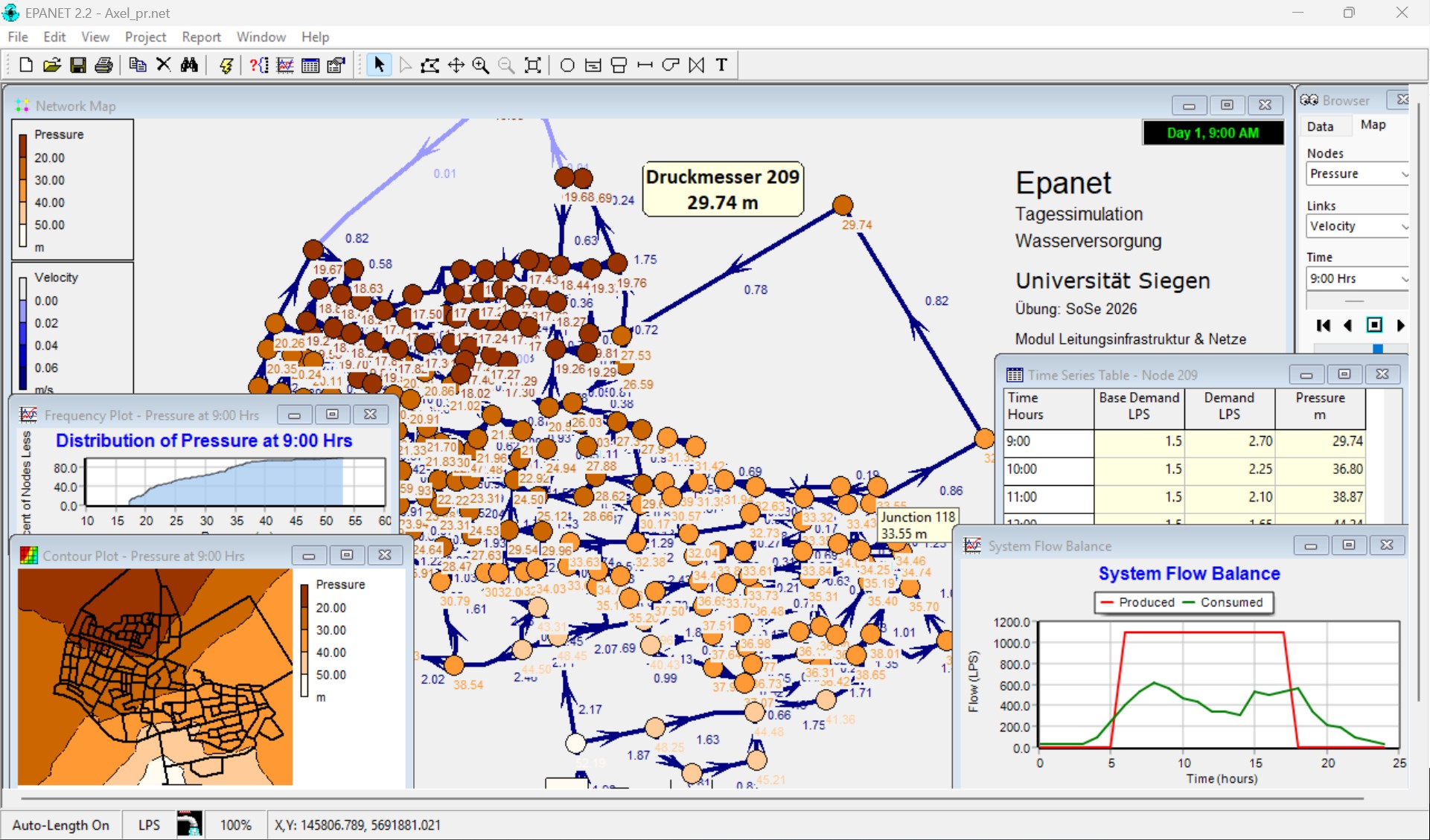
Daily simulation (drinking water) with documentation of pressures / firefighting water.
Simulation
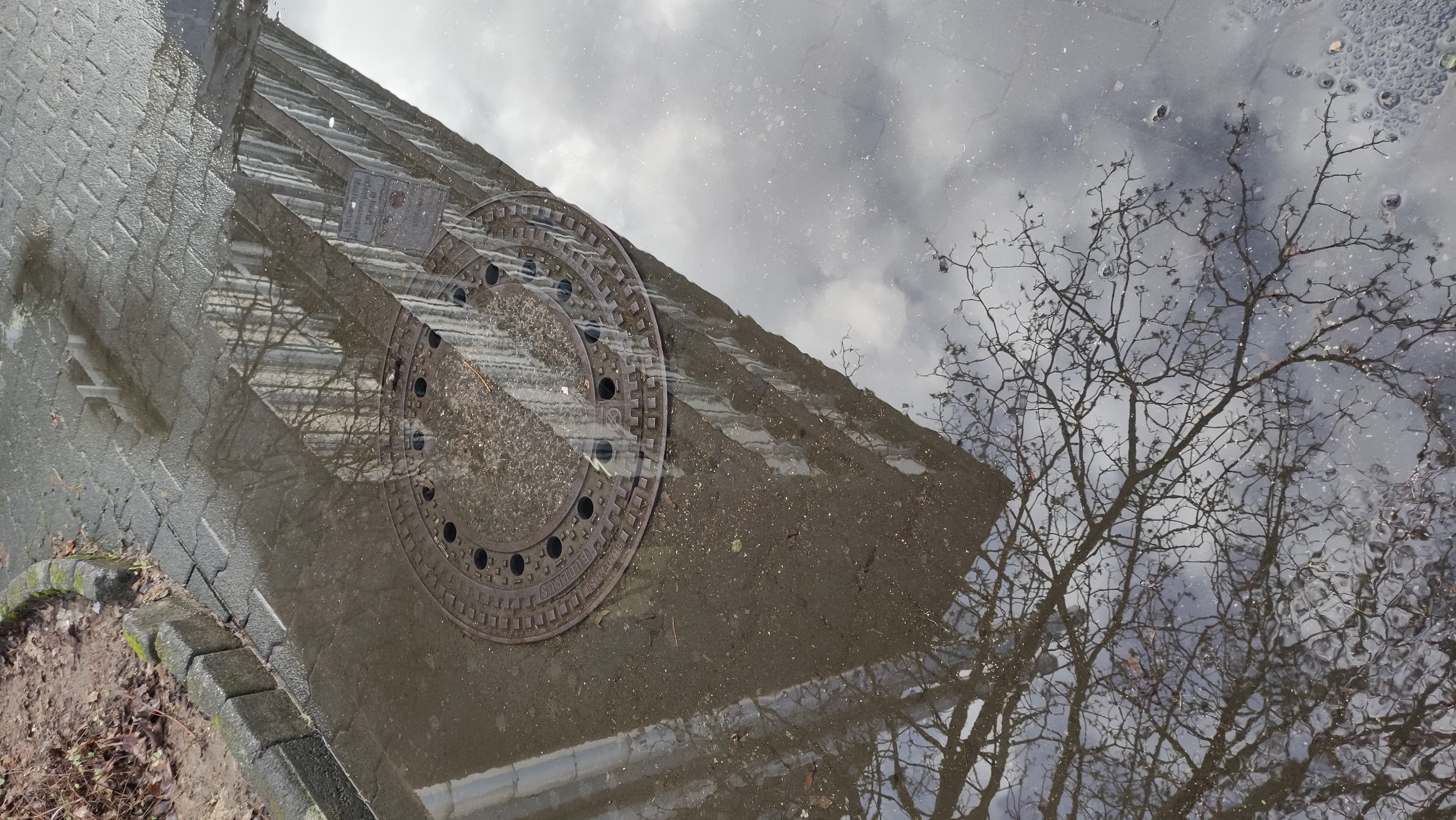
Identification of channel-induced flooding through hydrodynamic simulation.
Simulation
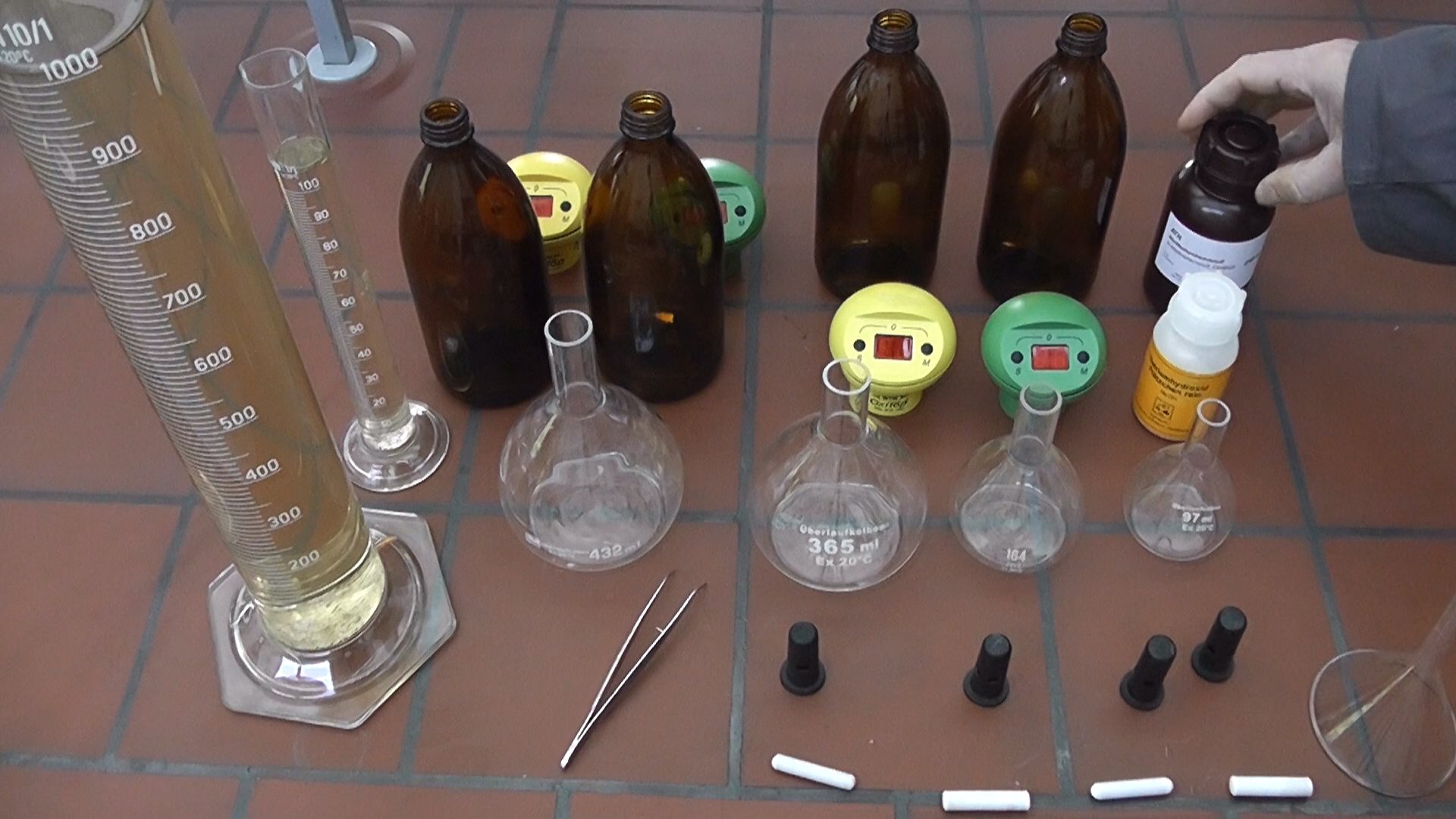
Long-term tracking of emissions from combined and separate sewer systems.
Simulation
A Blend of Tradition and Modernity
The use of software is only effective when combined with a basic understanding of the theory (lecture). It is important to interpret the calculation results in light of the design and success of engineering measures.
Software for sewer network design is used to (re)design sewer systems, including structures, and to verify the performance of existing networks (flood protection). Other software is designed for planning or specific areas (property drainage / stormwater management).
The following software is used.
- Excel spreadsheets: Design of sewers using the travel time method, design and verification of storm water retention basins (RRB) and storm water retention tanks (RÜB), property drainage, infiltration systems
- PDF: Editable PDF files with automated calculations, EPAG100: Property drainage (see DIN 1986-100, design, flood protection verification)
- Wabila – Water Balance Tool
- Hydrodynamic sewer network analysis, flood verification (see DWA-A118/DINEN752)
- Kanal++/ Dyna (Tandler)
- SWMM (EPA US)
- Hystem-Extran (ITWH)
- Web-based solutions from manufacturers (including for pumps, hydraulics, pipe statics, and cost estimation)
- ....
The design of drinking water systems includes pressure and velocity analyses, water balance calculations, and fire-fighting water analyses. Software is available for these purposes.
- Excel spreadsheets for looped networks (Hardy-Cross method) with up to 9 loops, elevated tank volume
- EPANET 2.2 (EPA US)
- Stanet Version 10 (IB Fischer-Uhrig)
- Software/apps for pump sizing
- Special extensions in QGIS.
New media, podcasts, and video tutorials are ideal for software products, as they provide a basic overview and a guided introduction to the programs’ respective features. (Supplement to manuals; tailored to specific needs and target audiences; therefore accessible via the Moodle course “Theses” or the master’s program in Network Infrastructure and Networks.)