Laboratory for Municipal Water Management and Waste Technology
The laboratory ("small lab") can be used for special tasks related to research and development projects. It is also used to support teaching activities. Students can conduct water, wastewater, and waste analyses with varying degrees of independence.
For research projects, resources within the department and the university’s Schools can be utilized. The involvement of external institutes outside the university is necessary to ensure high quality standards.
Laboratory and Field Tests
Wastewater - Drinking Water - Water Bodies - Solids
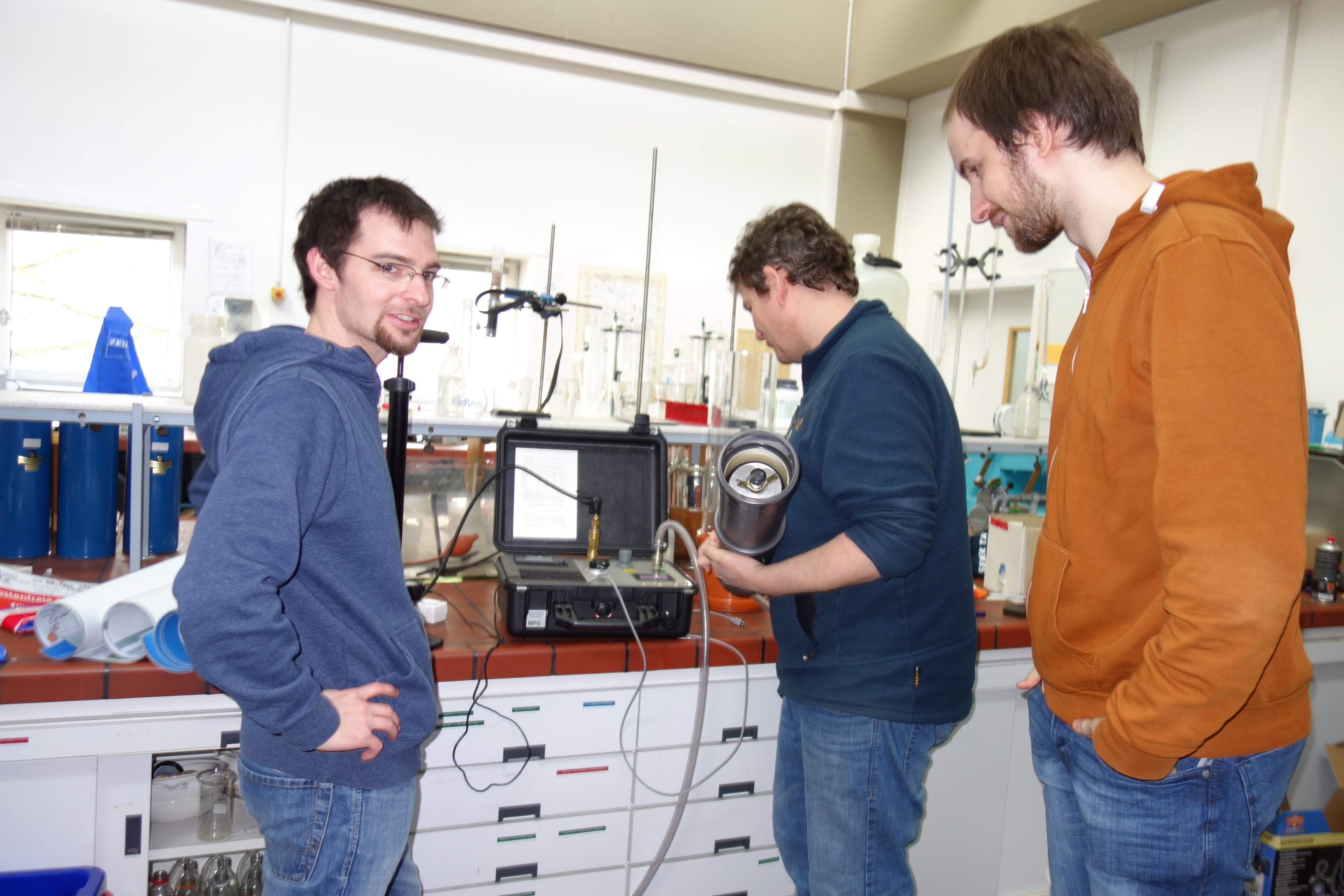
Conducting a water/air leak test on a sewer pipe (in accordance with DIN EN 1610) in the Pipeline Infrastructure and Networks module.
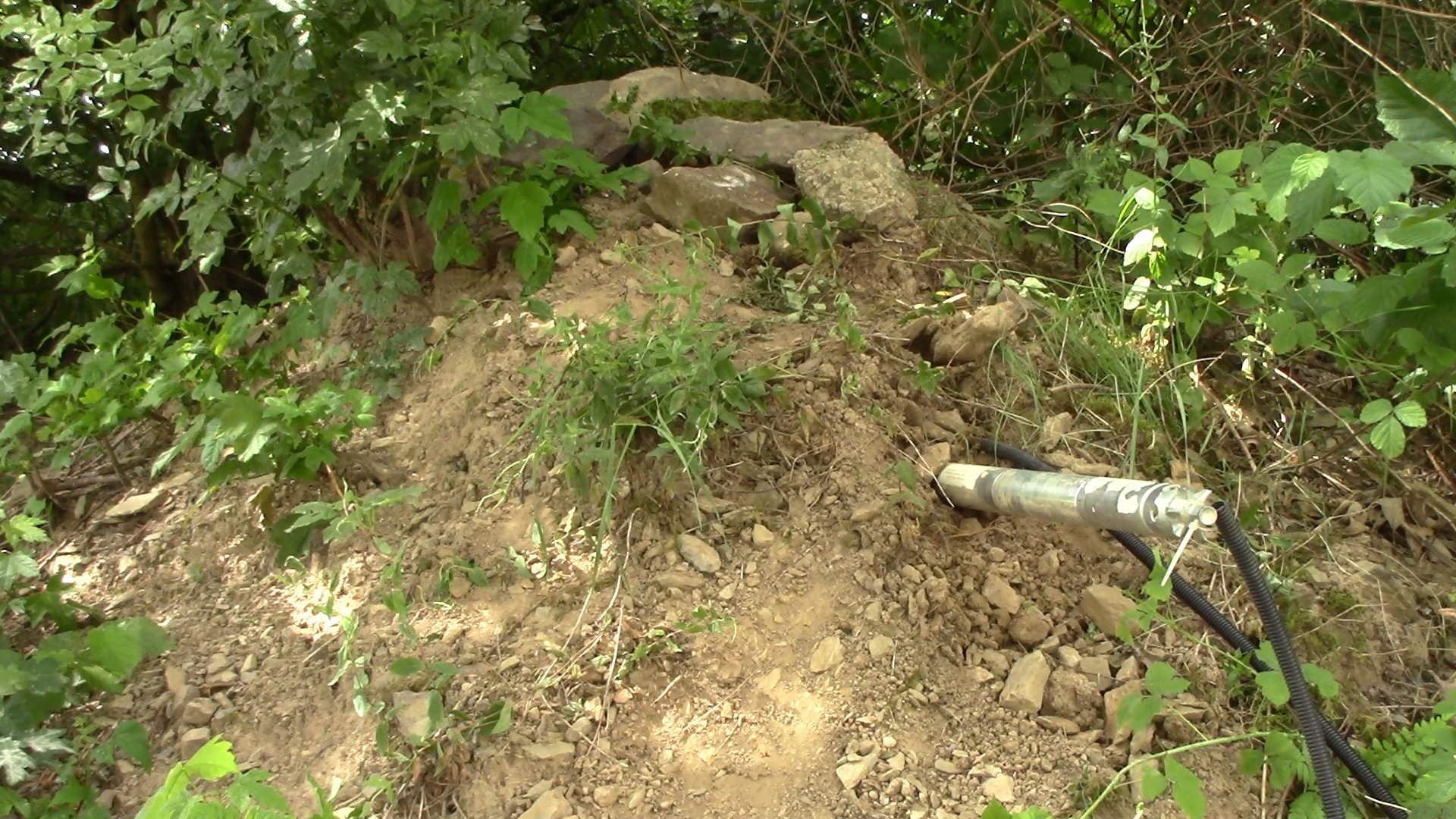
Pipe and cable installation using a ground-penetrating rocket. Pipe jacking and pulling a cable protection conduit. Outdoor test / test stand in the Pipeline Infrastructure and Networks module.
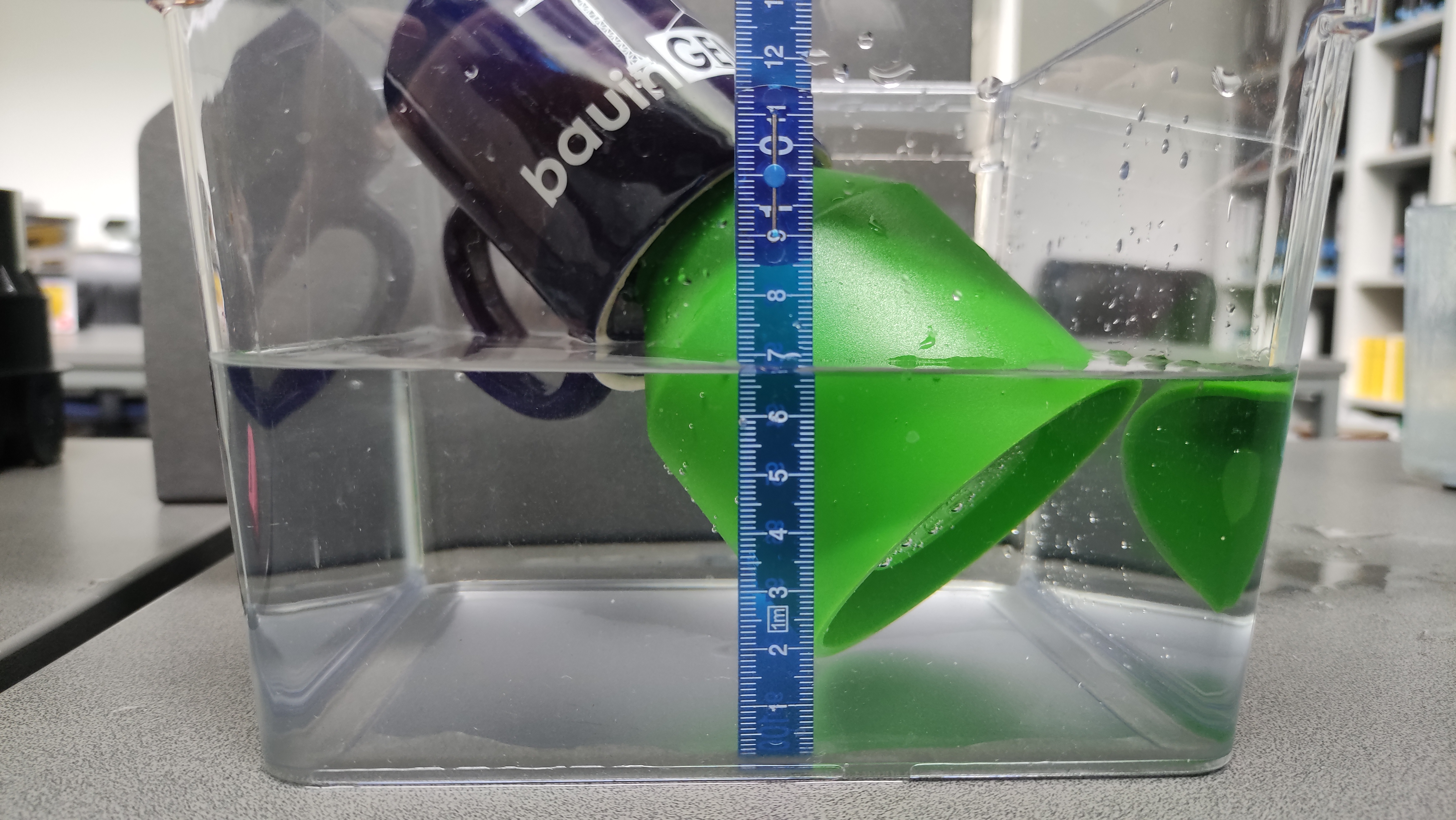
Student experiment on buoyancy in pipes (see Archimedes' principle) using a model with various test objects (shaft structures, pipes, tanks). Theory with calculations and practical work in a water bath.
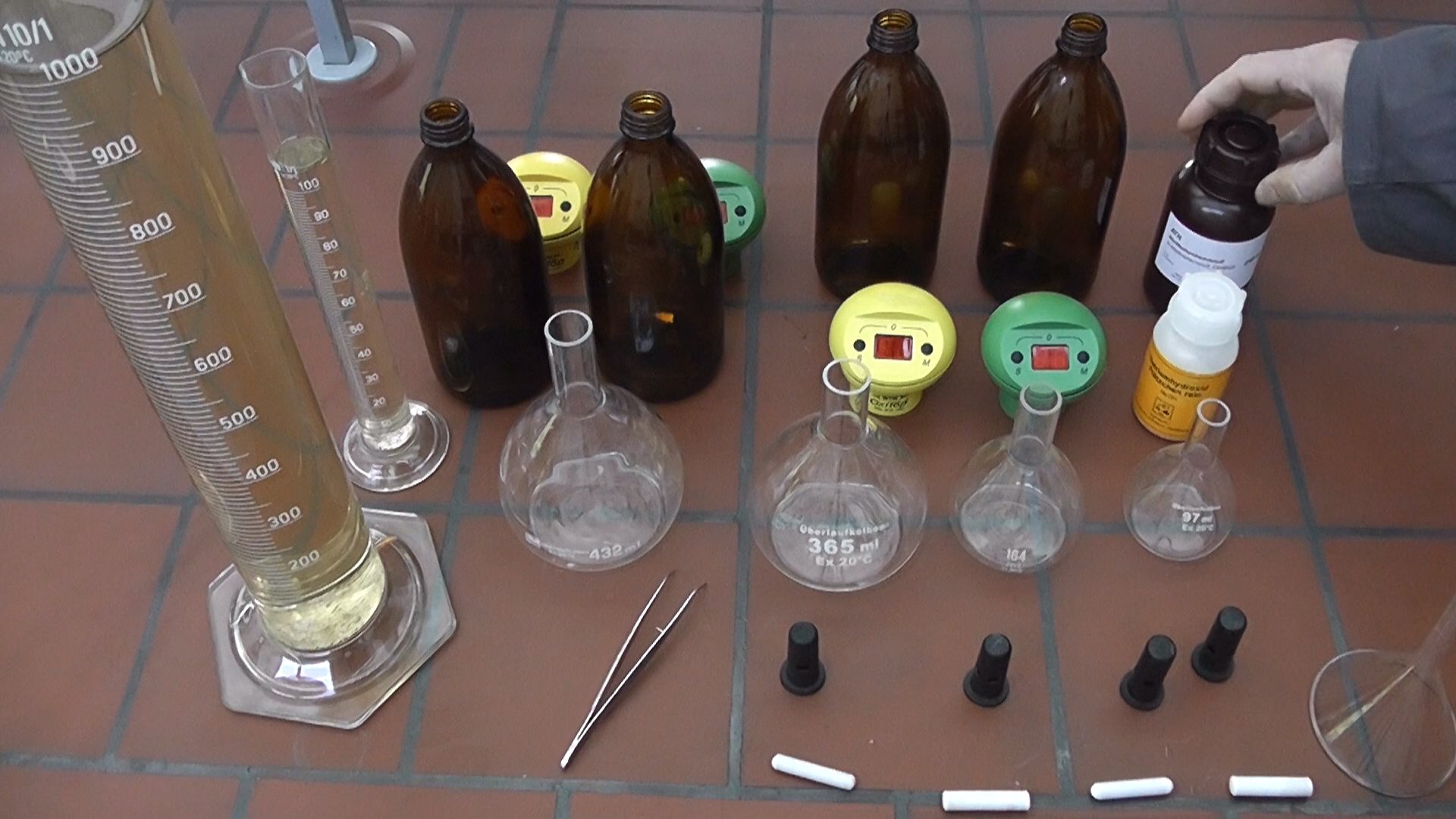
In laboratory tests, the contamination of wastewater is analyzed. One such test involves determining the organic load, for example, as the biochemical oxygen demand after 5 days at 20°C (BOD5).
Laboratory Program in Teaching, Research, and Service
Laboratory analyses include testing of water samples (wastewater, drinking water, surface water) as well as solids and residues (sludge, waste, soil).
The following parameters can be determined:
- Biochemical Oxygen Demand over 5 days (BOD5)
- Chemical Oxygen Demand (COD) via cuvette test; nitrogen, phosphorus, etc., via cuvette test.
- Oxidizability (potassium permanganate consumption)
- Oxygen content
- pH value, acid capacity
- Conductivity
- Turbidity and color
- Ca hardness, total hardness
- Iron content, copper content (cuvette test)
- Free chlorine and total chlorine content
- Sulfate content, magnesium content
- Sludge volume, sludge dry matter, sludge index
- Water content, loss on ignition
- Settleable solids
- Particle size distribution
- ....
The following are suitable for demonstration and educational purposes:
- analog and digital microscopes are suitable for observing activated sludge (transmitted light) and analyzing waste (reflected light). (Video: Activated sludge floc)
- Hydrocyclone for material separation
- Metal detector (scrap metal)
- Soil displacement hammer (soil rocket)
- Sewer inspection mirror and telescopic camera
- Models of structures / components
- ...