Alumni Academy 2026
From International, Innovative Transfer Processes to Creative, Diverse Transfer Strategies
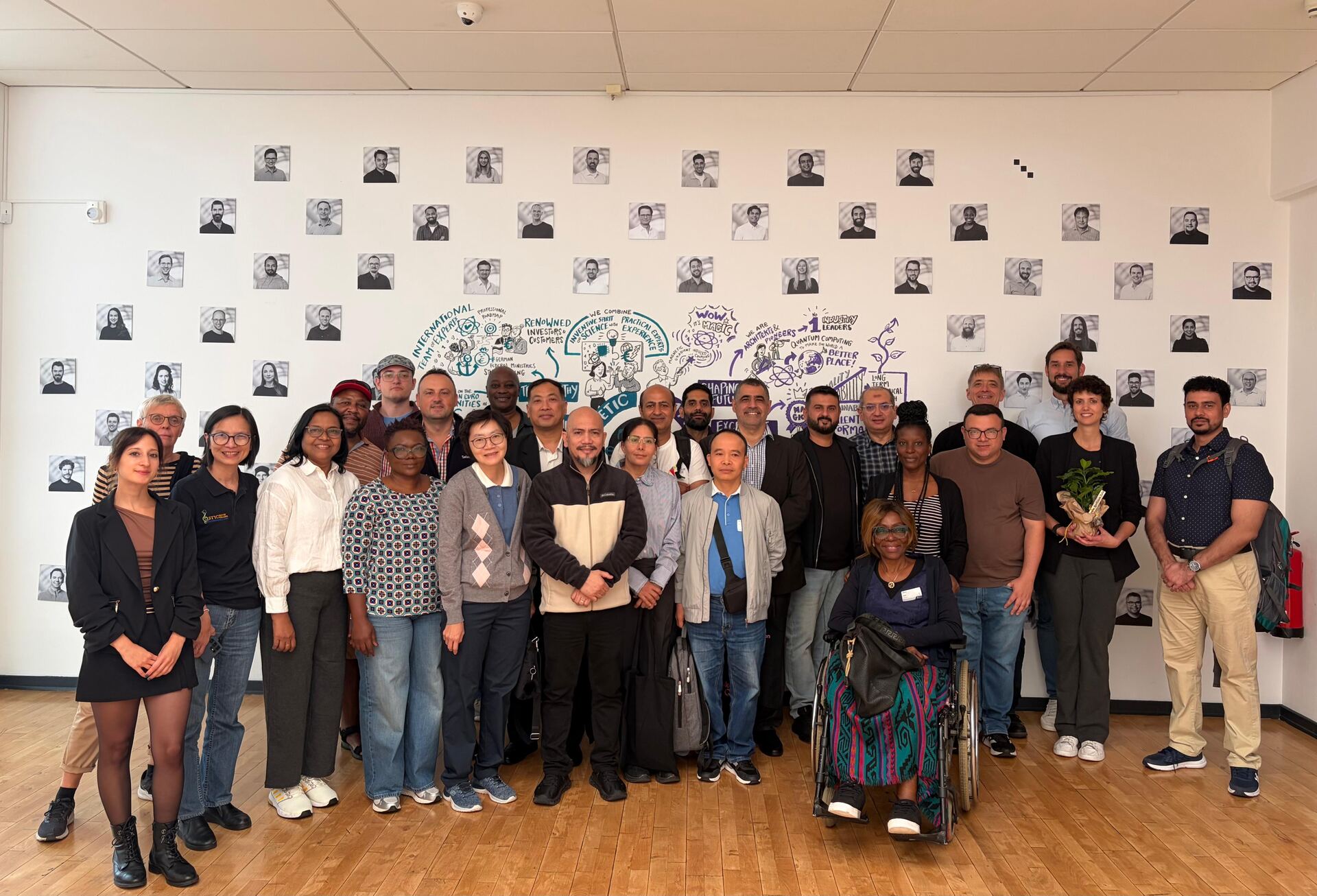
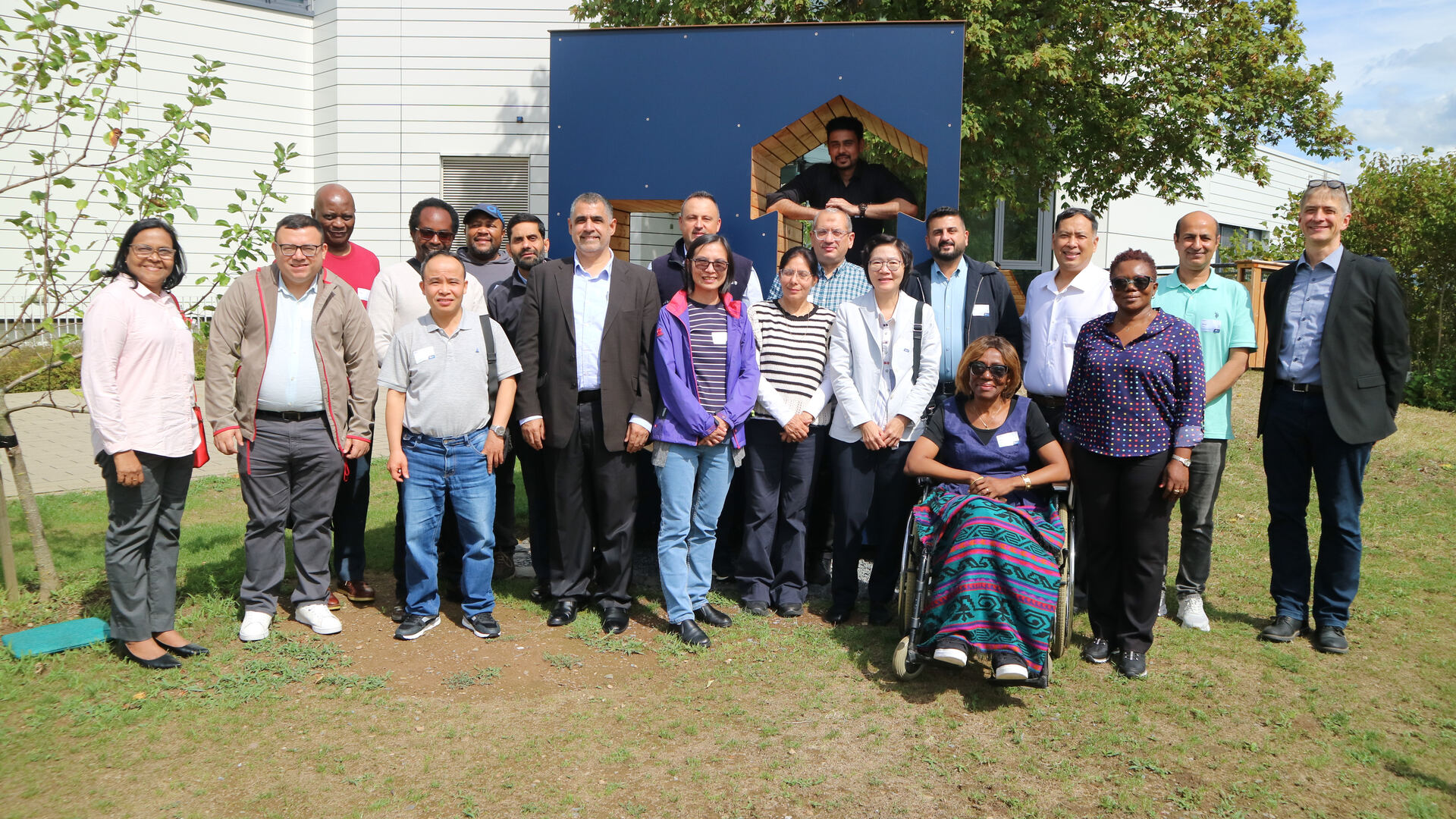
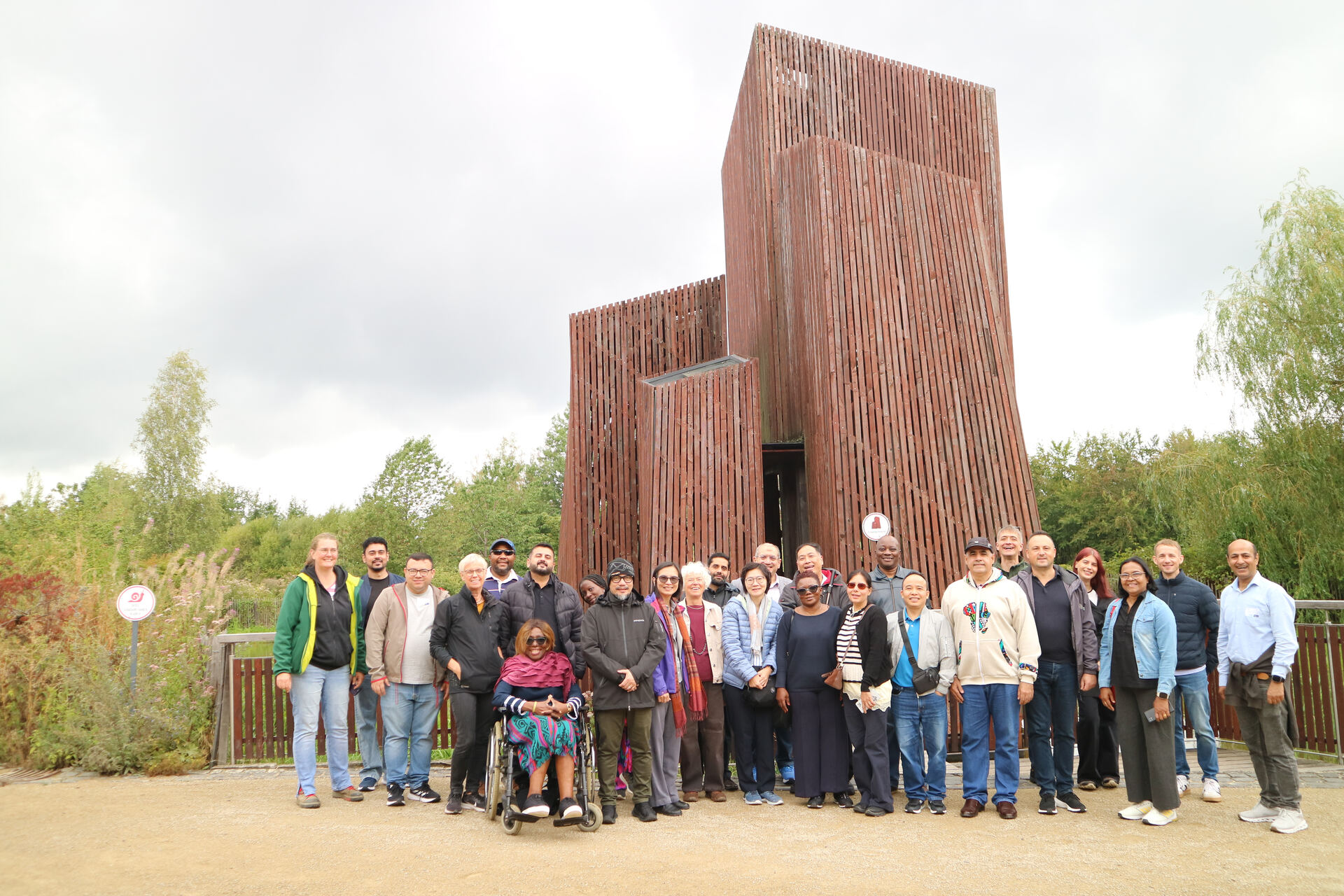
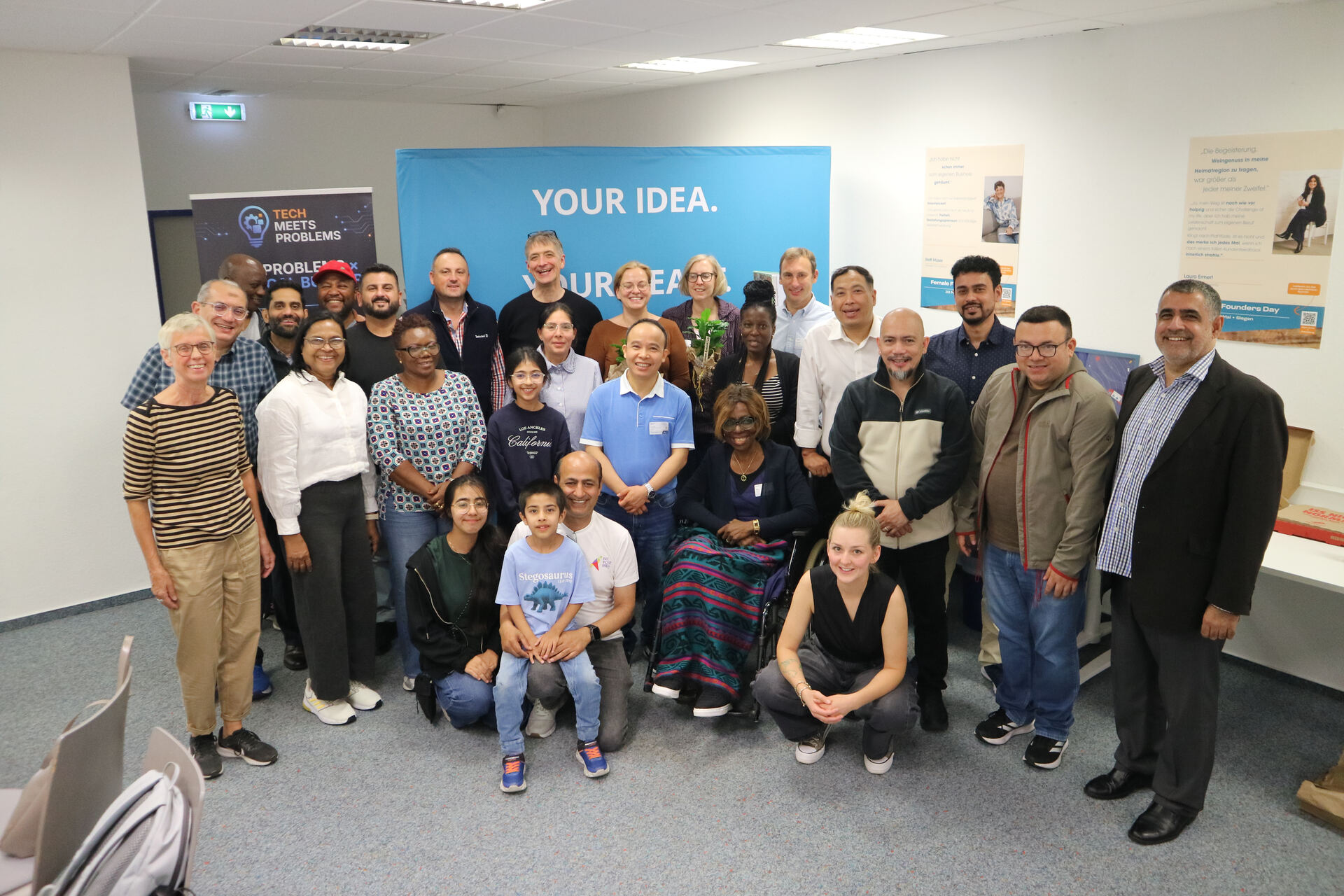
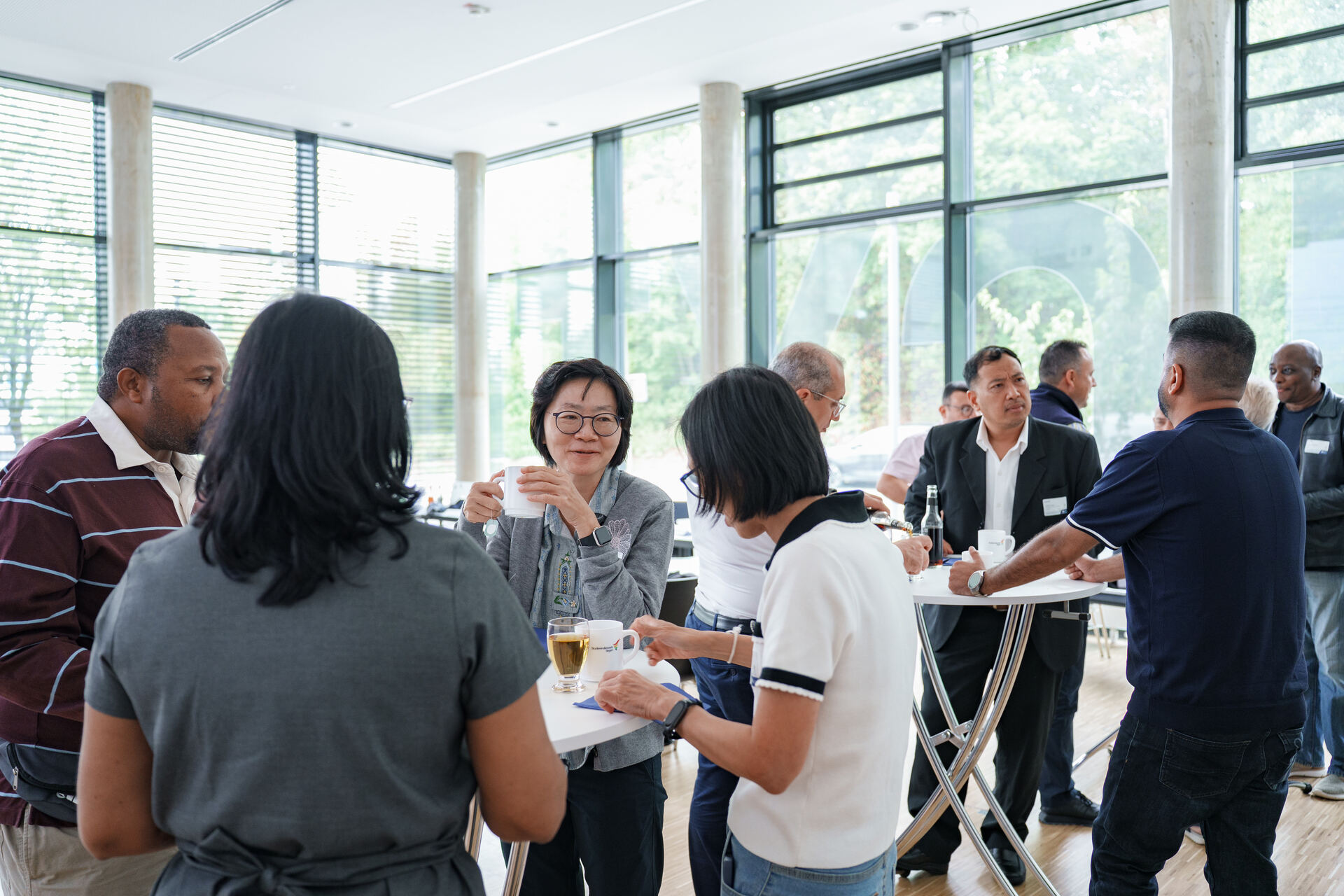
This year’s Alumni Academy, focusing on the theme “Shaping Knowledge Transfer Processes, Developing Innovative Initiatives,” took place from August 19 to 25. Nineteen international alumni who had studied or conducted research at the University of Siegen participated in this project week to exchange ideas on the impact and success of knowledge transfer processes. In addition to presentations on knowledge transfer projects from their respective fields, researchers from the university and stakeholders from the region also contributed insights into projects across the five knowledge transfer areas—“Higher Education and Business,” “Research and Society,” “Old and Young,” “Regional and International,” and “People and Cultures,” contributing to an international and intercultural discourse.
Since 2013, the Alumni Academy has been held regularly in what has since become a rotating hybrid format. Under the joint leadership of Dr. Susanne Padberg of the Alumni Office and Prof. Dr.-Ing. Mathias Wirths of the Department of Architecture at the University of Siegen, the tradition of the Alumni Academy has thus been continued for over a decade.
Nearly every continent was represented at this year’s Alumni Academy. International participants traveled from Asia, Africa, North and South America, and Eastern Europe to share their experiences with knowledge transfer processes and gain insights into innovative transfer projects.
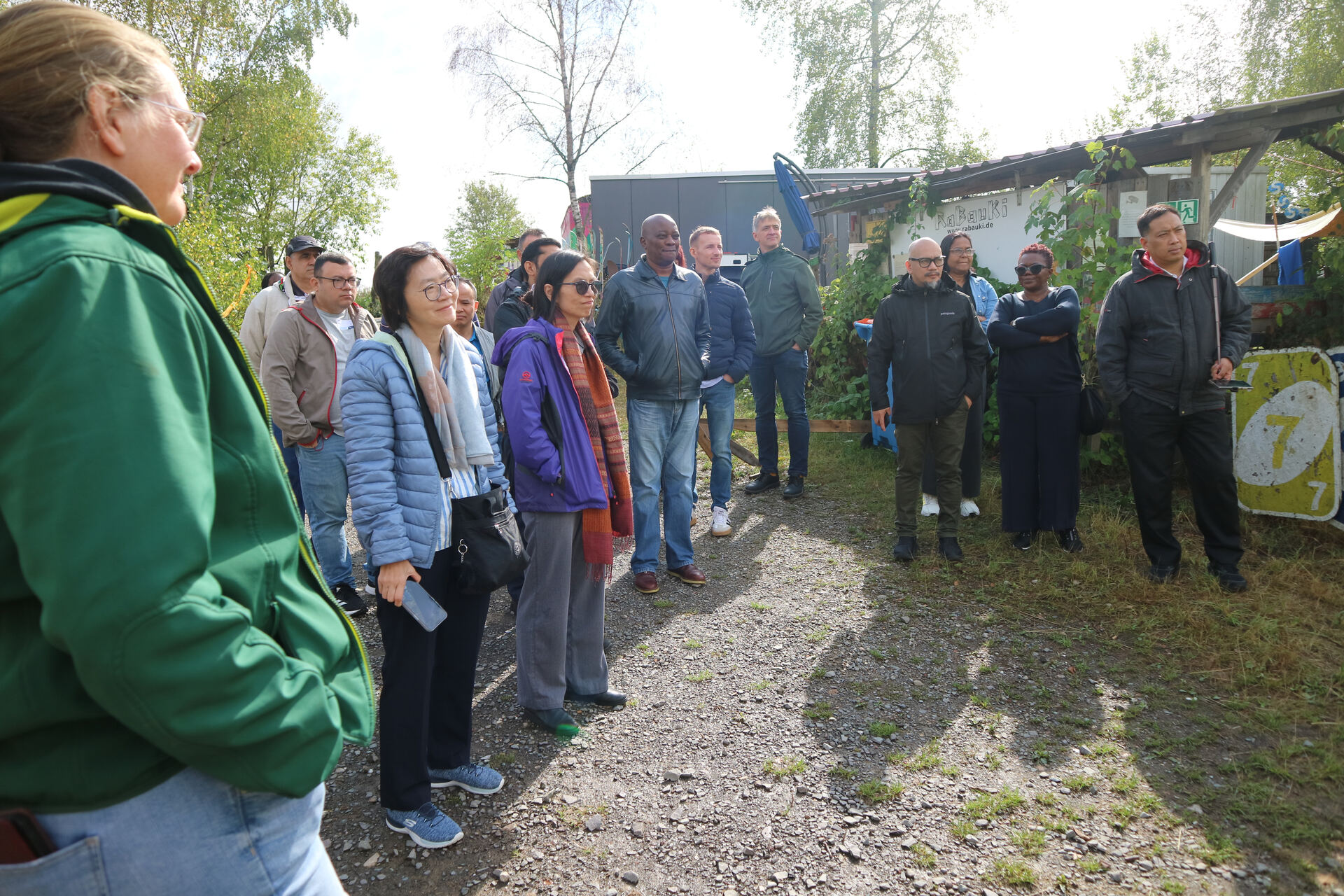
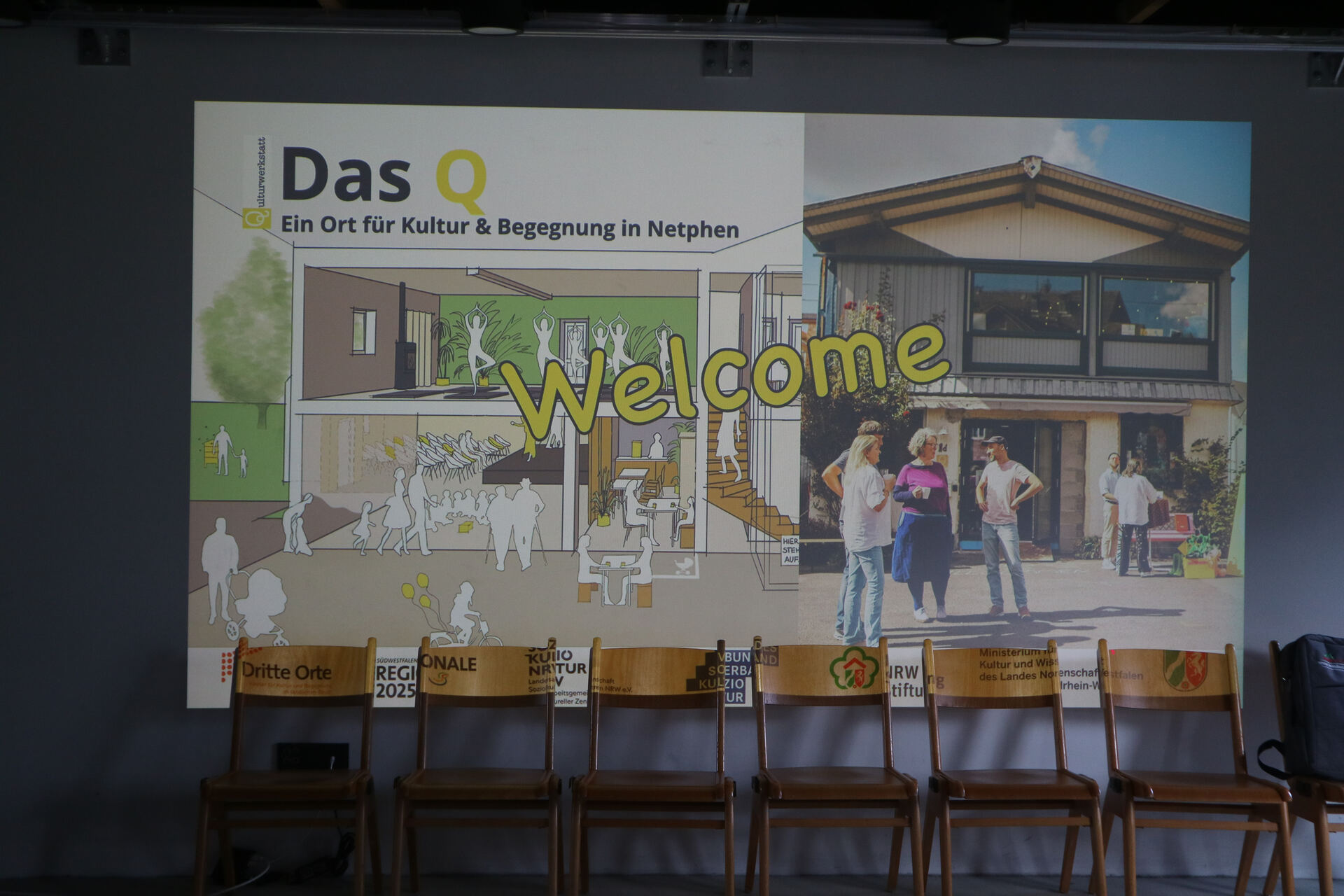
The seven-day project week featured presentations, insights, workshops, and group activities at various locations on campus and throughout the region, all aligned with the event’s thematic focus. Whether at the Qulturwerkstatt in Netphen, the Klimawelten in Hilchenbach, the SCHÖN und GUT experiential learning center on Fischbacherberg, or the university’s Entrepreneurship Center, the Alumni Academy’s program is more diverse than ever before.
The Alumni Academy kicked off with the first day of the program at INCYTE, the university’s new research building.
High-Tech: How Technology Inspires
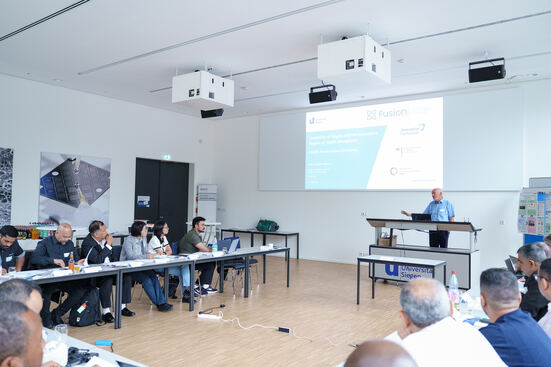
Prof. Dr.-Ing. Peter Haring Bolívar, head of a research group at INCYTE, and Prof. Dr. Rainer Wieching, director of the university’s FUSION transfer project, opened the project week with their presentations, focusing on the transfer area “Research and Society.”
In line with this theme, Prof. Wieching explained how neurorobotics can be beneficial in an aging society. To this end, he posed an important question: How can we support not only our own region but also rural regions, such as those in Africa? The answer is through neurorobotics. The goal is to use this technology to support older adults in their daily lives. The FUSION project, among others, is active in this field in both research and application.
Following Prof. Haring Bolivar’s presentation on research collaboration and innovation, participants had the opportunity to explore related applications during a tour of INCYTE, the university’s new research gem.
But it wasn’t just the university’s high-tech research center that fascinated the international alumni. They were also particularly impressed by eleQtron, a quantum computing startup spun off from the university that not only develops the hardware for quantum computers itself but also builds the quantum microchips. After an informative presentation, Head of Product Management and alumnus Christian Friedrich led the group through the company’s facilities, where MAGIC—in the truest sense of the word—is created: the patented Magic technology (magnetic gradient-induced coupling). For many, the highlight was the ion-trap quantum computer, located in a special, temperature-controlled area of the building that participants were only allowed to enter while wearing protective gear. The alumni were still talking about these unique experiences days later.
The Transfer Process via Microphone and Screen
As early as the second day, the atmosphere in the innovation lab at ZIMT (the University’s Center for Information and Media Technologies) was not only active but, above all, creative.
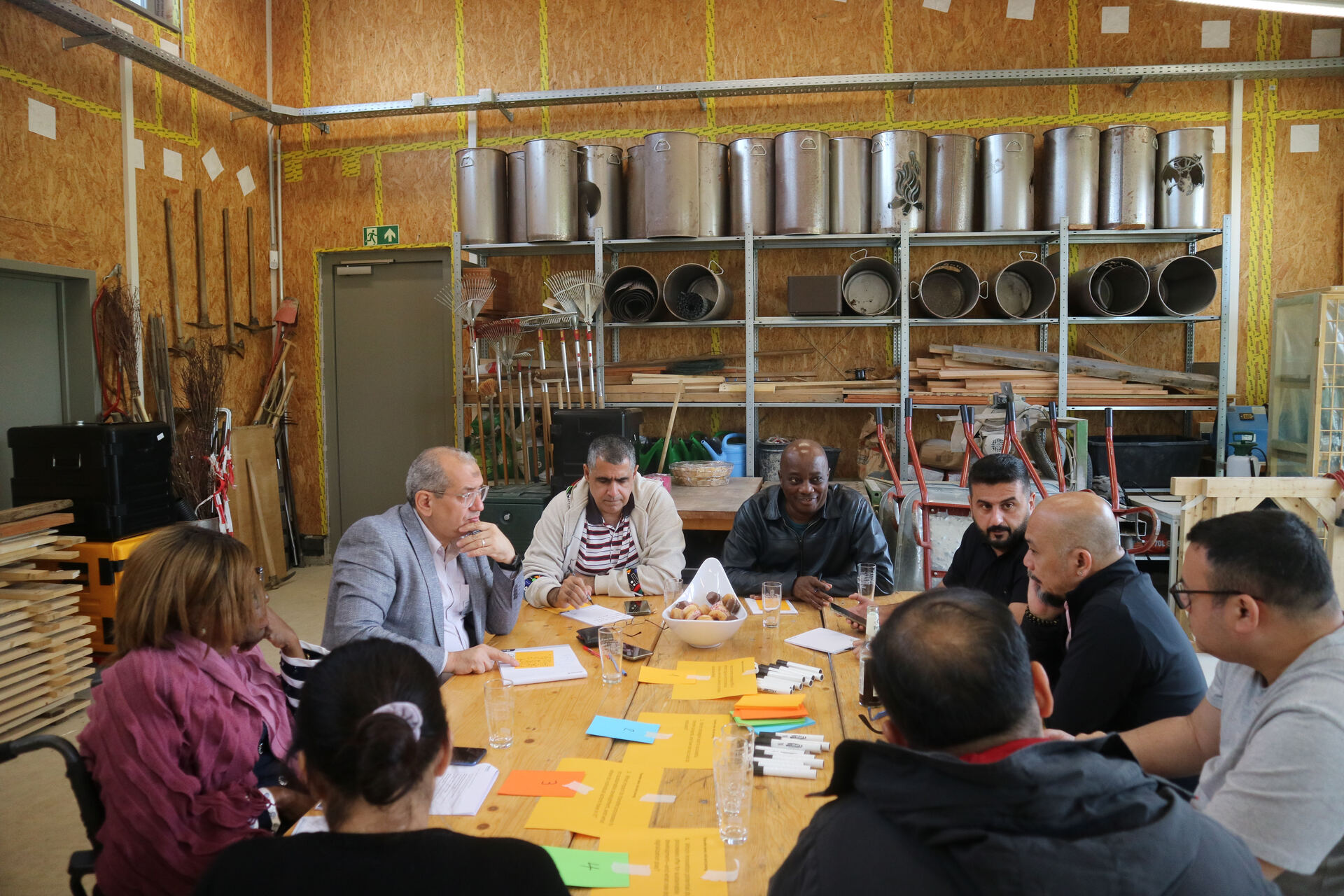
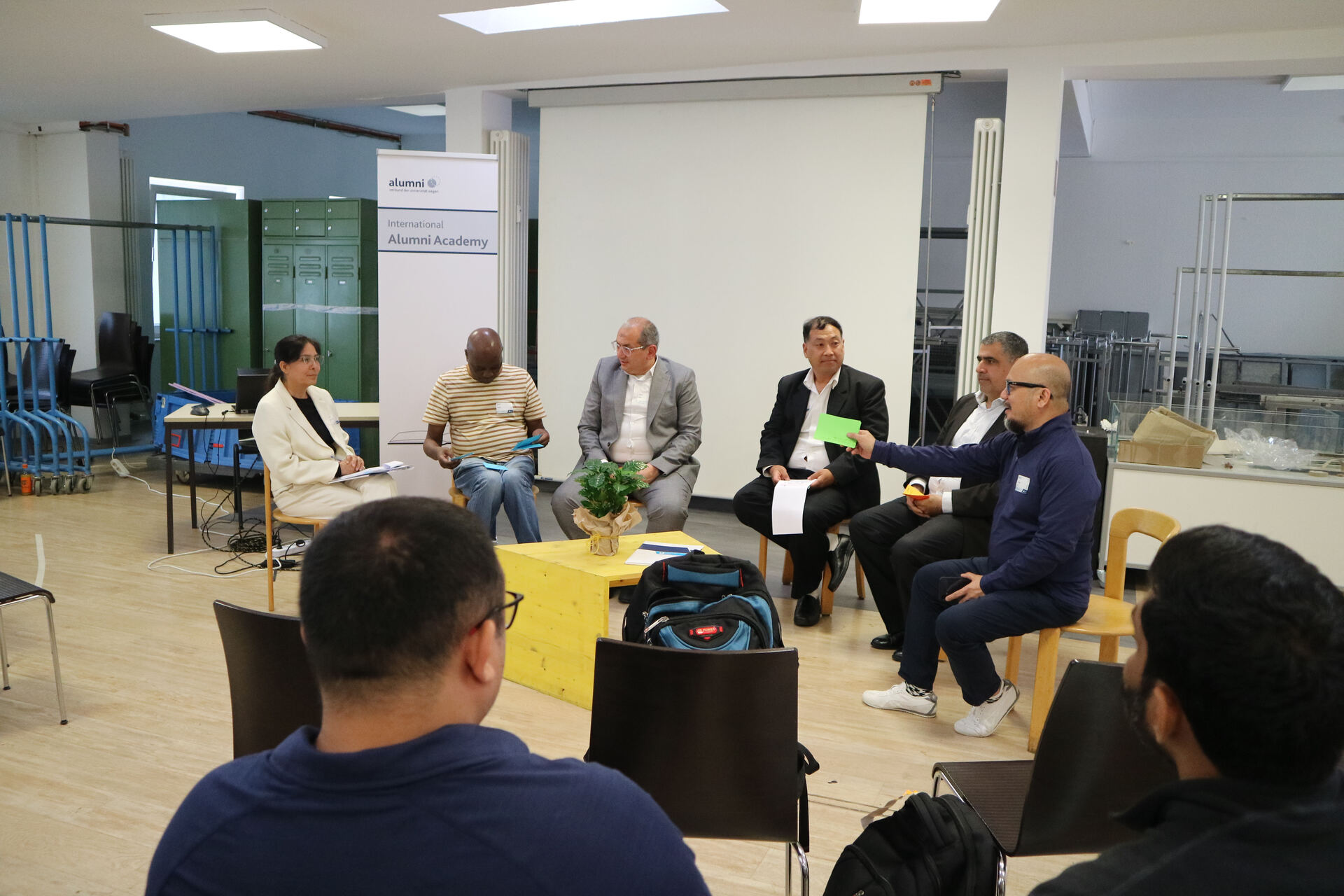
After a brief introduction, ZIMT staff members Steffen Weyand, Marc Brian Kohler, Joshua Burgmann, and Sören Bloscheck assisted the alumni in developing special formats. Following the presentations by alumni from the “University and Business” knowledge transfer sector, the exchange of ideas regarding regional and international perspectives was to be documented in audio and video formats at the “Ideenwerkstatt.” In small groups, the international researchers discussed questions related to knowledge transfer processes through podcast recordings and short videos. This interactive activity brought out the rhetorical and media talents of many participants. On the final day of the Alumni Academy, the videos and podcasts—along with the results from the other workshops—were presented to the plenary session at the FUSION-FORUM.
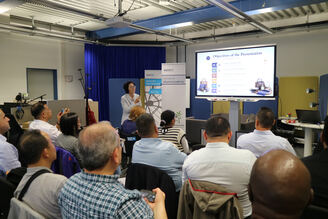
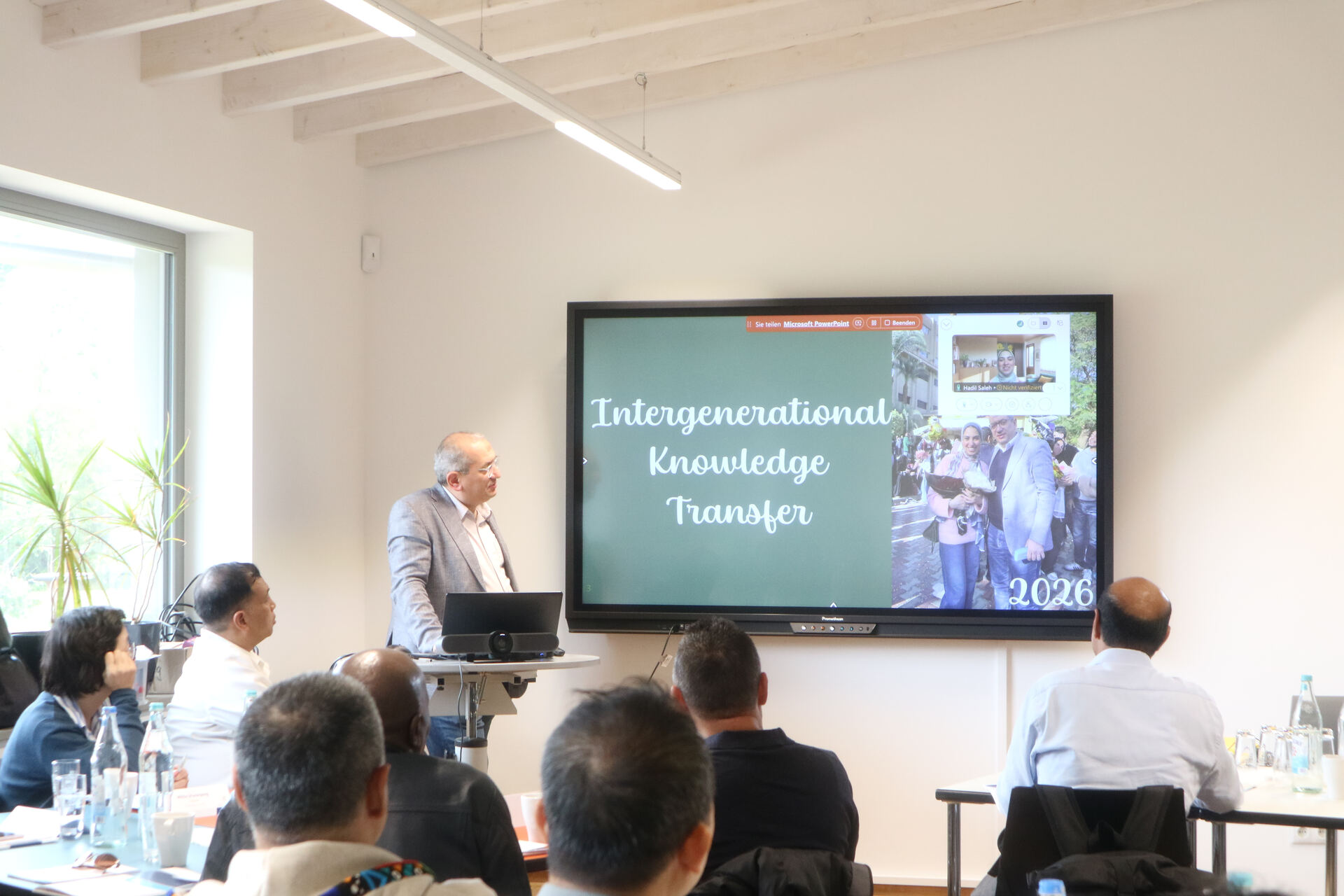
Throughout the project week, participants presented their contributions on the various transfer areas. The focus was consistently on successful transfer projects and their impacts. In the international discourse, the transfer projects presented did more than just facilitate the exchange of knowledge. They also demonstrated the importance of, for example, intergenerational knowledge transfer—a point that became particularly clear in the “Old and Young” transfer area, even from an international and intercultural perspective. Younger generations can introduce the older generation to new technologies, while the older generation shares its knowledge and experiences with the younger generation. This can also help prevent age discrimination. To preserve cultures, another example from African countries highlighted the special importance of the diversity of local languages. It is important to maintain this diversity by passing it down through the generations. This is only possible through speech and, consequently, the transfer of knowledge from the older to the younger generation. After all, language—and thus culture—cannot sustain itself.
Experiencing Transfer Processes Together
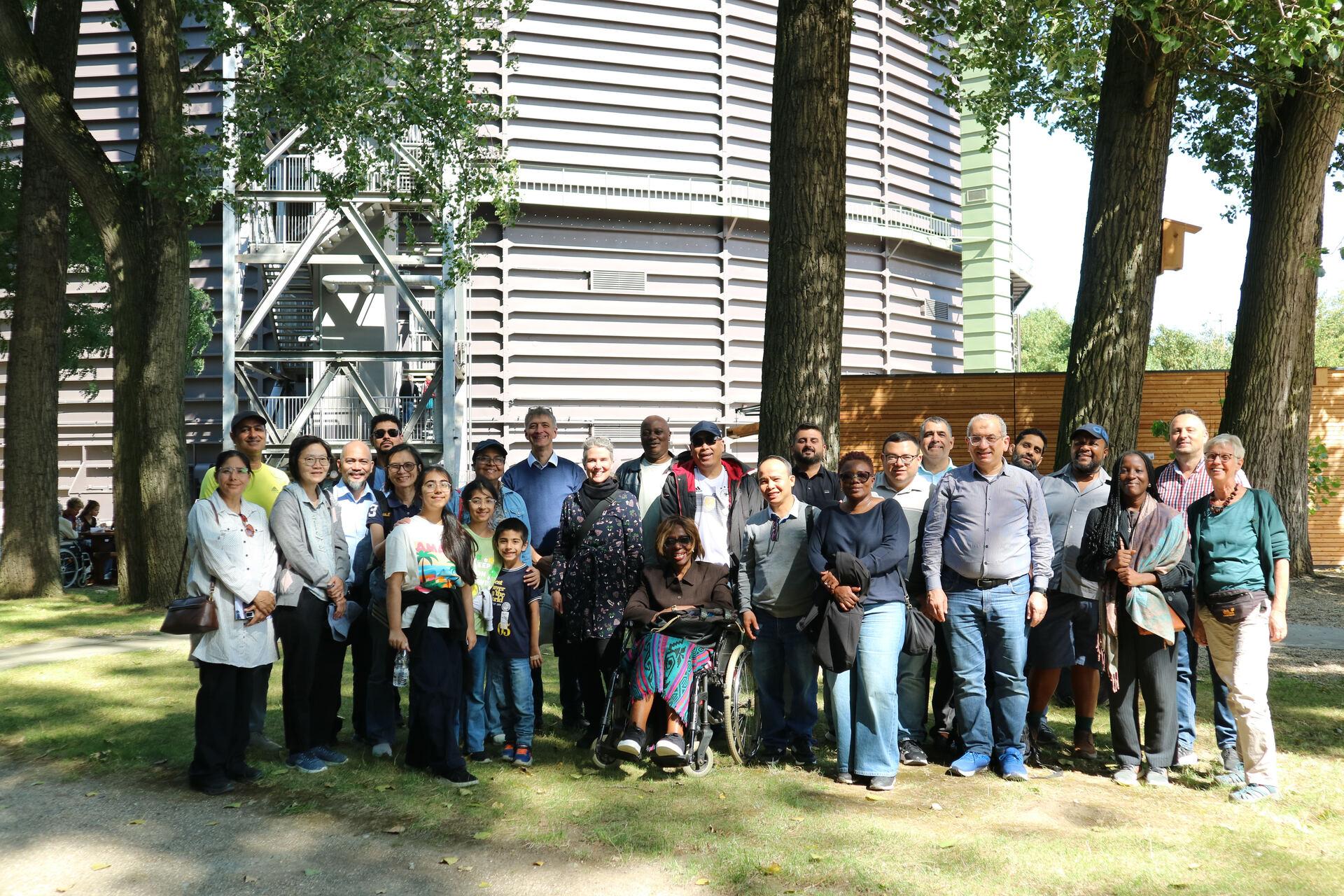
On the penultimate day, in keeping with the theme of “transfer processes,” the group went on an excursion to the Gasometer in Oberhausen, which hosts the “Mythos Wald” exhibition, and to Landschaftspark Nord in Duisburg. There, the various facets of transfer processes became not only visible but also tangible for the alumni. The guided tour of the former steelworks in Duisburg offered a fitting finale: climbing Blast Furnace 5 via a total of 252 iron stairs. From the 70-meter-high observation deck, the alumni were able to catch a glimpse of the Ruhr region.
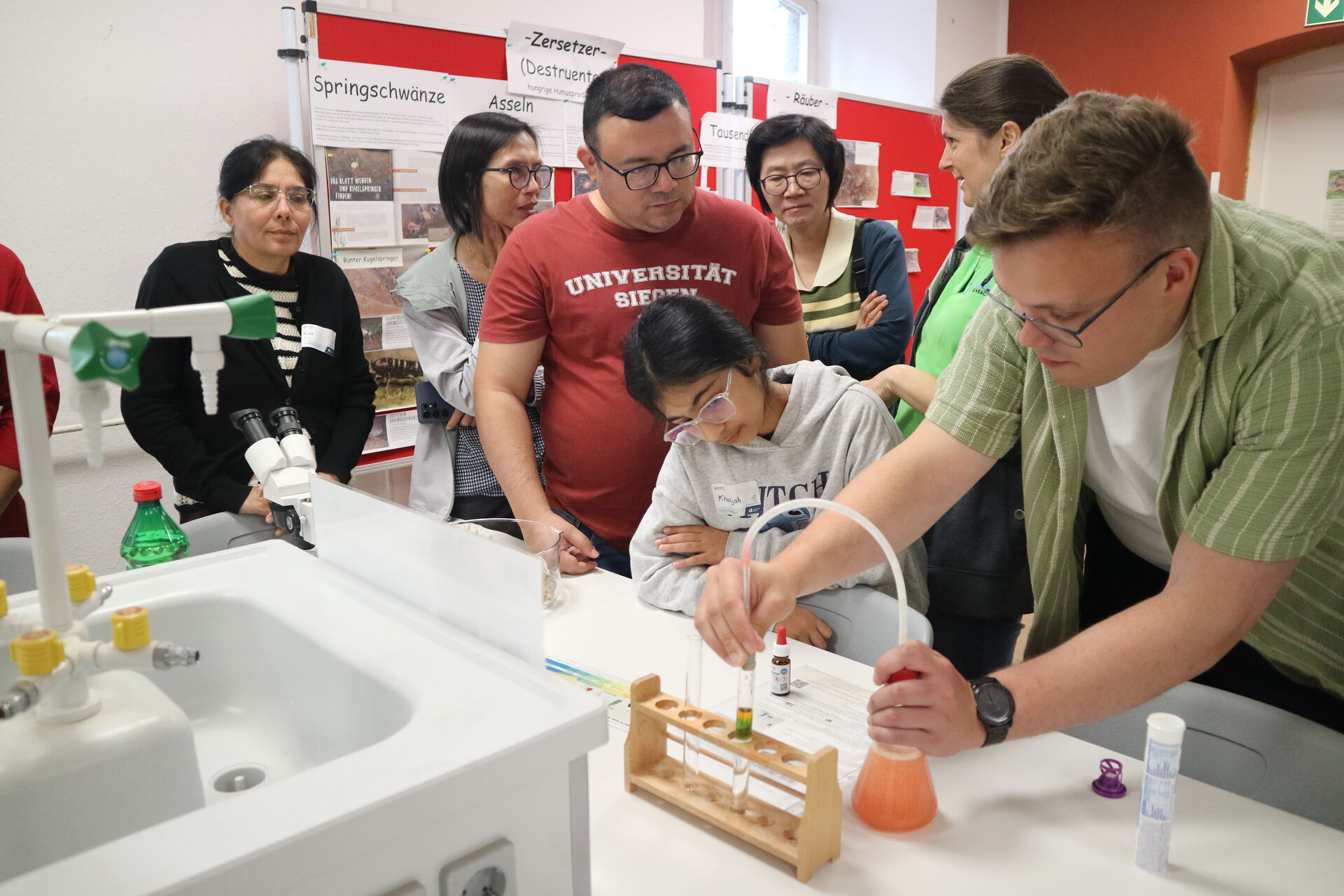
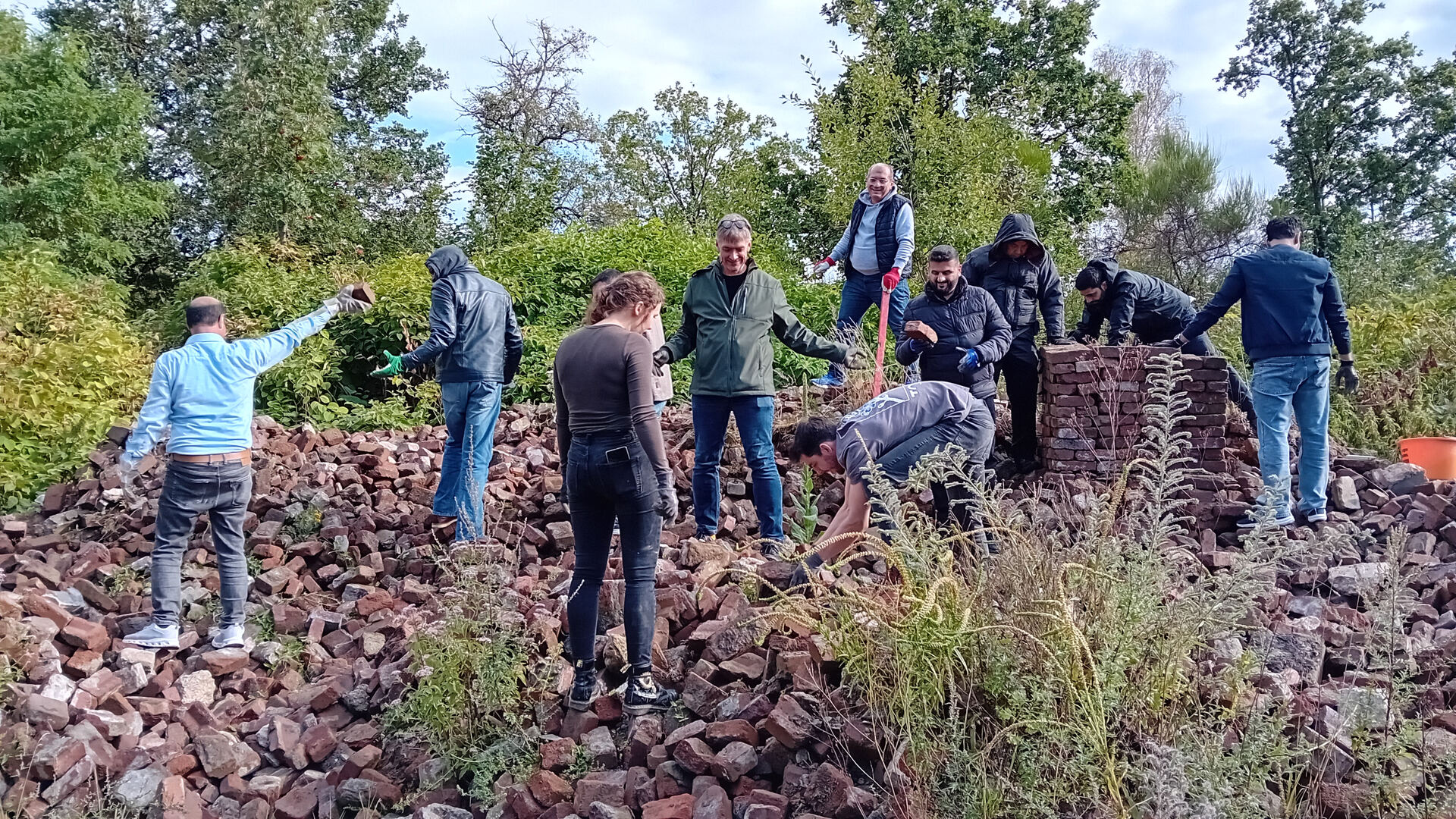
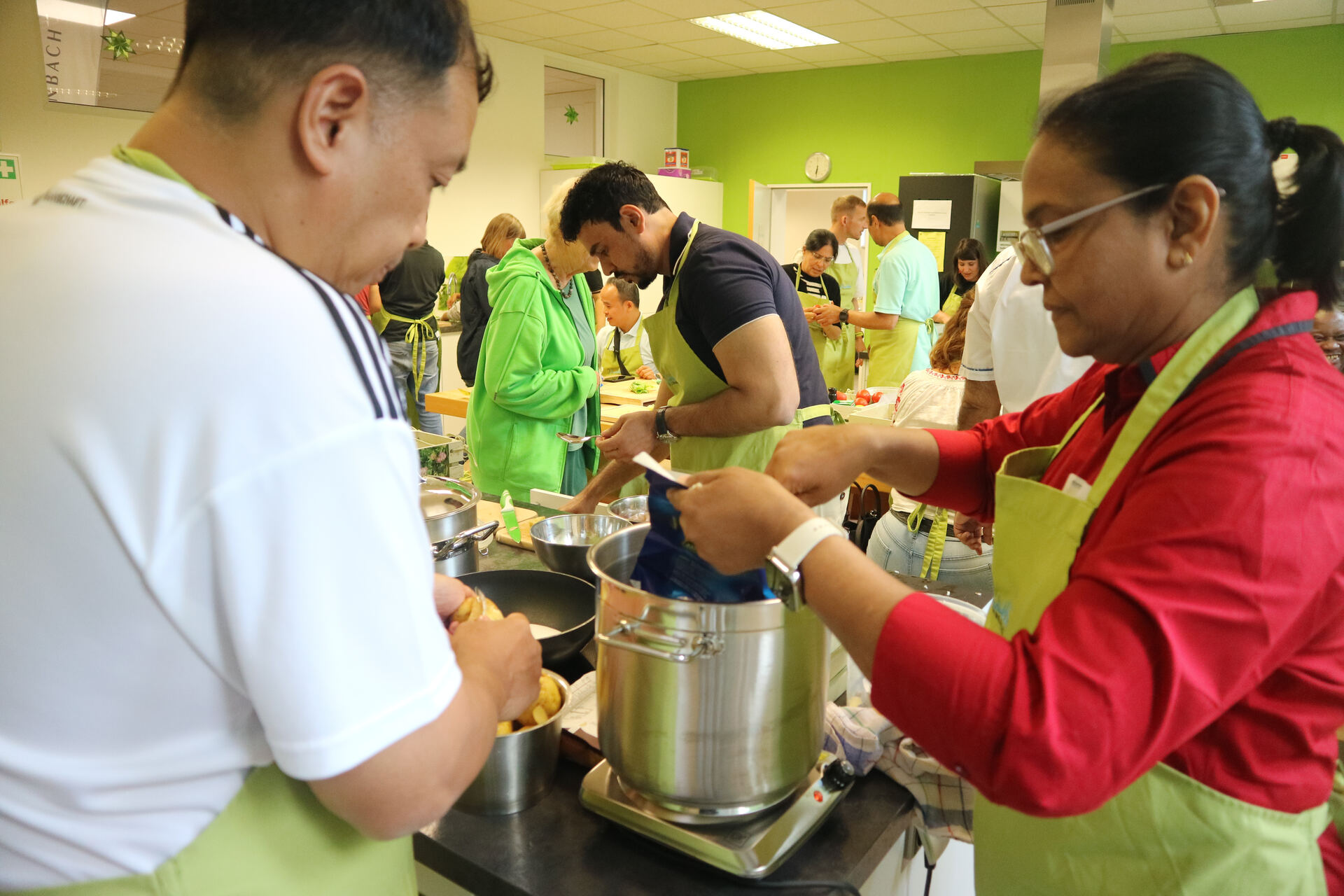
What made this Alumni Academy a special shared experience for the participants was its versatility, which allowed for a great deal of creative freedom. Activities ranged from a collaborative art performance titled “Leaving Traces” at the SCHÖN und GUT experiential learning center, to a cooking event at Klimawelten—where groups worked together to prepare traditional dishes from various countries—to an immersive visit to the Qulturwerkstatt and an excursion to the Ruhr region.
Alumni Family for Life
The Alumni Academy is more than just a project week. It fosters dialogue between regional and international perspectives. Not only does it facilitate the exchange of knowledge and enable new collaborative projects to emerge even outside the Alumni Academy, but it also sustainably builds an international community that has grown strong and feels almost like family. Over the years, the concept of the “Alumni Family” has taken root within the University of Siegen’s Alumni Academy community. The relationships among its members are like those between family members, a dynamic that inspires more than just admiration in anyone on the outside. It is a truly unique bond.
The project week was funded by the DAAD with grants from the Federal Ministry for Economic Cooperation and Development (BMZ).
Duygu Cicek, Alumni Editorial Team