20 years of ZIMT: a mainstay and active contributor

20 years of ZIMT: a mainstay and active contributor
The Centre for Information and Media Technology (ZIMT) is a special institution without which everyday digital life at the University of Siegen would be almost unimaginable today: Created through the merger of the University Computer Centre and the Media Centre and shaped by a culture in which media, technology and commitment work together, ZIMT has become an indispensable partner of the university in matters of IT and digitalization. The center celebrated its 20th anniversary with a ceremony in the Audimax. Members of the university from science, technology and administration took the opportunity to look back together on two decades of digital transformation and infrastructure work.
In their welcoming addresses, Rector Prof. Dr. Stefanie Reese and Chancellor Iris Litty paid tribute to ZIMT's central role for the University of Siegen. "ZIMT is a mainstay here at our university and at the same time an active co-designer. 20 years of ZIMT stand for competence, reliability and vision. I would like to sincerely thank all employees for their commitment," emphasized Rector Reese. Chancellor Litty emphasized: "ZIMT provides proactive advice and offers strategic solutions for a wide range of challenges - from digital performance to IT security. Thanks to ZIMT, we as a university are excellently positioned for the future in terms of IT and media technology."
Another highlight of the ceremony was the presentation by Prof. Dr. Andreas Kolb, Prorectors for Research, Infrastructure and Networking. He gave an overview of central research fields and projects at the University of Siegen and made it clear that modern and, in particular, data-intensive research is no longer conceivable today without a high-performance IT and media infrastructure.
From operating unit to strategic service facility
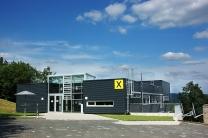
In their joint speech, ZIMT directors Jens Aßmann and Daniel Harlacher looked back on the development of ZIMT - from its beginnings to the present day. ZIMT demonstrated strategic foresight early on, for example with the introduction of the "Moodle" learning platform in the mid-2000s, which still forms the foundation of digital teaching today. The integration of administrative IT in 2016 also marked an important milestone, with ZIMT assuming central responsibility for the digital infrastructure of the entire university.
Aßmann and Harlacher also recalled the particular challenges posed by the coronavirus pandemic. The pandemic has shown how resilient and efficient the established structures are. Thanks to the extraordinary commitment of the entire team, it was possible to switch teaching and all communication to digital channels within a very short space of time.
Digital solutions for studies, research and transfer
Today, ZIMT's role goes far beyond the provision of technical infrastructure. The focus is on integrated solutions for studies, research, administration and transfer. These include digital examination formats, the modernization of lecture halls and seminar rooms as well as advisory and training services for researchers and teaching staff. ZIMT supports complex projects - for example in the field of artificial intelligence - and helps to make high technology accessible for science, business and the region. "Like the university, ZIMT is also firmly anchored in the region: as an employer, training partner and cooperation partner for schools, local authorities and SMEs," explained Aßmann and Harlacher.
Another central focus of ZIMT's work is IT security. In the face of growing threats from cyber attacks, new organizational and technical structures have been established in recent years, including an Executive Departments for operational IT security and modern authentication procedures. At the same time, Aßmann and Harlacher emphasized the importance of employees: "Technology is only as good as the people who design and operate it. The cohesion of the team and the commitment of all employees are the real strength of ZIMT."
For the future, ZIMT is focusing on networking, cooperation with other universities and expanding its own expertise. The aim is not only to accompany technological developments, but to actively help shape them and strengthen the university's digital sovereignty.