Siegen's AI flagship project moves into the next phase

Through the joint development of innovative image sensors and corresponding AI software, the “Learning to Sense” research group at the University of Siegen is conducting pioneering scientific work—with great success. The German Research Foundation (DFG) is funding the project for another four years. During the new funding period, eight research groups will collaborate to develop sensor systems that can dynamically adapt to different situations with the help of AI, thereby delivering even better results. The research group’s spokesperson is Prof. Dr. Michael Möller, professor of computer vision at the University of Siegen.

“The renewal of the research group is an outstanding success and strengthens our university’s position as a prominent center for fundamental AI research in North Rhine-Westphalia and throughout Germany. I extend my warmest congratulations to Prof. Möller and the entire team and thank everyone involved for their outstanding work and dedication,” says University Rector Prof. Dr. Stefanie Reese.
“The University of Siegen plays a truly pioneering role in the joint development of artificial intelligence and sensor technology. On the one hand, this is based on our long-standing expertise in sensor technology, anchored in the Center for Sensor Systems (ZESS). On the other hand, it is our continuously expanding research focus in the field of AI and machine learning. The convergence of these two areas is a key differentiator that we can now further expand and strengthen,” says Prof. Dr. Andreas Kolb, the university’s Prorector for Research and himself a member of the research group.
This research topic can be illustrated using the example of a camera: A conventional image sensor captures the surroundings using fixed technical settings. Artificial intelligence then analyzes the images and recognizes, for example, people or objects. “Learning to Sense” takes this process a step further: the sensor and AI are to be developed together from the very beginning. “Instead of optimizing the sensor independently of its later application, the entire system learns what information is actually needed for the respective task. Put simply: Not only should the AI learn what it needs to recognize in an image—the camera should also learn how best to ‘look’ at it for that purpose,” explains research group spokesperson Prof. Möller.
During the first funding period, the research group was already able to demonstrate this principle in various applications. In doing so, sensor characteristics were optimized in conjunction with the AI system—for example, the arrangement of a sensor’s pixels for object recognition. In the second funding period, which has now been approved, the team aims to take it a step further: the sensor systems are to learn to adapt dynamically to different situations while in use.
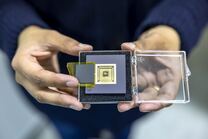
“The conditions under which sensors are used can change constantly: An object may move, the lighting may change, or a scene may change entirely. We want to develop systems in which the sensor, in conjunction with AI, independently adjusts its settings to achieve the most reliable results possible,” explains Prof. Möller. In this process, the AI no longer merely evaluates sensor data but actively influences which data the camera or sensor records in the first place.
The research group aims to test and validate this approach in various fields: in the field of terahertz imaging—using this technology, for example, defects in workpieces that are hidden beneath the surface can be made visible by measuring light frequencies. Another field is 3-D microscopy, which is relevant, for example, in the detection of tumor cells in cancer research. A third field is the further development of CMOS sensors for visible light. A new addition in the second funding phase is wearable sensor technology—for example, in smartwatches that use sensors to collect physiological data.
The "Learning to Sense" Research Group
Working on the project alongside Prof. Dr. Michael Möller and Prof. Dr. Andreas Kolb are Prof. Dr. Ivo Ihrke, Prof. Dr. Bhaskar Choubey, Prof. Dr. Peter Haring Bolívar (all from the University of Siegen), and Prof. Dr. Margret Keuper (University of Mannheim). Joining the group in the second funding phase are Jun.-Prof. Dr. Jovita Lukasik and Prof. Dr. Kristof Van Laerhoven (both from the University of Siegen). Prof. Dr. Volker Blanz (University of Siegen) is an affiliated member of the group. All Siegen-based professors in the research group are affiliated with the Center for Sensor Systems (ZESS) and the School of Science and Technology at the University of Siegen.
You can find more information about the research group here.