
Georg Bollenbeck Scholarship
To promote and further develop international cooperation and research, the School sponsors a scholarship program named after one of the university’s most distinguished scholars: Georg Bollenbeck (1947–2010).
Professor Bollenbeck joined the University of Siegen (then known as the University-Gesamthochschule Siegen) in 1982 as a research assistant, became a lecturer in modern German literature in 1984, and was appointed to a tenured professorship in German literature in 1988. He was an influential and prolific scholar whose research interests encompassed cultural criticism and theory. Among his most important publications are:
- Education and Culture: The Splendor and Misery of a German Interpretive Framework (1994),
- Tradition – Avant-Garde – Reaction: German Controversies over Cultural Modernity (1880–1945) (1999), and
- A History of Cultural Criticism: From Rousseau to Günther Anders (2007).
As a visiting professor at Emory University (Atlanta, USA, 1989–90), the Université d’Aix-Marseille (France, 2002), and Chalongkorn University (Bangkok, Thailand, 2004), Georg Bollenbeck embodied an interest in international mobility that now guides the internationalization efforts of the School of Cultural Studies and Social Media.
The Bollenbeck Fellowship was established in 2015 and has brought several international female scholars to Siegen. The fellowship is awarded by invitation and lasts from 1 to 3 months. Members of the Faculty of Cultural Studies and Social Media may nominate outstanding international female scholars at the postdoctoral level or higher. Applications are first evaluated by the school’s research committee and, if approved, forwarded to the school council for confirmation.
Past Bollenbeck Scholarship Recipients
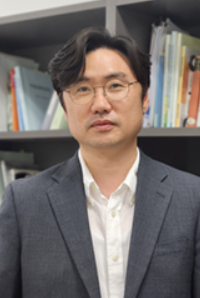
Hyeongjoo Kim
Chung-Ang University, Seoul, Korea
Professor Dr. Hyeongjoo Kim was born in Seoul, South Korea, in 1982. He earned his master’s degree in philosophy from Chung-Ang University in Seoul in 2009. In 2016, he earned his Ph.D. from the University of Siegen with a dissertation on a topic in philosophy. He subsequently taught Kantian philosophy at Chung-Ang University and Seoul National University of Education. In 2018, he was appointed as a tenure-track professor at the Unit for Artificial Intelligence and the Humanities at Chung-Ang University and was promoted to associate professor in 2021.
His research interests fall into two main areas: German Idealism, including Kantian philosophy, and the philosophy of artificial intelligence. In this context, he has authored 30 scholarly articles and published or edited five books. His most significant works include the following:
- Kant and Artificial Intelligence (De Gruyter, 2022)
- Inexplicable, Explainable AI (Synthetica Philosophica, 2022)
- Kant’s Critical Psychology as Enlightenment (Journal of Philosophical Research, 2020)
- Foundations of Artificial Intelligence in the Humanities (Jahr – European Journal of Bioethics, 2020)
- What Does “I Think” Mean as an Empirical Proposition? (Kant-Studien, 2019)
He was invited to deliver a keynote lecture at the 9th Siegen Kant Conference in 2021. He also participated in the following research projects:
- “Self-Aware AI,” funded by the German Federal Ministry of Education and Research
- “Critique of Artificial Reason,” funded by the National Research Foundation of Korea
- “Humanities of Artificial Intelligence,” funded by the National Research Foundation of Korea Translation into Korean: “Kant’s Correspondence,” funded by the National Research Foundation of Korea
- "Networking General Studies – Opening Up Perspectives," funded by the MIWF – NRW in Germany
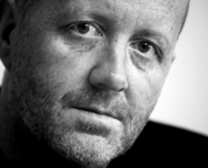
Michael Symmons Roberts
Manchester Metropolitan University
Michael Symmons Roberts was born in 1963 in Preston, Lancashire. After graduating from the University of Oxford, where he studied philosophy and theology, he joined the BBC. His last position at the broadcaster was as Executive Producer and Head of Development for BBC Religion & Ethics, before he left the BBC to devote more time to writing.
Michael Symmons Roberts has published eight collections of poetry, two novels, and has co-authored two nonfiction books. He is a regular radio presenter for the BBC (Radio 3 and 4) and has created programs ranging from features (e.g., “A Fearful Symmetry” [2011]; “Northern Drift” [2022]) to radio plays (including “Utopia” [2016], “The Sleeper” [2017], “Paradise Lost” [2018], and “Danger 2023” [2023]). His ongoing collaboration with composer James MacMillan has resulted in two choral commissions for the BBC Proms (“The Birds of Rhiannon” [2001], “Quickening” [2009]), song cycles (including “Raising Sparks” [2002]), music theater works, and operas for the Royal Opera House (“Clemency” [2011]), Scottish Opera, Boston Lyric Opera, and Welsh National Opera (“The Sacrifice” [2007], “The Sleepers” [2011]).
Michael Symmons Roberts has been awarded several prizes, including the Forward Poetry Prize for Best Collection (2013; 2004), the Costa Poetry Prize (2013), the Jerwood Prize for Non-Fiction (2009, with Paul Farley), the Whitbread Poetry Award (2004), the Sandford St. Martin Premier Award (2002), and the Eric Gregory Award (1988). Five of his poetry collections have also been nominated for the T.S. Eliot Prize (Ransom, 2021; Mancunia, 2017; Drysalter, 2013; Corpus, 2004; Burning Babylon, 2001).
He is a trustee of the Royal Literary Fund, a fellow of the Royal Society of Literature, and has served on the judging panels for several poetry awards. He teaches poetry at Manchester Metropolitan University.
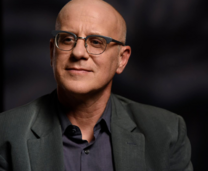
Thomas Hallock
University of South Florida, St. Petersburg, USA
Transcript of an interview between Marcel Hartwig (Department of English) and Georg-Bollenbeck Fellow Thomas Hallock
Marcel Hartwig: Hi, Tom Hallock. We’re very happy to have you here as a Bollenbeck Researcher. And perhaps to start off, you’re working essentially at the intersection of literary and cultural studies—could you briefly comment on how these two fields relate to each other in the U.S. and how you perceive their relationship in Germany so far?
Thomas Hallock: That’s a really interesting question that I personally think needs to be understood within the history of the discipline. Beginning in the first decades of the twentieth century, a field known as the English major emerged, and it was essentially equivalent to literature. From there, in the 1950s and 1960s, we split into literature and writing studies, and creative writing branched off into its own [field]. I think literary criticism and cultural studies—especially as shaped by the counterculture, social critique, and the growth of American studies—became a field in their own right. And so literary and cultural studies began to use the tools of literary criticism as a means to critique and imagine culture more broadly.
Marcel: Do you see a difference in the significance of literary and cultural studies in the U.S. and in Germany?
Thomas: That’s an impossible question for me to answer! I do know that when I talk to Professor Stein or Dr. Etter or you, we all seem to be on the same page—we all have similar answers and questions. I think we’re all after the same basic thing. I think the main difference for me is actually that you, as a German, are studying American culture, and I am an American studying American culture—and to me, that’s the most interesting difference, because you’re on the outside looking in and you reach completely different conclusions. I find that very interesting when collaborating with German scholars on America because all of a sudden I see things through a different cultural interpretive lens. Even if we’re reading the same authors and critical works, we have different backgrounds, and that leads to very different perspectives.
Marcel: You’re currently researching sustainable environmental discourses. What is particularly appealing about this field of research to you? Why are you doing this, and what are your goals?
Thomas: It’s become increasingly interesting to me because in a hundred years, the state where I live—Florida—will no longer exist. It will be underwater, and I think it’s important to remember and observe this landscape while it’s still here. How have we “produced” this landscape, as Henri Lefebvre would say, and how are we remembering it, and what stories are we telling about this produced landscape?
Marcel: You were teaching a course here on writing about place. Perhaps you could briefly outline what your plans were for this course and what you’ve accomplished with the students.
Thomas: It’s been a lot of fun. I enjoyed working with the students from the University of Siegen. We began by examining several models of narrative scholarship that blend the personal essay with traditional criticism. There was some resistance to that at first, but we discussed breaking down the subject/object binary. That, of course, you have a personal stake in the study of culture, and rather than pretending that your study is objective, you should bring your position to the forefront in order to explain how your perspective was formed and where it came from. So it’s not simply “this is what I think”—it’s actually taking your own perspectival bias into account to explain the basis of your interpretation.
We also used place and experience—I asked students, for example, to read and bring a text they were familiar with, and then we walked around downtown Siegen. We went to different spots and talked about the city’s mining history and industrial history. We discussed why Siegen’s cityscape took on its current form. We went to the museum and discussed how history explains the present-day streetscape, the appearance of the buildings, and all these other aspects. In our last class together, we wrote a draft, enjoyed some pizza—which the students really appreciated—and then revised our essays.
Marcel: A significant part of your work also focuses on Early America. Could you briefly say something about how you’d like to deepen that research while you’re here in Siegen with the colleagues you’re meeting—especially since you’re also meeting colleagues who specialize in Early American studies?
Thomas: Yes, I’ve had the privilege of working with the distinguished Dr. Marcel Harwig on this project, “The Mobile Archive,” which grew out of an earlier conversation we had at a symposium in Uppsala, Sweden. We are continuing that conversation and have been reflecting on the status of the archive in the age of digital media and during a pandemic. And how does our understanding of Early America change when we move beyond the notion of the archive as a fixed entity? What happens when we consider the mobility of the archive? Not only how archival materials travel to reach the archive or how we physically have to travel to visit the archive, but also how things have changed now that they are digitized—particularly during the pandemic. How does that break down geographic boundaries? As we enter the archive, what is your personal stake in it? How does it make some people uncomfortable? How does it make some stories possible while leaving others out? And as we enter this space of discomfort, how do we translate that into our teaching?
Marcel: As a final question: Where do you see opportunities for further collaboration with the humanities here in Siegen and with the University of South Florida in St. Pete?
Thomas: We hope to formalize our continued collaboration on “The Mobile Archive Project” in a memorandum of understanding. There are certainly environmental concerns in the background, as well as ecocriticism and environmental studies. Lastly, the University of Siegen’s strengths in popular culture and the arts. One of our core courses in the English department at the University of South Florida focuses on popular culture, literature, and the arts. I can definitely see opportunities for exchange. I have students from Siegen collaborating with students from the University of South Florida. They’re going to exchange their papers and watch TV shows together. I’d love to see that cross-cultural engagement with culture because I think everyone learns, everyone wins, and everyone benefits.
Marcel: Thank you so much!
Prof. Dr. Geoffroy de Laforcade
Norfolk State University, Virginia, USA
Prof. Dr. Robinson dos Santos
Federal University of Relotas, Rio Grande do Sul, Brazil
Dr. Anne-Laure Daux-Combaudon
Paris 3 – Sorbonne Nouvelle University, France
Interview with Dr. Anne-Laure Daux-Combaudon – 2020 Georg Bollenbeck Fellow
Ms. Daux-Combaudon, our questions are reaching you during “confinement,” that is, during the lockdown imposed in France due to the COVID-19 pandemic. Has the pandemic already piqued your interest as a linguist?
Yes, this period of social distancing is giving rise to new phenomena that require, among other things, new words. How do you describe an “apéritif” when neighbors stay in their own gardens and at their own tables, chatting over the fence? Or an “apéritif en visioconférence”? Several terms are currently competing in France, such as apéroconf, apérovisio, télé-apéro, and e-apéro. A typically French example, you’re probably thinking. But I’ve also read, for example, that in English they’re now talking about “zumping” when someone gets kicked off a Zoom call (zoom-dumping). It seems that new media, in particular, are playing a new role in communication, even among older generations.
You’re a German studies scholar and conduct research primarily in the field of text linguistics. The beginning of a text often plays a role in your work. What do you find so fascinating about the beginnings of texts?
As a researcher, you don’t often ask yourself what makes an academic topic an engaging one. When you ask that question, I immediately think of my high school Latin classes, where we were taught that sentence elements in Latin don’t have a specific order. And then I also think of my German classes, where we were taught that verb placement is particularly important in German syntax. But that alone doesn’t enable my students to construct a sentence that fits the context or to write a correct text. The question of the transition from non-text to text—or from silence to language—is one faced both by the writer staring at a blank page and by an employee who wants to write an email. And it actually arises not only at the beginning of a text, but also at the beginning of every sequence of text.
You work at the intersection of linguistics and literary studies. How do you perceive the relationship between these two fields in France and Germany?
I studied modern literature and German studies. Both degree programs include the subjects of literary studies and linguistics. For my master’s thesis, while conducting a linguistic analysis of literary texts, I felt that I could reconcile literary studies and linguistics. Of course, Christa Wolf’s texts, written in the context of the GDR, are something of a special case in this regard. I believe that the approach—or rather, the application of linguistic methods to literary texts—was more prevalent in Germany than in France at the time, as evidenced by the German disciplines of language criticism and stylistics. I now believe that the language of literature is also recognized as a field of discourse in France, and that the poetic function of language in non-literary discourses is undisputed. For example, as part of a seminar on short text formats in public spaces, I attended a lecture on poetry in the city. That drew my attention to the presence of poetry even in the Paris Metro. Overall, I find interdisciplinary collaboration stimulating and challenging. When engaging in dialogue with literary scholars and theater scholars, for example, I also have to clarify concepts rooted in linguistics, such as narrative, voice, performativity, and so on.
As part of your fellowship in Siegen, you’ll be focusing on crisis communication. What exactly do you have planned?
Actually, for someone interested in business and crisis communication, the University of Siegen is the perfect place! Among other things, I’d like to learn more about the binational degree program “European Business Communication,” which is similar to the LEA program in France (Langues Etrangères Appliquées—Applied Foreign Languages). The LEA program often has no direct equivalents at German universities, making it difficult to establish binational B.A. programs. I’m looking forward to discussions with the students.
On the research front, a workshop on the topic “Dire et traduire la crise – The Production, Conceptualization, and Communication of Crises in Discourse” will be organized on October 30 in collaboration with Prof. Dr. Stephan Habscheid, Prof. Dr. Sandra Herling, and Prof. Dr. Britta Thörle. In this regard, I would like to examine the linguistic phenomenon that currently interests me—namely, generalizing statements—in political discourse surrounding the COVID-19 crisis. These “clichés” serve as linguistic indicators of the recipient’s involvement. After analyzing their use in other text types, I would like to explore how they function in political discourse. The discourse on the crisis seems well-suited for this purpose, as a crisis is a negative and undesirable turning point that requires the speaker to take their audience into account.
Where do you see intersections or points of connection with your research at the Faculty of Arts and Humanities? What are your expectations and hopes regarding collaboration with colleagues at the Faculty of Arts and Humanities? What are you looking forward to?
First and foremost, I’m simply looking forward to spending some time in Germany. As a Germanist based abroad, it’s important to maintain regular contact with Germany. But it’s not so easy to find the time for that when you’re working at a university and have a family. The language is alive. It’s not the same in Siegen as it is in Berlin, where I studied, nor is it the same as it was 20 years ago when I was a student.
I’m also looking forward to exchanging ideas with my colleagues in the Faculty of Arts and Humanities. One focus of the linguists in Siegen is applied linguistics and specialized language (e.g., in business and industry). This is precisely the area in which I teach at the Sorbonne Nouvelle, but one that is still underdeveloped in my research—though I find the integration of teaching and research very enriching.
Dr. Aprilfaye Manalang
Norfolk State University, Virginia, USA
Current professional background:
I hold an MA in Social Sciences from the University of Chicago and a PhD in American Culture Studies from Bowling Green State University. With training in both the social sciences and the humanities, I am currently an assistant professor of interdisciplinary studies at Norfolk State University in Virginia. I was named a top 10 finalist for the National Hiett Prize in Humanities, an “annual award aimed at identifying candidates who are in the early stages of careers devoted to the humanities and whose work shows extraordinary promise and has a significant public component related to contemporary culture.” In May 2019, I received the Teaching Faculty Excellence Award, which “recognizes a member of the teaching faculty who has advanced the university’s mission through outstanding teaching, research, and community service.”
Field of research:
My research interests include immigration, transnationalism, the sociology of religion, issues of citizenship, as well as race and ethnicity. My ongoing project, “Minority Millennials and the Rise of ‘Religious Nones’: A Comparative Analysis,” is funded by the John Templeton Foundation Early Career Award (https://research.kent.ac.uk/understandingunbelief/person/dr-aprilfaye-manalang/) and has benefited from three Georg Bollenbeck Fellowships (2017–2019) at the University of Siegen as well as Virginia Humanities Fellowships (2019; 2016).
Purpose of your last research visit:
This research project investigates the role of religion and how it influences the integration of immigrant millennials’ families at Berufskolleg Ehrenfeld, Cologne’s most diverse school, where over 90% of students are immigrants. BKE is a highly diverse vocational school with students from various backgrounds, including first-, second-, and third-generation immigrants from a range of countries. Because of its immigrant diversity, BKE is an excellent location in which to conduct this research study. In the summer of 2017, we conducted over 300 surveys, 40 in-depth interviews, and 6 focus group interviews. We will further analyze the role of religion in how these millennial immigrants navigate family, community, and difference in relation to their host country.
We will also explore the role of religion in shaping educational, civic, and political outcomes in Germany. Overall, this research aims to answer the following question: How do these millennial immigrants navigate family, community, and differences in relation to their host country?
This research is significant because there is a persistent educational inequality among immigrants regarding their attainment of high school and college degrees in Germany. Moreover, since Germany has taken in a record number of Syrian and other refugees, it is now among the world’s major immigrant-receiving nations. Since religious pluralism and immigration are now (much more so than before) part of the social reality in Germany and many other parts of the world, this study will help us clarify the role of religion in their integration process and how that integration affects their family dynamics as they navigate one of the most secular countries in the world. This study will also shed light on the factors that help immigrant millennials integrate, and how religion influences the ways they navigate family, community, and difference. Investigating the relationship among religion, education, and integration will help scholars develop better transnational family and kinship models.
This study garnered citywide attention when the Kölner Stadt-Anzeiger published two articles on our research: https://www.ksta.de/koeln/ehrenfeld/berufskolleg-in-koeln-ehrenfeld-us-uni-forscht-zur-integration-von-fluechtlingen-31188438 & https://www.ksta.de/koeln/ehrenfeld/internationales-projekt-studie-zu-religion-und-integration-am-berufskolleg-ehrenfeld-27925762
Relationship to the University of Siegen and the local host:
This research study is a transnational collaboration with Prof. Dr. Daniel Stein (North American Literary and Cultural Studies, University of Siegen) and Prof. Dr. Page Laws, Dean of the Honors College and professor emerita of English (Norfolk State University), and Britta Moelders (Ehrenfeld Vocational College in Cologne).
Future projects / Activities:
I’m looking forward to participating in the Religious Diversity and Secular University Summer School at the University of Cambridge in the spring of 2021. Currently, I am also conducting research on minority millennials, the rise of secularism, and its impact on citizenship in the 21st century.
Impressions of Siegen:
I am grateful for the strong support and collaboration with Prof. Stein. We have had a number of fruitful discussions regarding the ongoing research, and the workshops for this project have been particularly insightful. Colleagues at Siegen have been universally receptive and highly collegial. I deeply appreciate this special opportunity to grow as a scholar.
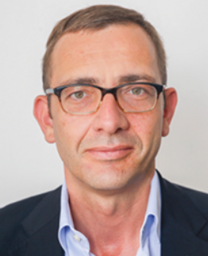
Mag. Dr. Peter Plener
Federal Ministry of Public Service and Sports, Section III: Public Service and Administrative Innovation, Austria
You are a subject matter expert in media history and administrative culture, including digital transformation (e.g., the “Administrative Interfaces” project), at the Federal Ministry of Public Service and Sports, Section III: Public Service and Administrative Innovation.
What does it mean to you to be a humanities scholar? Especially in this context?
Entire library shelves have been filled with writings on the definitions of what the humanities were, are, and should be (not necessarily to their detriment); but for me, it essentially comes down to being able to determine how a text functions, which media and their combinations we’re dealing with, what a book and a pencil are, which media forms produce which effects—and which ones don’t work, why, and how. I’ll set aside entirely for now my natural love of books, textual analysis, and the study of signs.
What challenges does working in a federal ministry present, and do political events have a direct influence on your work?
No administrative body is entirely independent of the respective political regime. However, a largely shared interest among nearly all political parties can be identified in the fact that the administration, in the best sense of the term, must be a public service that is professionally organized and functions as such on an ongoing basis. At the same time, the administration is precisely the area of the public sector where budgetary resources must be managed very frugally and carefully. This sometimes entails a greater amount of effort when it comes to applications and reports; moreover, a ministry operates quite differently from, say, a university (which, aside from the nature of such institutions, their orientations, the varying durations of contracts, and the respective basic training required, is also due, among other things, to a completely different approach to committees, files, document workflows, and areas of responsibility).
However, I have not yet observed any direct political influence on my work.
Do you have a different perspective on administrative processes and procedures than, for example, lawyers or administrative scientists? And if so, what is it?
Lawyers and administrative scientists must have a different approach; that’s their job. Conversely, I wouldn’t pretend that I can operate freely in their fields without proper qualifications. The advantage that scholars in the humanities and media studies may have over the aforementioned fields of study—especially when it comes to examining administration and bureaucracy—is, with all due respect—and partly because we haven’t been in the game that long—a multifaceted one: For one thing, we can discuss the media in use, their history, and their effects. For another, our methodological toolkit allows us to answer—at least in new ways—the seemingly increasingly necessary, subject-specific questions related, for example, to the Cultural and Iconic Turns. This also implies different perspectives and approaches to the Digital Turn. Third, in our professions, we know how to deal with historical constructions; here, a knowledgeable application of our methodological repertoires is quite useful. Finally, one might also assume that observation and analysis in various subfields are certainly somewhat easier when one has not personally set up and developed the systems in all areas. A simple example: the form. When asked what this is, legal scholars will (have to) provide a very different answer than administrative scientists. Scholars in the humanities and media studies will ask what it is, whether there is a specific grammatology of these serial standardizations, what traces it has left diachronically throughout history, and what the situation is with its revenants—social media, whose interfaces are nothing else. Here it is more present than ever, but it goes by a different name and looks different; and that is why billions of people enthusiastically fill out these text and image fields. There are reasons for this—and we ask about those, too.
What expectations do you associate with the term “administrative innovation”?
Aren’t administration and innovation mutually exclusive? Do you see more potential for innovation in your academic work?
Without public administrations, innovation would simply be hardly possible—at least not on this scale. As a distribution channel or transmission mechanism, administrative institutions are virtually unmatched. This applies not only to the funding and support of academic projects but also to the adoption and implementation of innovative technologies in the service of the public good. Whether this is reflected in the digitalization index, in the social welfare system, in complex educational programs and public libraries, in facilitating participation and ensuring legal certainty, or in research on organizational models of work groups or entire social systems. In any case, unlike numerous forms of the private sector (which, for their part, could not exist without administrative bodies), complex state administrative systems have a centuries-long track record of success, including all the necessary adaptations, state crises, and the collapse of social and political systems that have occurred. This is not just a matter of resilience and hidden hierarchies, but often quite simply a matter of structural necessities and efficient organizational and media techniques, right down to small-scale forms of everyday application. Now we have ever-changing societies and concepts of the state; we are all grappling with massive technological changes in our lived environments—and administrative systems continue to be challenged not only to react to these changes but also to provide adequate support through participatory models and the creation of interfaces, two-way communication, and overall connectivity—to provide adequate support. (At least for those who want to stay and will remain; so this is also about continuous improvement.) We at various levels of administration could certainly be enormously creative in this regard and come up with some truly wonderful, even wondrous ideas: but if we fail to legitimize them and put them into practice—in a way that proves effective and pays off—we will very soon, and quite rightly, face a massive problem justifying our actions.
Could you briefly describe your current project as a Georg Bollenbeck Fellow?
Is the project related to your work at the Federal Ministry? Is it inspired by that work? And if so: Will you implement and apply your research findings in practice at the Federal Ministry? Does your research help break down mental barriers, or can you change existing structures? What appeals to you about your research topic?
As a “scientific expert in the Public Service and Administrative Innovation Section, responsible for cultural studies/technologies, media history and theory with regard to the fields of administration, the state, bureaucracy, and the public,” my interest in the current collaboration and the excellent opportunities offered by this fellowship has already been outlined in as much detail as is permitted—and yet I’d like to elaborate a bit further here: Here at our institution, the goal is not to replace existing perspectives but to complement them; if you will, it’s a kind of academic competition among the Schools to deliver the best possible results. In these contexts that have arisen for me—it hasn’t been around that long yet—we now have initial collaborations with several universities in the German-speaking world. To forge closer ties, such as helping to organize a joint workshop at the University of Siegen on “The Form,” or working on a monograph about “Interfaces of Administration” and other publications, as well as giving lectures and exploring collaborations on related topics—that is the goal of the fellowship. Ideally, this will yield benefits for both sides—and so, in addition to the exchange, there are plans to add a second part to the aforementioned workshop and then hold it in Vienna. It all depends on the individuals, the Schools, and the institutes—on the truly outstanding abilities of the people here.
Here in Vienna, there are indeed changes taking place in that, starting this year, we’ve been introducing additional elements into the basic training for the civil service, such as the course “Media and Cultural History of Public Administration.” This will need to be expanded in the coming years. There were—and still are—so many mental barriers that cannot be overcome; otherwise, my job description—and the relevant work assignments—wouldn’t exist either.
As for the appeal of it all: on the one hand, this touches on so much of what I’ve been working on repeatedly over the past few decades (and there are good reasons for that); on the other hand, it naturally has to prove itself—and find its footing. That’s exciting, and I hope it stays that way.
Where do you see intersections or points of connection with your research activities at the Faculty of Arts and Humanities?
What do you expect or hope to gain from your stay at the Faculty of Arts and Humanities at the University of Siegen? What does Siegen have to offer you?
The University of Siegen, in the departments of philology and media studies alone, not only has many brilliant minds but also a wide variety of research topics that—as might be suggested by what I’ve already mentioned—can serve as additional catalysts, so to speak: flywheels. I’m thinking, for example, of the focus on pop cultures, where the connection between societies and media phenomena is explored in a very exciting way. The idea of doing something on “The Form,” for instance, emerged from discussions over the past year and serves as a good example of the possibilities that arise when reflective curiosity and methodological rigor are present to such a high degree and of such outstanding quality within the Faculty of Arts and Humanities.
Prof. Dr. Tsutomu Haga
Tokyo Theological University
My Stay in Siegen
I spent my six-month research sabbatical at the University of Siegen from early April through the end of August 2018. During my stay in Siegen, I prepared to write a book on Christian soteriology from a narrative perspective. The book has since been published in Japan. I also participated in two seminars on Calvin’s theology and the Barmen Theological Declaration, both led by Prof. Georg Plasger. In these seminars, I learned very insightful interpretations and gained many ideas regarding interactive teaching methods.
I delivered my guest lecture on “The Narrative Tradition in a Pluralistic World” on June 26, 2018, at the University of Siegen. After some introductory remarks on the shift in the missionary paradigm and the situation of Christians in Japan as a minority, I characterized the essence of Christianity as particularity open to universality—a distinctive trait of Christian communities. In the face of the problems posed by utilitarian individualism and the aimlessness and meaninglessness of human life in the midst of a profit-oriented society, we should rediscover the universal and purpose-driven “grand story” that modern society has lost and that has sustained the religious community until now. Hans-Georg Gadamer’s advocacy for the rehabilitation of tradition certainly contributes to this. Belonging to tradition is the prerequisite for understanding. What is important is making an appropriate judgment as to which preconception is more suitable for explaining reality. Tradition, as a process of shaping, is in the making. American communitarians (Alasdair MacIntyre, Robert Bellah, Michael Walzer, Michael Sandel, Charles Taylor) argue that there should be an intermediate group—a voluntary community—between the state and the individual to present and cultivate the concept of the good life in a narrative manner. And I drew attention to the tradition of Christian communities that narrates salvation, because the narrative of the salvific event is, in fact, the living tradition in the truest sense. I envision four “family trees” of salvation stories: the sacrifice story, the redemption story, the atonement story, and the judgment story. These terms seem quite old-fashioned in the traditional theological teachings on salvation. Yet they are still alive today, as they share common and analogous characteristics as “pre-stories” in modern society. My thesis is that Christian congregations and the Church as a whole have the courage to retell the narrative community as ekklesia narrans.
During my time in Siegen, I wrote an essay titled “Christologies in Japan” for the journal *Verkündigung & Forschung* and another essay, “Who Is Karl Barth for Japanese Christians?” for the *Karl Barth Magazine*. Subsequently, after my return to Japan, I translated Prof. Georg Plasger’s book, “Believing Today with the Heidelberg Catechism,” into Japanese.
I am very grateful to have been offered this opportunity for such an intensive period of research. I have fond and beautiful memories of the University of Siegen on the hill.
Assoc. Prof. Dr. Maren Lickhardt
Leopold Franzens University of Innsbruck
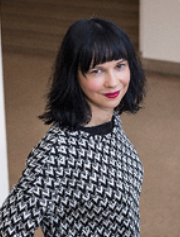
Dr. Aprilfaye Manalang
Norfolk State University, Virginia, USA
See 2019
Dr. Richard McMahon
University of Portsmouth, UK
Prof. Dr. Jason Dittmer
University College London, UK
I am a political geographer at University College London, and I visited Siegen for two months in 2017 after being invited by Dr. Daniel Stein. I had, of course, been aware of the tremendous work in the humanities being undertaken in Siegen, but the invitation was a fantastic opportunity to immerse myself in its research culture and experience the community firsthand.
My current research examines contemporary Gibraltar through the lens of assemblage theory, emphasizing the circulation of materials within and through the polity. In 2017, I was working on earlier iterations of this theoretical project, particularly focusing on analyzing “popular culture” through the lenses of materiality, embodiment, and affect. While happily settled in my office—with its stunning views of the countryside—I was working on a paper that explored military heritage and the embodied experience of museums. But when I was out and about—engaged with the amazing staff and students at Siegen—I was discussing the broader relationship between popular culture and geopolitics as it is being explored in the Popular Culture research group. This ranged from superheroes (a topic on which I wrote an earlier book) to German pulp fiction to early classical geopolitical theory (a topic no less fictional than the first two).
My time in Siegen was truly enriching, as it introduced me to a range of world-class scholars whose work aligns with my own interests. It was also a delightful experience for me and my (then) 4-year-old daughter, who was able to join me and enjoy Siegen’s extraordinarily child-friendly campus. I am so grateful for my time in Siegen. I hope to continue collaborating with the wonderful scholars in Siegen who work at the intersection of popular culture and geopolitics!
Dr. Aprilfaye Manalang
Norfolk State University, Virginia, USA
See 2019
Prof. Dr. Mine Gencel Bec
The Bollenbeck Fellowship provided me with the opportunity to continue my research and to be part of the newly developing research project on pop, popular culture, and populism.
I completed my Ph.D. at Loughborough University in the UK. I also have some experience in the U.S. as a visiting scholar at MIT. Although I had visited Germany several times to attend conferences, I had never had the chance to stay longer than a week in the past. Neither Germany nor any other place outside Turkey was on my radar until I was dismissed from my position as a professor in 2017 solely for signing a peace petition. A colleague who had previously worked here recommended the University of Siegen to me.
My background is in media studies. I believe the interdisciplinary nature of media studies and my research interests align well with the academic tradition at the University of Siegen. My research has focused on mapping the digital initiatives of the Turkish diaspora in challenging authoritarianism.
I believe that the internationalization of the University of Siegen is a great opportunity for the city of Siegen to transform into a multicultural, cosmopolitan city. The whole world needs critical academic work and dialogue.
Prof. Dr. Page Laws
Norfolk State University, Virginia, USA
A Long-Standing Research Collaboration between Norfolk State University (USA) and the University of Siegen.
When Prof. Dr. Page R. Laws, Professor of English and Dean of the R. C. Nusbaum Honors College at Norfolk State University, returned to the Adolf-Reichwein campus last summer, she did not travel alone. Invited by Prof. Dr. Daniel Stein, chair of North American Literary and Cultural Studies in the English Department at Siegen, to a conference on Migration and Immigration in Europe and the Americas, Prof. Laws brought five colleagues from Norfolk State—one of the three remaining historically Black colleges and universities in Virginia—to present papers and discuss current and past movements of people across borders. The group had already visited Graz, where they had participated in the “Ethnicity and Kinship: Interdisciplinary Approaches to Family, Community, and Difference” conference organized by the Society for Multi-Ethnic Studies: Europe and the Americas (MESEA), and they were eager to share their work with colleagues from Siegen.
This conference was just the latest installment in a long-standing research collaboration between Norfolk State and Siegen. Initiated by Dr. Cathy Waegner (now retired, but still actively involved) from the English Department at Siegen and Prof. Laws at Norfolk, the partnership between the two universities is now in its 12th year. It began with a chance meeting between the two at a European conference, where they decided to launch a collaboration that would soon include faculty and student visits to Siegen and Norfolk, three conferences, and a book publication that established the core theme and research focus of the collaboration: Transculturality and Perceptions of the Immigrant Other: “From-Heres” and “Come-Heres” in Virginia and North Rhine-Westphalia (eds. Cathy Covell Waegner, Page R. Laws, and Geoffroy de Laforcade, Cambridge Scholars 2011).
Issues of migration and immigration were at the forefront of a 2007 conference at Norfolk State University titled “America’s 400th Anniversary: Voices from within the Veil,” where Waegner and Laws presented papers that were eventually published in the conference volume *Voices from within the Veil: African Americans and the Experience of Democracy* (eds. William H. Alexander, Cassandra L. Newby-Alexander, and Charles H. Ford, Cambridge Scholars, 2008). Since then, Page Laws has visited Siegen many times, teaching a course on socially conscious films, giving lectures, and, as a Bollenbeck Fellow (Faculty I) in 2015, teaching the very popular master’s-level course “Shakespeare and Race.” In 2018, she returned to Siegen, this time as an official research alumna, to present a paper on Gianfranco Rosi’s immigration documentary *Fire at Sea* (2016) and to strengthen the long-standing ties between Norfolk State University and the University of Siegen. Her role as co-editor of the second book to emerge from this collaboration—tentatively titled *Mother(s) of Exiles? Migration in Europe and the Americas – Aesthetic and Civic Interventions* (ed. Cathy Covell Waegner, Page R. Laws, Geoffroy de Laforcade, Daniel Stein), further underscores her enthusiasm for the partnership, which has been formalized by an ongoing Memorandum of Understanding between the universities since 2015.
Together with Prof. Stein, Prof. Laws also serves as an advisor to an interdisciplinary research project spearheaded by her Norfolk colleague and fellow Bollenbeck guest researcher Dr. Aprilfaye Manalang, and organized locally by Britta Moelders from Berufskolleg Ehrenfeld. During three visits between 2017 and 2019, Manalang and Moelders collected surveys from several hundred students and conducted over sixty in-depth interviews with students at Berufskolleg Ehrenfeld for the project “Religion, Community, Family, and Difference: An Intersectional Analysis of the Role of Religion in Integration among Immigrant Millennials and Their Families in Cologne, Germany.”
Finally, Prof. Laws has hosted several scholars from Siegen during their visits to Norfolk State, enabling Daniel Stein to present his research on African American literature and culture to Norfolk students and faculty in a 2015 guest lecture on jazz singer and trumpeter Louis Armstrong’s autobiographical writings. Most recently, Dr. des Lukas Etter, also from the English Department at Siegen, visited NSU in January 2019 to deliver a lecture with the intriguing title “Sheep, Hounds and Co.: On Benjamin Banneker’s Mathematical Word Problems” and to explore the legacy of slavery and the history of higher education in the area. If another small group from Siegen travels to Virginia to attend the many events commemorating the 400th anniversary of the first African slaves arriving in North America, it will be largely thanks to Page Laws’ efforts to foster interdisciplinary and intercultural research and exchange between Siegen and Norfolk.
This article was written by Prof. Dr. Page R. Laws and Prof. Dr. Daniel Stein
Other Visiting Scholars
The Faculty of Arts and Humanities thrives on the diversity of its international connections. These are evident, among other things, in the visiting scholars we have hosted in recent years. In the departments of German Studies, English Studies, Philosophy, History, and Media Studies, colleagues from Europe and overseas have taught courses, given lectures, and prepared joint research projects with us.
2023
- Prof. Dr. José Ramón Ruisánchez, Mexico
Guest of the Department of Romance Languages
2021
- Dr. María Cristina Osorio Vázquez, Universidad Anáhuac Mayab, Mexico
Visiting Scholar at the Department of Romance Languages
2020
- Jordi Jané-Lligé, Universitat Autònoma de Barcelona, Spain
Visiting Scholar at the Department of German Studies
2019
- Maia Damenia, Ilia State University, Georgia
Visiting Scholar at the Department of History - Dr. Cornelia Gräbner, Lancaster University, United Kingdom
Visiting Scholar at the Department of English - Prof. Ana Kirvalidze, Ilia State University, Georgia
Visiting Scholar at the History Seminar
2018
- Assoc. Prof. Korakoch Attaviriyanupap, Silpakorn University, Thailand
Guest of the Department of German Studies - Dr. Mine Gencel Bek
Visiting Scholar at the Department of Media Studies - Prof. Boris Djubo, St. Petersburg, Russia
Visiting Scholar at the Department of German Studies - Dr. Sami Gohar Farag, Minya University, Egypt
Visiting Scholar at the German Studies Seminar - Prof. Ketevan Gurchiani, Ilia State University, Georgia
Visiting Scholar at the Department of History - Prof. Makram Haluani, Simón Bolívar University, Venezuela
Visiting Scholar at the Department of German Studies - Prof. Hyeongjoo Kim, Chung-Ang University, Korea
Visiting Scholar at the Department of Philosophy - Giga Khositashvili, Ilia State University, Georgia
Visiting Scholar at the Department of History - Prof. Beatrice Larrain, University of Concepción, Chile
Guest of the History Seminar - Ítalo Clay Tavares de Lima, Federal University of Pelotas, Brazil
Guest of the Philosophy Seminar - Prof. Dr. Oliver Reisner, Ilia State University, Georgia
Guest of the History Department - PhD Victor Udwin, University of Tulsa, USA
Guest of the German Studies Seminar - Prof. Jeanne Wirtner Simon, University of Concepción, Chile
Visiting Scholar at the Department of History
2017
- Paulina Astroza Suárez, University of Concepción, Chile
Visiting Scholar at the Department of History - Dr. Amelia Bonea, University of Oxford, United Kingdom
Guest of the History Seminar - Dr. Mehmet Ruhi Demiray
Visiting Scholar at the Philosophy Seminar - Prof. Dr. Tsutomu Haga, Tokyo Union Theological Seminary, Japan
Visiting Scholar at the Department of Protestant Theology - Giga Khositashvili, Ilia State University, Georgia
Visiting Scholar at the Department of History - Dr. Richard McMahon, University of Portsmouth, United Kingdom
Guest of the Department of German Studies - Prof. Dr. Oliver Reisner, Ilia State University, Georgia
Visiting Scholar at the History Department - Prof. Dr. Jeanne Simon, University of Concepción, Chile
Visiting Scholar at the Department of History