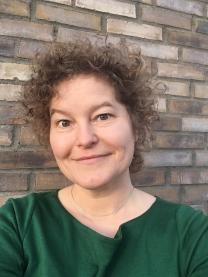
Prof. Dr. Nicole Milman-Dörr
The sociologist researches, among other things, the rhetoric of right-wing populist parties and far-right mobilization, for example on climate policy, gender, EU asylum policy, and migration.
My professorship is called:
Sociology with a Focus on Qualitative Methods of Empirical Data Analysis and Research on Migration (Faculty I)
This is what my research is about:
My research examines political participation and social integration among diverse groups of citizens and migrants, including labor migrants in the United States and asylum-seeking women and refugees in Europe, within the context of transnational mobility, humanitarian crises, civil society solidarity, and local democracy.
That’s what fascinates me most about my field of research:
I am particularly fascinated by the collaborative development of interdisciplinary qualitative research methods by scholars of democracy in cooperation with experts in communication studies and engineering, especially those working in computer vision and computational linguistics. As a Professor of Qualitative Methods, I employ critical historical visual discourse analysis to study videos and the visual rhetoric of various political actors – including right-wing populist parties and social movements – comparing opposing positions on issues such as climate policy, gender equality, EU asylum policy, and migration. My comparative research includes case studies from the United States and Canada, Scandinavia, Central Europe, and Latin America. In this way, my research agenda builds a bridge between North American approaches to the cultural sociology of migration and political theories of democratic participation, with a focus on polarization, exclusion and inclusion, and political engagement in the context of public debates on diversity and democracy.
Why Siegen?
The University of Siegen enjoys an international reputation in the fields of visual media studies, protest research, and democracy studies. Given its strong research profile in migration, education, and health, I consider Siegen and the Department of Social Sciences an ideal environment for my work on transnational migration using diverse qualitative methods, particularly interdisciplinary AI-assisted visual approaches to critical discourse analysis, narrative media analysis, and computational linguistics. Having lived in Scandinavia for many years, where I learned a great deal about climate policy and environmental protection, Siegen reminds me in many ways of Oslo and Norway – not only because of its mountains and beautiful forests, but also in terms of its history and its evolving questions about the relationship between people and nature in times of climate change.
My most interesting previous career stations were:
Along the U.S. Pacific Coast, between San Diego and Los Angeles, I studied the relationship between migration and multilingual local democracy and met many students engaged in housing rights, residence status, social security, and civil rights protests – often in solidarity with fellow students and their families who were labor migrants. Later, at Harvard and as a Professor of International Relations on the U.S. East Coast, I witnessed the Occupy Wall Street movement and subsequently researched Donald Trump’s election campaigns and their influence on European politics. In Denmark, I taught for nearly a decade in Copenhagen, where I founded the Commons Research Center at the University of Copenhagen, focusing on public-good-oriented research on climate change, democracy, solidarity, and the political inclusion of migrants and socially disadvantaged groups.
That’s what students learn in my courses, e.g.:
In my courses, students learn to understand and critically interpret political and public debates on refuge, migration, and integration from an academic perspective. They also learn how to analyze these debates using social science methods. For example, students practice digital and ethnographic methods such as sociological discourse analysis and digital visual media analysis to explore political debates and the participation of ethnic minorities in civil society and public life – including movements such as Black Lives Matter and Fridays for Future in a European and international context. They also learn to critically examine U.S. debates on right-wing populism and disinformation in digital media.
In my free time, I enjoy:
Cycling and hiking