Shaping Research Together: Focusing on People with Dementia and Their Families
When Research Becomes a Shared Endeavor
A research project on the participation of people with dementia and their family members and caregivers.
How can people with dementia and their families be actively involved in research? And what does it mean for them to contribute their experiences and perspectives to scientific projects? Kathinka Beutel, a student research assistant at the Chair of Psychological Research on Aging, addressed these questions in her poster presentation at the 13th Congress of the German Alzheimer’s Association. The conference took place on October 15 and 16, 2026, at the Magdeburg Exhibition Center under the theme “Dementia: Shaping the Future Together.”
The research project she presented, “PsychPart,” focused on the participation of people with dementia, as well as their caregivers and family members, in research initiatives. The project’s goal is to develop recommendations for the structure of research advisory boards while also examining the psychological effects that participation has on advisory board members.
To this end, two research advisory boards were established: one comprising people with dementia and another comprising family members and caregivers of people with dementia. The results to date show how important local stakeholders are for setting up and establishing such advisory boards. The Alzheimer Society of Siegen-Wittgenstein played a significant role in this effort.
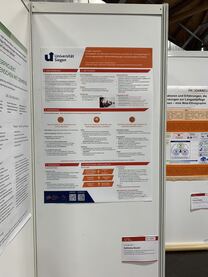
Furthermore, the results point to positive psychological effects of participation. Among the participants in the research advisory boards, improvements were observed in, among other things, the sense of coherence, self-efficacy, perceived health, self-esteem, and sense of meaning. At the same time, perceived stress decreased.
The findings thus underscore the importance of actively involving people with dementia and their family members and caregivers in research. The National Dementia Strategy also calls for greater participation by those affected. Not only can their experiences and perspectives help tailor research projects to meet actual needs, but participation itself can make a valuable contribution to the participants’ personal well-being.
The 13th Congress of the German Alzheimer’s Association also offered a diverse program of expert presentations. Topics included the situation of family caregivers and existing support services, opportunities to improve early-diagnosis care, new therapeutic approaches—including antibody therapy—as well as dementia in younger adults and prevention.
For Kathinka Beutel, the conference also marked a special personal milestone: for the first time, she presented research findings from the professorship at a scientific conference, thereby representing the team’s scientific work beyond the university.
