Uni Siegen becomes a beacon for intelligent sensor technology

Glaringly bright light, absolutely clean air, researchers in blue full-body suits: The cleanroom area forms the technological heart of the new INCYTE research building at the University of Siegen. A state-of-the-art laboratory environment in which intelligent sensors can be manufactured, tested and developed into prototypes. The WISENT pilot line is now significantly expanding the infrastructure once again: five new high-tech systems and additional process options are taking research and development work in the clean room to a new level. The project is being funded by the ERDF program with EU funds amounting to 4.7 million euros.
Partner for the industry
"The new systems not only complement the existing infrastructure, they also enable fundamentally new process and analysis methods and, together, create truly outstanding technological conditions. A few years ago, we would never have dared to dream of coating or removing individual atomic layers of selected materials in a targeted manner," says Dr. Andreas Bablich, Head of Technology at WISENT.
WISENT stands for "Westphalian Intelligent Sensor Integration Pilot Line" - an end-to-end high-tech production line that covers the entire development process: from the initial idea to chip and component design, sensor production, integration into complex systems and system-specific software development. Not only researchers, but also companies and start-ups can make use of the infrastructure and scientific expertise at INCYTE.
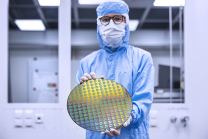
"Collaboration with industry is very important to us. We want to create a low-threshold offer to implement feasibility studies and initial demonstrators for new sensor concepts without companies having to invest in cost-intensive large-scale equipment themselves," explain Paul Kienitz, who is responsible for operating the new cleanroom facilities at WISENT, and Maurice Müller, who played a key role in acquiring the pilot line.
Sensors for medicine, industry and the environment
The new infrastructure opens up a wide range of possibilities for intelligent sensor technology: one example is 3D image sensors, in which microscopically small structures - such as lenses or other optical elements - can be printed directly onto the sensor chips using modern production technologies. This allows the incident light to be captured and processed particularly efficiently. Novel materials also play an important role. For example, researchers are working with extremely thin semiconductor layers or two-dimensional materials such as graphene.
"The integration of special AI hardware makes these high-performance sensors even more powerful," explains Dr. Bablich. "You get a kind of integrated little brain that evaluates the huge amounts of data from the 3D pixels or graphene layers directly on site in fractions of a second." This results in extremely compact systems that perceive the environment in precise 3D depth and immediately interpret the information obtained. Areas of application include autonomous driving, robotics and wearables for fall detection, which can react in real time.
Plant analysis and biomarker recognition
Other applications range from agriculture to medicine. In future, drones equipped with special image sensors could analyze plants from the air and determine the health status of fields based on reflected light signals. In medical technology, Prof. Dr. Peter Haring Bolívar's team is working on highly sensitive sensors that can detect the smallest molecules - so-called biomarkers. This could enable diseases such as skin cancer to be diagnosed much more effectively in future than with current laboratory methods.

With the Center for Sensor Systems (ZESS), the University of Siegen has already had an internationally recognized platform for research into this key area of technology for many years. The WISENT pilot line in the new INCYTE research building will enable the university to further expand its role as an innovation driver for intelligent sensor systems. "The combination of state-of-the-art infrastructure, interdisciplinary research and close cooperation with industry characterizes our location. This makes us the central point of contact in NRW for all questions relating to software, hardware and system integration in sensor technology," says Andreas Bablich.
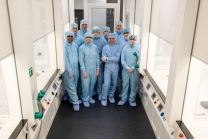
The cleanroom at INCYTE may only be entered with special protective clothing. First row: Prof. Dr. Bhaskar Choubey, Paul Kienitz, PD Dr. Andreas Bablich, Moin Diwan, second row: Prof. Dr. Michael Möller, Matthias Weber, Prof. Dr. Peter Haring Bolívar, third row: Prof. Dr. Benjamin Butz, Prof. Dr. Ivo Ihrke, Dr. Andrii Nehrych (from left to right).
Background:
The WISENT project was launched in September 2025 and will run until the end of 2028. It is funded as part of the ERDF/JTF NRW 2021-2027 program. A total of five interdisciplinary professorships at the University of Siegen are involved in WISENT :
- Prof. Dr. Peter Haring Bolívar (Chair of High Frequency Technology and Quantum Electronics)
- Prof. Dr. Benjamin Butz (Chair of Micro- and Nanoanalytics)
- Prof. Dr. Bhaskar Choubey (Chair of Analog Circuit Technology and Imaging Sensor Systems)
- Prof. Dr. Michael Möller (Chair of Computer Vision)
- Prof. Dr. Ivo Ihrke (Chair of Computational Sensing and Communications Engineering)
In addition, there are numerous project supporters from industry, including Siemens, Sony, BASF, IGI, Leybold and the University of Siegen spin-offs EleQtron and PMD Technologies.