Why Easter and Christmas are more than just days off
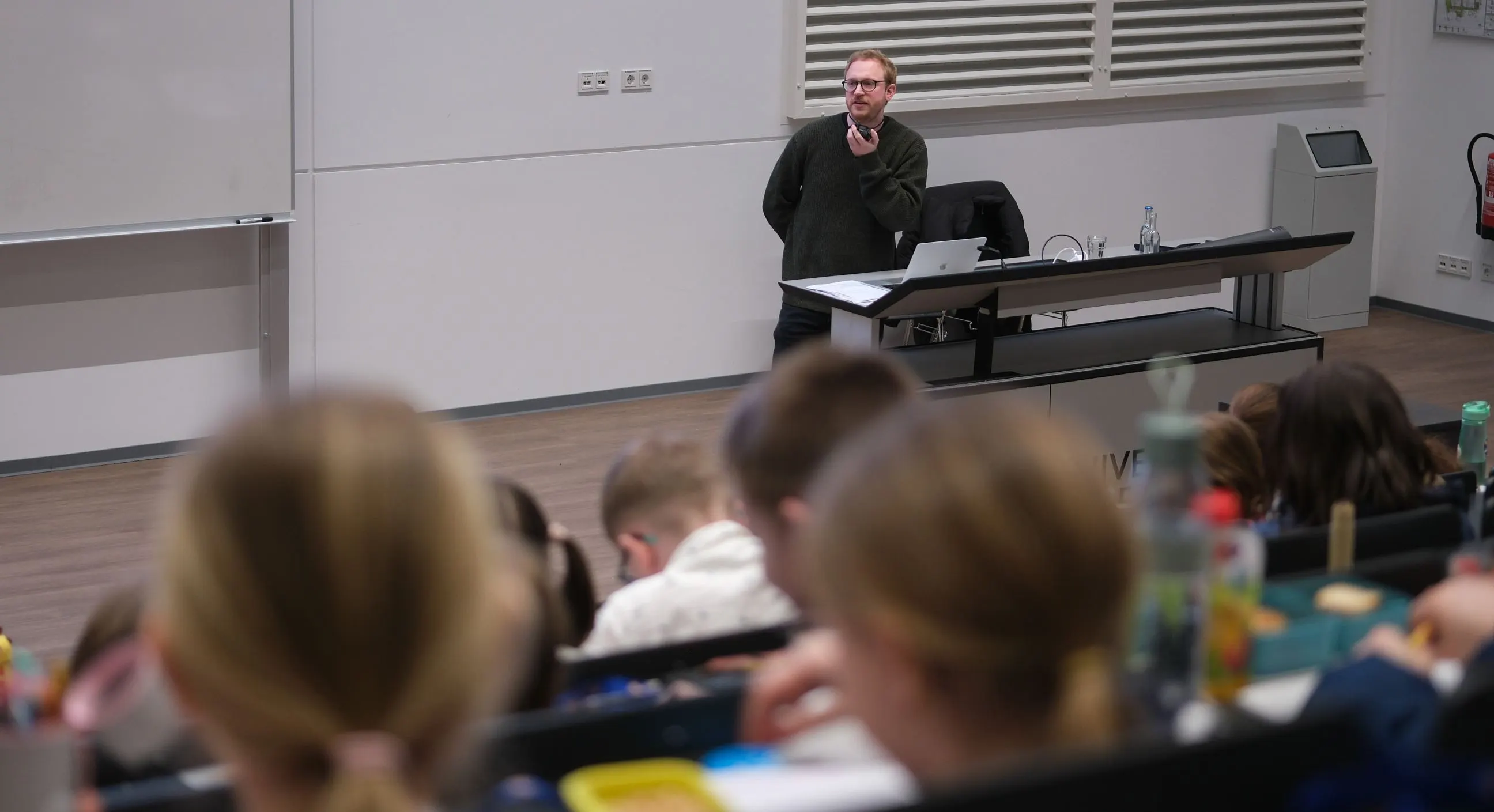
Do you like holidays? The "yes" in the children's university round was very clear to hear. "Easter, St. Martin's, Christmas: How do religious festivals influence our year?" was the topic of Dr. Niklas Bend from the Department of Catholic Theology at the University of Siegen. The arguments for the popularity of public holidays are obvious: parents often don't have to work, schools are closed, families and friends get together for activities, there is delicious food. Sometimes there are also presents - for example at Easter and Christmas. Public holidays are special days in the calendar that often have a religious or historical basis. Birthdays are individual holidays.
"Church historians look at religions in the past," Niklas Bend explains to the children. This includes, for example, deciphering old inscriptions and texts. The content contributes to an understanding of cultures and their traditions. Easter, St. Martin's Day and Christmas are old holidays with traditions in our country. "Stand up if you've ever looked for colored eggs!" Almost all the children stood up from their chairs. "Stand up if you've ever eaten a chocolate Santa Claus!" "Stand up if you've ever made a lantern!"
At Christmas, Christians celebrate the birth of Jesus. Christmas always takes place on December 25/26 of each year. St. Martin's Day is on November 11. It is named after St. Martin, who divided his robe. The date of Easter varies. From time immemorial, the resurrection of Christ has been placed in the period of the Jewish Passover. Bend: "The festival is aligned with the moon". He continues: "Easter is always celebrated on the Sunday after the first full moon in spring." Many subsequent holidays are calculated according to the date of Easter.
Bend: "The first Christians were Romans. They therefore integrated their Christian holidays into the calendar. The church year became the basis of this calendar: "They created a new system of time division". In the Roman Empire, Sunday was considered the "day of the sun". In both the Christian-Roman and Muslim calendars, Sunday marks the first day of the week.
Christians have been celebrating Christmas since the 4th century AD. The festival falls at the darkest time of the year. Symbolically, light came into the world. In fact, lights play an important role in the tradition. Bend: "Many cultures have a festival of light at this time." Agriculture was at a standstill during the winter. The days were short. Light was scarce. People had less work and more time for family and friends. Easter marks the end of winter and the beginning of spring. Bend: "This is a time of new beginnings and growth. After winter, there is new life." This is what Easter customs such as eggs, fire and rabbits stand for. St. Martin's Day takes place in autumn and seasonally represents the harvest season and the transition to winter. The three Christian holidays mentioned therefore also represent the seasons of sowing (Easter), harvest (St. Martin's) and rest (Christmas).


