Digital innovations for the healthcare of tomorrow
The focus was on the innovative care model DIHVA (Digital GP Care Assistance), which combines digital technologies, artificial intelligence and new forms of division of labor in the healthcare sector. The aim of the approach is to relieve the burden on GP practices while ensuring efficient care close to home.
Student research on real challenges
As part of their seminar paper, students Pia Gräbener, Kimberly Hasel, Sophie Ortlepp and Milla Semibratova developed a scientifically sound impact model to analyze the DIHVA intervention.
In doing so, they combined
-
an extensive literature review
-
theoretical models from health services research
-
as well as qualitative interviews with the project managers Alex Baasner and Stefan Spieren
The aim was to systematically map the potential effects of the model and analyze them at various levels - from individual effects on patients to effects on society as a whole.
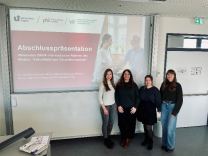
Scientific added value: an impact model for complex care
A key result of the work is the development of a multidimensional impact model that integrates economic, social and ecological effects. This model serves as a basis for future evaluations and shows which factors are decisive for the success of such care innovations.
The key results at a glance:
1. relief for GP practices
By delegating standardized diagnostic activities to specially trained care assistants, doctors can be relieved of more workload and concentrate on complex medical decisions.
2. improved access to care
In rural and underserved regions in particular, the model can significantly improve the accessibility of medical services and reduce waiting times.
3. more efficient care processes
The structured digital recording and transmission of patient data enables better coordination of treatment and can avoid duplicate examinations.
4. strengthening health literacy and participation
Digital communication and information processes promote the active involvement of patients in their treatment and can reduce health inequalities.
5. ecological effects
Telemedical elements and care close to home help to reduce travel distances and thus potentially reduce emissions in the healthcare sector.
The seminar paper clearly shows that digital and AI-supported care models such as DIHVA have considerable potential to change primary care in the long term. Further empirical studies are required for a reliable evaluation - in particular on long-term effects, cost-benefit aspects and integration into standard care.
Learning through research: A benefit for study and practice
The seminar is an example of research-oriented teaching in which students work independently on real challenges in the healthcare system. By working closely with practice partners, students gain direct insights into innovative care models and at the same time develop scientifically sound analyses with high practical relevance. Such didactic formats show how study, research and practice can be meaningfully combined - and how students can actively contribute to the further development of the healthcare system.