Information for teachers
What does Talent Scouting want to achieve?
NRW Talent Scouting aims to overcome predetermined biographies through individual and continuous support. Together with the young people, it gives concrete form to dreams, wishes and inclinations and accompanies and supports their realization over a long period of time and across system boundaries. The talent scouts encourage talented young people, work with them to develop visions for the future, point out paths, create helpful networks and open up access to existing support instruments in the education system.
Who is a talent?
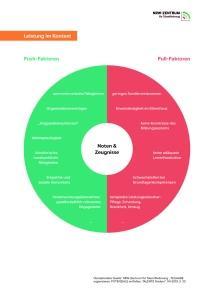
Many people think of talent scouting as promoting the highly gifted. However, NRW Talent Scouting specifically targets a group of pupils who achieve amazing results despite sometimes challenging conditions. Talent promotion uses a search logic that focuses not only on academic performance but also on those areas of performance that cannot or only insufficiently be reflected in school grades. These include special language skills, social commitment and organizational or entrepreneurial skills. At the same time, talent promotion takes into account performance-reducing effects (temporary performance absorbers: care, parental separation, illness, relocation, etc.) as well as social and economic conditions in order to assess the "real performance" of talented individuals.
How is talent scouting implemented?
Talent scouting takes place on site in schools and is voluntary. The program is offered at the beginning of upper secondary school at comprehensive schools, vocational colleges and grammar schools and the support can continue beyond the school years.
a) Counseling
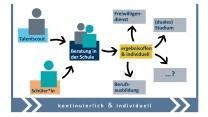
An initial consultation, which focuses primarily on future aspirations, interests and problems with post-school educational choices, can develop into years of support. The advice is open-ended; the young people themselves decide whether a traditional university course, a dual course of study or vocational training is the right choice for them. The further course of the program is individually tailored to the needs, questions and uncertainties of the students.
b) Networking
The talent scouts help to break down barriers and build bridges to cooperation partners and universities. Networking meetings, visits to universities and interest tests are used for this purpose. Talent scouts also offer information on scholarships, other advice centers, stays abroad, vacation camps, talent colleges and academies. NRW Talent Scouting remains at the side of young adults after graduation if desired and offers exchange and support opportunities.
c) Scholarships/right to nominate for funding from the German National Academic Foundation
In addition to the schools' own right to nominate, one talent per talent scout and per calendar year can be nominated for funding from the German National Academic Foundation for the cooperation schools. The Evangelisches Studienwerk Villigst gives talents from the NRW Talent Scouting program direct access to the second application round. The Hans Böckler Foundation also gives special consideration to NRW Talent Scouting. This close cooperation is an effective instrument for improving the financial situation during studies and at the same time promoting personal development and prospects for a successful start to a career through idealistic support.
What role do teachers play in talent scouting?
Teachers are not always able to provide individual support in the area of study and career guidance due to their numerous tasks and obligations in everyday school life. NRW talent scouts therefore work closely with teachers who know the pupils. They encourage pupils to attend the initial consultation with a talent scout. However, pupils can also go to the talent scout at their school on their own if they wish.
How are schools that take part in talent scouting recognized?
As a sign of active support for their pupils, schools where talent scouts regularly provide advice receive the "School in NRW Talent Scouting" badge. The schools and universities thus seal the existing cooperation in NRW Talent Scouting.
How has talent scouting developed?
Talentscouting originated at the Westphalian University of Applied Sciences in Gelsenkirchen. Suat Yilmaz was the first talent scout in Germany to go to secondary schools to work with teachers to find, accompany and support motivated young people who, due to their life context, did not have the opportunity to fully exploit their potential. What began with one university and one talent scout has expanded throughout NRW since 2015 with the support of the North Rhine-Westphalian Ministry of Science. More than 100 talent scouts from 23 partner universities now support 30,000 young talents in their individual educational biographies.
What results has the evaluation of Talent Scouting produced?
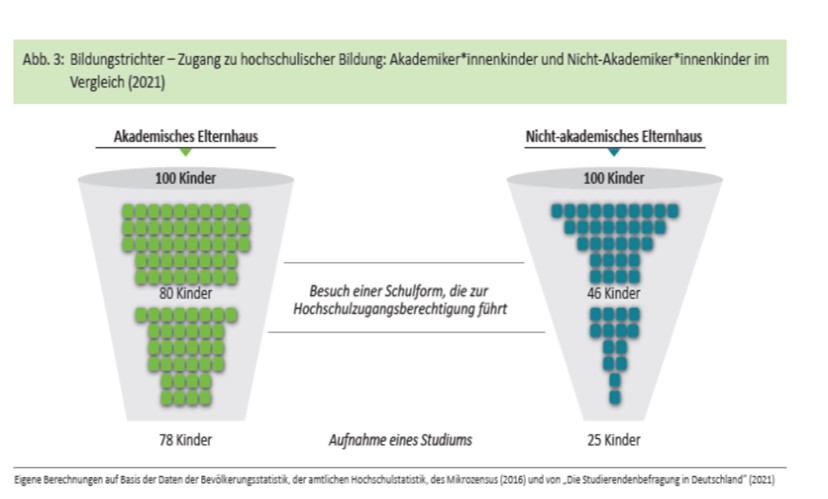
NRW-Talentscouting is a program that has been independently evaluated for its impact on equal opportunities. An accompanying study by the Social Science Research Center Berlin (WZB), which began in 2017 and involved over 1,400 pupils from 31 schools in NRW, documented the effects of NRW Talent Scouting for the first time in 2022. The results show that higher-performing young people without an academic family background who are accompanied by a talent scout are more likely to go to university after their (technical) Abitur, while lower-performing pupils whose parents have studied are more likely to take up dual vocational training. Taken together, these two effects reduce the inequality of opportunity in access to higher education by over 70 percent. Furthermore, the results show that the proportion of students who have chosen a gender-atypical degree course with the support of a talent scout doubles. The results also show that an intensive and lengthy guidance program such as NRW Talent Scouting can reduce social inequalities in the transition to university and vocational training. The program differs from previously investigated short interventions in that it makes a larger group of students think and readjust - and not just those who are already willing to study.