Climate Action in Small Municipalities: Obstacles and Success Factors
Small municipalities face particular challenges when implementing climate protection measures. The KikK research project is examining the obstacles that local elected officials and climate protection staff in small municipalities encounter, and how successful climate protection can still be achieved despite these challenges.

Project Description
Small municipalities with up to 10,000 residents face particular challenges when implementing climate protection measures. As public authorities, municipalities are obligated to take the federal government’s climate neutrality goal into account when planning and implementing local policy decisions. At the same time, structural underfunding and the failure to apply the principle of connectivity severely limit municipalities’ scope for action.
The research project “Climate Protection in Small Municipalities” (KikK) examines the obstacles faced by local politicians and climate protection staff in small municipalities, as well as the factors that enable climate protection measures despite these obstacles. The final report is based on research interviews with municipal climate protection experts from all German federal states (excluding the city-states).
The results show that the strained financial situation, complex grant applications, and the voluntary nature of these tasks are hindering climate protection and climate adaptation at the local level. Nevertheless, small municipalities are succeeding in contributing to the achievement of national climate protection goals, among other things through intermunicipal cooperation and participatory financing approaches.
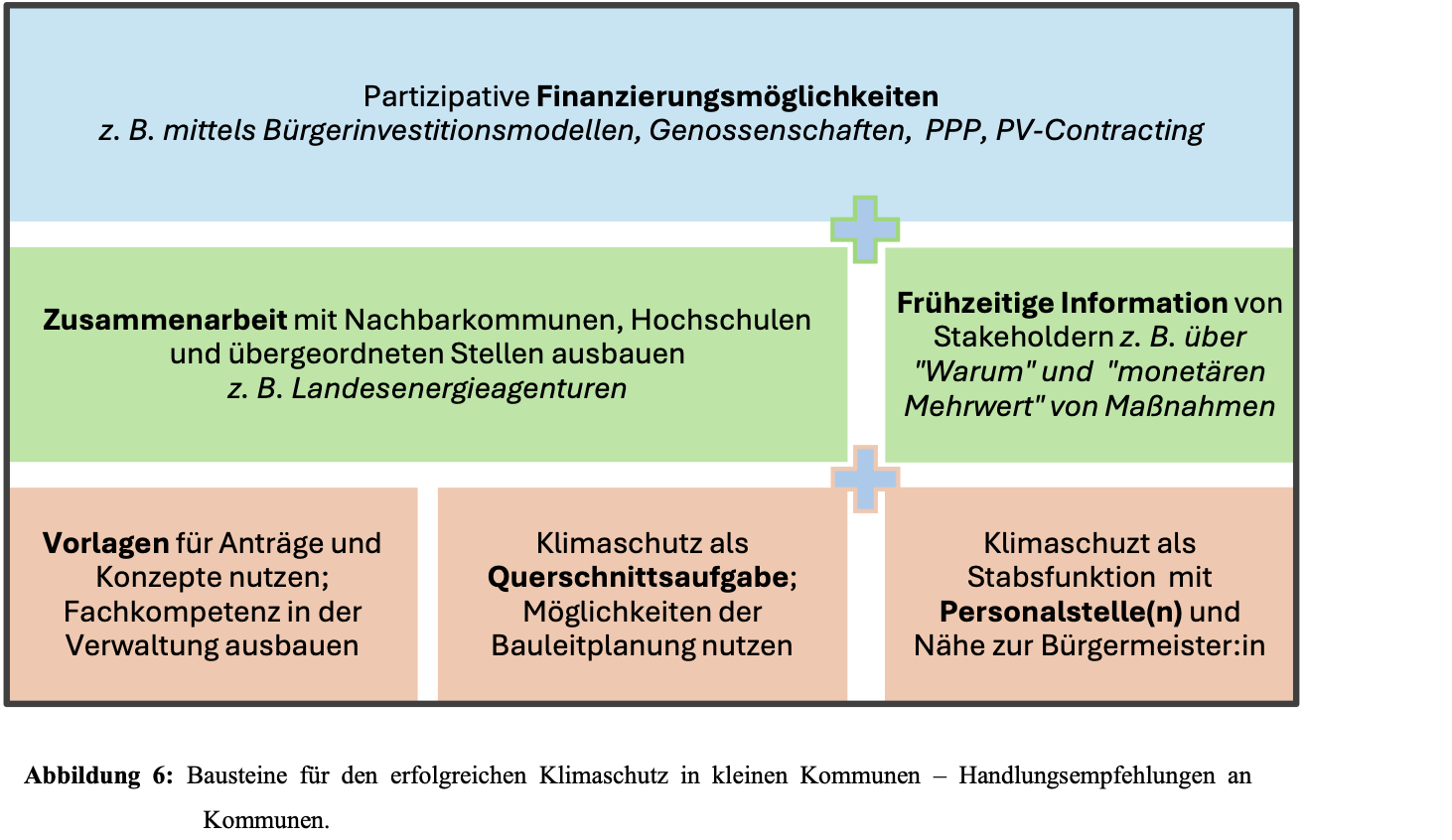
The project identifies three basic approaches to managing municipal funding and proposes measures to support municipalities. Our recommendations for action are directed, on the one hand, at state and federal policymakers, but at the same time demonstrate how local actors can successfully pursue climate protection despite existing obstacles.
Small municipalities need (1) planning certainty, (2) financial relief, (3) streamlined procurement procedures, (4) innovative financing approaches, and (5) targeted support from higher-level institutions in order to establish climate protection as a cross-cutting priority.
Everything at a Glance
-

Duration
February 1, 2025 – April 30, 2026 -

Research Area
Climate Protection -

Funding
Own Funds -
Project Management
Sarah Dahlmann
Publications and more on this topic
Final Report
Final Presentation Supplementary Material


Research Questions
The overarching research question is: “What obstacles and success factors do local elected officials and municipal climate action staff encounter with regard to climate action in small municipalities?”
Using an empirical research approach, the project examines the obstacles and desires for change in small municipalities. It also analyzes why and how municipalities can successfully implement climate protection despite existing obstacles. The two-stage research approach takes into account the specific challenges faced by small municipalities and formulates policy recommendations for the federal and state governments. At the same time, the findings provide concrete examples and recommendations for action for small municipalities. The findings are based on guideline-supported expert interviews conducted throughout Germany. In addition to addressing the overarching question regarding barriers and success factors in municipal climate protection, the article answers six subordinate research questions:
1. What specific challenges in the area of climate protection do small municipalities with a maximum of 10,000 residents face?
2. How do municipal shortcomings affect the area of climate protection?
3. How are funding opportunities for municipal climate protection and the application process for them perceived?
4. What factors enable small municipalities to advance climate protection and climate adaptation despite existing obstacles?
5. What aspects are perceived as key factors for the success of climate protection and climate adaptation?
6. What do small municipalities need for a successful future in municipal climate protection?

Recommendations for Action
Financial constraints pose the greatest obstacle to municipal climate protection. The heavy reliance on grants leads to a structural differentiation of small municipalities into three types based on how they manage these funds. The funding landscape is viewed with mixed feelings: On the one hand, funding programs make it possible to implement climate protection activities; on the other hand, bureaucracy, the “funding jungle,” short deadlines, high co-payment requirements, and an overemphasis on conceptual planning significantly hinder access to funding.
Public acceptance of municipal climate protection measures proves to be multifaceted. While public acceptance varies widely and is rarely perceived as a decisive barrier, support from the mayor is effectively a “deal-breaker” for successful climate protection.
Despite these hurdles, many small municipalities are already making a significant contribution to the success of national climate protection goals. Their key success factors include networking and intermunicipal cooperation, early and direct communication with citizens, the institutional and personnel-based integration of climate protection, and a clear fiscal benefit from climate protection measures. Small municipalities benefit particularly from collaborative solutions with neighboring municipalities, counties, or regional networks.
The goal of the research project is to gain an in-depth understanding of the individual experiences of selected municipalities, as well as their similarities and differences. This logic of qualitative research should be taken into account when interpreting the research results. The consequences of the climate crisis are being felt in municipalities throughout Germany. Climate protection and climate adaptation to safeguard the population from extreme weather are, in fact, not voluntary additional tasks but must be embedded in administrative practice. This requires reliable framework conditions, municipal leeway, and the initiative of mayors to support climate protection and the safety of citizens despite existing obstacles.