New research project
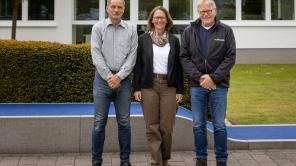
A new ionization chamber for measuring radon concentrations has been developed for an EU project in the solid mechanics department at the University of Siegen. Such highly sensitive chambers require special insulation. The University of Siegen successfully collaborated with the Bad Berleburg-based company REGUPOL.
Radon is a naturally occurring gas that rises from the ground. It is odorless and colorless, but radioactive. It is therefore important to keep an eye on radon levels in the air. Ionization chambers are used to measure it. Scientists at the University of Siegen have built a new, highly sensitive radon pulse ionization chamber that will be operated as part of the EU RadonNET project. The aim is to find possible correlations with climate change by monitoring the radon concentration in the outside air.
Until recently, the radon pulse ionization chamber was calibrated at the Physikalisch-Technische Bundesanstalt in Braunschweig. Now, according to Kerstin Weinberg, it will be permanently stationed at the University of Siegen, where it will measure the radon concentration in the air.
Prof. Dr.-Ing. Kerstin Weinberg from the Chair of Solid Mechanics explains the measurement process: "Air containing radon is passed through the chamber. Some of the radon decays and radiation (alpha particles) is released. This radiation leads to ionization of the air molecules inside the chamber. The resulting ions are accelerated by an electric field so that they generate a charge pulse on the electrodes of the chamber that is proportional to the energy of the alpha particles. These pulses are measured to determine the radon concentration in the ambient air." The radon pulse ionization chamber provides a sensitive method of monitoring radon exposure, which is particularly important for health and radiation protection because high radon concentrations increase the risk of lung cancer.
Soundproofing the chamber was a challenge. The Institute of Solid Mechanics worked together with the company REGUPOL from Bad Berleburg. The working group selected an elastomer damping layer from the REGUFOAM material family for the elastic mounting of the ionization chamber. These materials are otherwise used for the elastic mounting and decoupling of building services equipment, machine foundations and buildings.

Due to their structure-dependent and therefore individually adjustable deformation behavior, foamed elastomers have a wide range of applications in various branches of industry, such as in components of sealing, thermal insulation and soundproofing systems. While these systems have received an enormous development boost in the last decade through computer-aided design methods, the requirement profiles have been continuously expanded, so that today the damping properties of externally introduced mechanical vibrations (structure-borne noise) are also coming into focus.
In a new project at the Chair of Solid Mechanics of Prof. Dr.-Ing. Kerstin Weinberg at the University of Siegen, the influence of the microstructure on the dynamic material behavior of elastomer foams is now being systematically investigated. The research project of the Industrial Collective Research (IGF) is funded by the Federal Ministry of Economics and Climate Protection with 400,000 euros. In addition to the Siegen scientists, the German Institute for Rubber Technology (DIK) in Hanover is also involved as a second research institution. A special feature of IGF projects is that small and medium-sized enterprises (SMEs) are also directly involved in the project. This gives SMEs easy access to practice-oriented research and thus strengthens the competitiveness of SMEs.
The mechanical properties of a foamed elastomer depend on both the matrix material and the microstructure. With increasing porosity, the influence of the microstructure on the mechanical deformation behavior increases. With the help of experimental tests on conventional elastomer samples from industry and additively manufactured foam structures, material and structural parameters can be determined and the coupled material behavior can be simulated by computer-aided methods using the finite element method (FEM). For application-oriented FEM simulations with commercial software, which are widely used in the digitized component design process of SMEs, simple material models are required that nevertheless represent reality in the best possible way with justified simplifications. In the case of elastomer foams, however, the industry currently lacks these practical models. Two modeling approaches are being pursued as part of the project: A phenomenological approach, which is characterized by particularly low computational times, and a continuum mechanical approach, which does not require renewed experimental effort when modifying the foam structure. At the end of the project, real component simulations from the fields of application of the participating SMEs will be carried out with the developed material models and tested experimentally.
Vacancies
- Your tasks:
- Collaboration in the research project 'Development of a hydrodynamic measurement complex and an AI-based numerical data evaluation'.
- Supervision of student work (Bachelor, Master, project work).
- Scientific qualification (doctorate).
- Your profile:
- Scientific university degree (Master or Diploma) in mechanical engineering, physics, mathematics, electrical engineering or computer science.
- Programming skills in Matlab, Python or similar languages.
- Very good communication skills and good written and spoken English.
- Further information about the application:
Student projects
-
Who can apply?
Every year, three places are awarded to students of the Department of Mechanical Engineering, both Bachelor's and Master's students.
-
What requirements do I need to meet?
Students are selected by the department. A letter of motivation and a CV in English are required for the application, as well as a certificate of study and a current transcript of records.
-
What is the application deadline?
Students apply for the exchange place in the winter semester for the following winter semester and/or summer semester. The application deadline for stays abroad in the 2022/23 academic year is currently 15 December 2021. Any remaining places for the 2023 summer semester will be advertised in April 2022.
-
What qualifications are obtained?
Students can have the courses they attend at ENISE credited towards their degree course in Siegen. Students also gain an insight into other cultures, perhaps learn a new language and broaden their horizons.
-
How long are you abroad for?
Students can go abroad for a semester or an academic year. The winter semester at ENISE lasts from September to January, the summer semester from February to June.
-
Which courses are taken?
As is the case at the University of Siegen, the courses on offer vary from semester to semester and must be researched by the students themselves. ENISE offers its own catalog for English-language courses.
-
Further information:
For stays abroad in general, you can find
information.Details on the application procedure can be found here.
In this context, please also note the information for departments, which we provide here.
available here.
Awards
District Administrator Theo Melcher recently presented three successful graduates from the University of Siegen with the Olpe District Study Award. The prize for 2020 was shared by Dr. Carola Bilgen from Kirchhundem and Laura Birlenbach from Wenden, who each received a cash prize of 1,000 euros for their outstanding theses. Dr. Felicitas Pielsticker from Siegen had to wait a long time for her prize, as last year's award ceremony was canceled due to the coronavirus pandemic.
Dr. Carola Bilgen studied business mathematics and completed her doctorate at the Chair of Solid Mechanics. In her dissertation, the Heinsberg native dealt with numerical simulations of fracture mechanics problems using phase field models. Such computer simulations can be used to predict under what conditions and in what way cracks develop in materials and how they propagate. "The topic is very ambitious and theoretically extremely challenging," praises Prof. Dr. Weinberg in her report. At the same time, the research is of great practical value for companies, for example in product development and the virtual design of machine components.
The Olpe District Study Prize, endowed with 2,000 euros, is awarded annually for outstanding, practice-oriented scientific theses at the University of Siegen. The winners are nominated by the University of Siegen's Commission for Research and Young Academics and selected by an independent jury.