Theses currently being written and those already completed at the Chair of Modern and Contemporary History
On these pages, you will find an overview of all qualification theses accepted by the Chair of Modern and Contemporary History since 2006. All habilitation and doctoral projects have been or are being supervised by Prof. Angela Schwarz.
If you are planning to write your own thesis and would like to have it supervised by the Chair of Modern and Contemporary History, please contact Prof. Schwarz directly by email. Please also note the general information regarding doctoral and habilitation studies at Faculty I of the University of Siegen.
Making Noise: Soundscapes, (Auditory) Experiences, and Social Acoustics in Erfurt, Essen, and Birmingham (1910–1960)
Completed habilitation project by Heiner Stahl (2019)
Publication:
Heiner Stahl: Soundscapes. Social Acoustics and Auditory Knowledge in Erfurt, Birmingham, and Essen (1880–1960) (TransKult. Studies in Transnational Cultural History, Vol. 4), Vienna/Cologne 2022
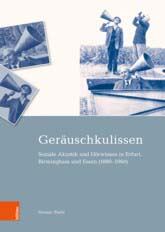
It is sometimes said that writing about hearing is only possible with sound recordings. It is claimed that soundscapes can only be determined through media-technological recordings of speech, sounds, and music, or through physical measurements of sound levels. Heiner Stahl’s historical study demonstrates that it is possible nonetheless. It examines the auditory traces of sounds from the period between 1880 and 1960 that were and are contained in historical documents. This includes court rulings, expert reports from industrial inspectors and police authorities, assessments by city physicians and public health departments, and complaints from citizens. Social acoustics is composed of bodies of auditory knowledge that compete with one another for the power to define. This is evident in noise pollution conflicts that arose in the “phonotopes” of factories, residential areas, traffic, public gatherings, and airspace. It explores the self-conceptions, cultural traditions, and spatial arrangements of sounds.
Publisher’s link: https://www.vandenhoeck-ruprecht-verlage.com/themen-entdecken/literatur-sprach-und-kulturwissenschaften/kulturwissenschaft/57331/geraeuschkulissen
Urban Space as a Discursively Shaped Lifeworld from a Transnational Perspective, 1960–1970 (working title)
Ongoing habilitation project by Daniela Mysliwietz-Fleiß
Leap into History: The Popularization of History and Modes of Staging and Representation in Digital Games
Completed dissertation project by Milan Weber (2026)
Publication:
Milan Weber: Images of the Past. Staging and Popularization of History in Digital Games (TransKult. Studies in Transnational Cultural History, Vol. 5), Vienna/Cologne 2026
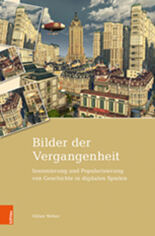
History is more popular today than ever before. It is increasingly present in popular media and is heard, read, seen, told, reenacted, experienced, and played. Digital games play a key role in this steadily growing popularity. They not only articulate the ideas that millions of people worldwide have about the past—they also change them. This makes a systematic examination of the history staged in this medium absolutely essential. Alongside books and films, digital games are now one of the most important mediums for popularizing history—regardless of the audience’s age, gender, or nationality. Digital games play a central role if we wish to understand, from a scholarly perspective, how history is represented, staged, negotiated, and imbued with meaning across society as a whole. What image of history is conveyed in digital games? What impact do the medium’s unique characteristics have on the popularization of history? And above all: How is this medium changing our historical culture? Milan Weber addresses these and other questions in his study, exploring the multifaceted transformations of popular history in one of the most widely reached media of our time.
Publisher’s link: https://www.vandenhoeck-ruprecht-verlage.com/themen-entdecken/literatur-sprach-und-kulturwissenschaften/kulturwissenschaft/60760/bilder-der-vergangenheit
Personal Appropriation and Reception of Popular History in Digital Games
Completed dissertation project by Tom Pinsker (2026)
Publication:
Tom Pinsker: History as Experience. Players’ Perspectives on History in Digital Games, Marburg 2026

Encountering history in video games is part of everyday life for people around the world. Medieval castles, World War battlefields, or ancient temple complexes—populated by knights, pharaohs, or gladiators—define titles such as Assassin’s Creed, Anno, and Kingdom Come: Deliverance. Given this diversity and popularity, the question arises: How do players perceive and influence these worlds? What fascinates them about history in video games? When is a portrayal considered successful or unsuccessful? Is the medium merely entertainment or a serious form of historical culture? Are players—as some fear—treated like empty vessels to be filled with digital historical narratives, or do they engage with these narratives individually and thoughtfully?
To find answers, Tom Pinsker conducted 86 interviews with people from various educational and professional backgrounds in Germany, Austria, and Switzerland. The interviewees describe what a “game with history” means to them, when it feels “authentic,” and how they compare the medium to classroom instruction or non-fiction books. What is particularly important to them is that history becomes something they can experience—whether as a soldier in the trenches, as Cleopatra VII, or as a revolutionary in the streets of Paris in 1789. The focus is always on immersion in historical game worlds.
Publisher’s link: https://www.buechner-verlag.de/buch/erlebnis-geschichte/
Exoticism in the Third Reich: The Colonial in Popular Media and the Mobilization of the Germans
Completed dissertation project by Christoph Hagebeucker (2019)
Publication:
Christoph Hagebeucker: Exoticism in the Third Reich. The Colonial in Popular Media and the Mobilization of the Germans, Hamburg 2019
Although the colonial era was relatively short, calls for colonial revision emerged in Germany after World War I. Furthermore, memories of the colonies were kept alive in popular culture—even after the political turning point of January 1933.
This study examines the portrayal of German colonialism in Africa in selected popular media of the Nazi era. The focus is on the question of what content and messages were used to address the colonial issue in popular cultural discourse between 1933 and 1945. The study highlights the potential of this “exotic” topic to mobilize segments of the German population in support of the Nazi regime.
Publisher’s link: https://verlagdrkovac.de/978-3-339-11280-4.htm
"A lively game never to be played for real" – the Cold War in video games
Completed dissertation project by Clemens Reisner (2018)
Publication:
Clemens Reisner: Cold War Games. The Cold War in Computer Games (ca. 1980–1995) (TransKult. Studies in Transnational Cultural History, Vol. 3), Cologne/Vienna/Weimar 2020
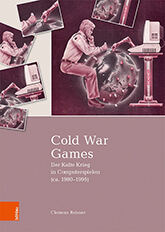
There is a close connection between video games and the Cold War. Not only do the technical foundations of the medium stem from the technologies of the systemic conflict, but from its earliest days, this entertainment medium also had something to say about what the Cold War was and what it meant.
Through a series of case studies, this study examines how video games made their media-specific contribution to the construction of the Cold War within the historical context of the final phase of the Cold War. In doing so, they served as translators of specialized Cold War knowledge into popular culture and as discursive tightrope walkers between simulation and play.
The study thus contributes to the understanding of video games as sources of cultural history.
Publisher’s link: https://www.vandenhoeck-ruprecht-verlage.com/themen-entdecken/geschichte/zeitgeschichte-ab-1949/55472/cold-war-games
"Out to Repossess Our Land"—The Debate Over Evolutionary Theory in the U.S. as a Struggle for Political Interpretive Authority
Completed dissertation project by Tim Bernshausen (2016)
Publication:
Tim Bernshausen: “Out to Repossess Our Land.” The Debate Over Evolution as a Struggle for America’s Future, Hamburg 2017

Since the 1980s, the debate over evolution has become the focus of a public controversy that, at first glance, appears highly specialized but—as becomes clear upon closer examination—has shaken the very foundations of American political culture. Protestant fundamentalists demanded that alternative theories to evolution be taught in schools to combat a perceived moral decline. These efforts were interpreted by pro-evolution activists as an attack on science itself. From the outset, therefore, the conflict over evolution was far more than a dispute over curriculum content. Rather, it sparked a power struggle between competing social groups over the future of America, a struggle inextricably linked to the search for the nation’s collective identity in an era of accelerating globalization. The trigger was the perception of a profound crisis in each side’s respective social and political position. A discourse-analytic perspective reveals the relationship between perceptions of crisis, sources of legitimacy, and claims to power on both sides.
Publisher’s link: https://www.diplomica-verlag.de/gesellschaft-kultur_65/out-to-repossess-our-land-der-streit-um-die-evolution-als-kampf-um-die-zukunft-amerikas_164939.htm/
"Welcome to my Bunker." Veterans Online: Vietnam War Experiences in the Digital World
Completed dissertation project by Roland Leikauf (2014)
Publication:
Roland Leikauf: “Welcome to My Bunker” – Vietnam War Experiences on the Internet, Bielefeld 2015
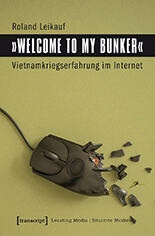
"Welcome back!"—On thousands of websites, Vietnam veterans welcome visitors to their new home: the Internet. The web has taken on great significance for many who were involved in the longest and most controversial war America has ever fought. Historian Roland Leikauf demonstrates that nothing less than a radical redefinition of the concepts of “Vietnam veteran” and “Vietnam War” is taking place here. The study makes it clear why coming to terms with war in virtual “space” is becoming increasingly important, even for veterans of more recent conflicts.
Publisher’s link: https://www.transcript-verlag.de/978-3-8376-3342-9/welcome-to-my-bunker-vietnamkriegserfahrung-im-internet/
Interior Spaces: The Discovery of the Factory as a Tourist Attraction for the German Middle Class during the Transition to Modernity
Completed dissertation project by Daniela Mysliwietz-Fleiß (2013)
Publication:
Daniela Mysliwietz-Fleiß: The Factory as a Tourist Attraction. The Discovery of a New Space for Experience in the Transition to Modernity (TransKult. Studies in Transnational Cultural History, Vol. 2), Cologne/Vienna/Weimar 2020
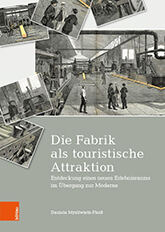
While factories were largely regarded as gloomy places of work during the early and high phases of industrialization—places that the middle class avoided as much as possible—by the end of the 19th century, more and more visitors from the bourgeoisie were drawn to industrial production sites. Driven by this interest, factories transformed from places of production into tourist attractions. Daniela Mysliwietz-Fleiß not only traces the origins of factory tours—which remain extremely popular today across various industries—but also links the history of tourism with the history of the German middle class’s mindset.
Printed with the kind support of FoKoS and the Dirlmeier Foundation at the University of Siegen.
Publisher’s link: https://www.vandenhoeck-ruprecht-verlage.com/themen-entdecken/geschichte/geschichte-der-neuzeit/49058/die-fabrik-als-touristische-attraktion
The Historical Construction of the "National" in Digital Games (working title)
Ongoing dissertation project by Jan Pasternak
Transnational History for All: The Popularization of History in British and German Magazines of the “Long 19th Century” (working title)
Ongoing dissertation project by Tobias Scheidt
Alfred Hugenberg and Willi Münzenberg: Two Media Moguls in the Weimar Republic (working title)
Ongoing dissertation project by Hinnerk Höfling
Daughters and Fathers in the Upper Middle Class—An Analysis of Relationships (working title)
Ongoing dissertation project by Anja Bel
Exoticism in Rural Daily Life: Human Zoos in the Provinces during the Long 19th Century (working title)
Ongoing dissertation project by Katharina Jabs
Colossus, Empire, Timeline, and More: The Staging and Reception of History in Board Games (working title)
Ongoing dissertation project by Robin Reschke