Web 2.0 and Historical Studies: "Social Networking" as a Challenge and a Paradigm
Venue: Siegen, Artur Woll Haus
Start: October 9, 2009, 2:00 p.m.
End: October 10, 2009, 2:00 p.m.
Conference Objective
The aim of the conference is to assess the functional significance of “Web 2.0” for teaching and research processes in historical studies. This will be done from two main perspectives.
- First, existing experiences with “social network applications” will be presented. The central question here is whether and to what extent these new technical platforms are accompanied by a shift in the culture of teaching and research in history.
- Second, the conference will examine whether and to what extent “social network applications” in historical studies represent a new paradigm for teaching and research processes.
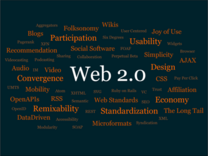
1) Web 2.0 and Historical Studies—A Complex Relationship
In recent years, the field of historical informatics has increasingly engaged with Web 2.0. The session on “Collaborative Writing, Teaching, and Learning” at the .hist2006 conference in Berlin and the “Zeitgeschichte online – Docupedia” project clearly demonstrate that a theoretical examination and methodologically sound testing of “collaborative systems” have found their way into the field of history.
The characteristics of the concepts and Internet applications encompassed by the term Web 2.0 are not precisely defined; however, there are a number of “key principles” that describe Web 2.0 applications and the working methods associated with them.
Web 2.0 stands “for a range of interactive and collaborative elements of the Internet.” It refers less to specific technologies or innovations and more primarily to a changed use and perception of the Internet. A central aspect of this is that users themselves create and edit content to a significant extent, both in terms of quantity and quality. Large numbers of individuals connect with one another using social software, and in this way communicate and collaborate. Web 2.0 thus means that individuals use “collaborative software” to create platforms on the Internet through which they design content and thereby work with others on “joint projects,” making particular use of communication features. At its core, Web 2.0 is therefore a “participatory web.”
The “participatory web” comprises two components that are of central importance to historical scholarship. On the one hand, it embodies the philosophy of “sharing knowledge,” which is fundamental to (historical) scholarly discourse. On the other hand, however, the formerly unambiguous relationship between a text and its author dissolves; texts undergo a dynamic evolution in style and content, the substance of which is determined by the set of rules that underlies the “social network,” serving, so to speak, as its constitution. In short: On Web 2.0 platforms, the (historical) scholarly author must adopt a fundamentally new relationship to the scholarly texts he or she writes.
For an explanation of Web 2.0, see: Michael Wesch: “Web 2.0 … The Machine is Us/ing Us,” in: YouTube, January 31, 2007, URL www.youtube.com/watch?v=6gmP4nk0EOE.
2) Key Questions of the Conference
- Theoretical and methodological issues surrounding “social networks” in historical scholarship – The advantages and disadvantages of “social networks”
- Design and implementation of “social software” in historical research—experiences and example projects
- “Knowledge Sharing Using Social Media” as a New Paradigm for Historical Research?
- “Social networks” as new paths for historical learning?
Conference Program and Schedule
October 9, 2009
- 2:00 p.m.
Angela Schwarz (Siegen):
Welcome and Opening Remarks - 2:15 p.m.
Rüdiger Hohls / Jürgen Danyel (Berlin):
Docupedia Contemporary History: Workshop Report on a Web 2.0 Publication Model - 3:15 p.m.
Jürgen Beine (Siegen):
Wikis as a Challenge for Historical Scholarship - 4:15 p.m.
Coffee break - 4:45 p.m.
Patrick Sahle (Potsdam):
The Archive as a Virtualized Research Environment? - 5:45 p.m.
Gregor Horstkemper (Munich):
A Stodgy Guild on the Path to Library 2.0? New Roles for Libraries and “Social Communities” in Developing Online Resources Relevant to Historical Research - 7:00 p.m.
Dinner
October 10, 2009
- 9:30 a.m.
Richard Heigl (Regensburg):
Wikis and Blogs as New Academic Tools - 10:30 a.m.
Peter Haber (Basel):
Writing History in the Digital Age - 11:30 a.m.
Coffee break - 12:00 p.m.
Manfred Thaller (Cologne):
The End of the Canon: Threats and Hopes - 1:00 p.m.
Closing Discussion
Source: Jan Pasternak: Web 2.0 and Historical Studies. “Social Networking” as a Challenge and Paradigm, conference held October 9–10, 2009, at the University of Siegen, in H-Soz-u-Kult, Conference Proceedings, November 28, 2009, URL: https://www.hsozkult.de/conferencereport/id/fdkn-121512
In the age of the Internet, the world appears more multimedia-rich and interactive than it did fifteen or twenty years ago. This applies equally to the World Wide Web, and even more so here, given that this field has evolved significantly in recent years under the banner of Web 2.0. The Internet is becoming a “participatory web” for everyone. This development does not stop at the field of history, especially since history in popularized form has already played a significant role for many years across various media, not least on the Internet. This conference, specifically focused on the topic “Web 2.0 and Historical Studies,” posited in its subtitle that this may present a challenge for established academic disciplines—one that should be addressed: According to the organizers, “social networking” should be viewed in all its ambivalent potential—both as a challenge and as a paradigm.
Consequently, on October 9 and 10, 2009, representatives from the field of history and several related disciplines gathered at the University of Siegen to discuss the phenomenon of Web 2.0 and its significance for the future of historical research. In her opening remarks, ANGELA SCHWARZ (Siegen) made it clear that there was virtually no way around engaging more intensively with the subject. She referred, on the one hand, to the scholarly projects already available digitally via the World Wide Web, whether they be museum-based presentations of history or digital editions of books and primary sources. However, according to Schwarz, these have in many cases not yet been implemented using Web 2.0 technologies but instead rely on older methods. On the other hand, she pointed out that there is now a wide variety of history available online, with many users writing “their” history in the form of texts, films, or images on major community portals such as the Wikipedia encyclopedia, the YouTube video platform, or the Flickr photo-sharing service. They use these portals, as well as other online services, even if they were not designed exclusively for the purpose of presenting history. From this, the organizer concluded that the field of history must increasingly engage with the digital presentation of history within the context of Web 2.0 and emphasized the importance of exchange between the field of history, the archival and library sectors, and (popular) history education in general.
RÜDIGER HOHLS (Berlin) presented a workshop report on the ongoing Docupedia-Zeitgeschichte project. The project draws on Web 2.0 mechanisms to create an electronic handbook on current research in the field of contemporary history, which will consist of scholarly articles, media data, and documents. By not aiming to be an encyclopedia, it distinguishes itself from Wikipedia; however, this does not imply a rejection of Wikipedia, but rather simply reflects the project’s objectives. According to Hohls, this also includes emphasizing the role of the author. The collective authorship characteristic of Web 2.0 is toned down in the Docupedia project in favor of an author-editor model. The author remains associated with their text, but it is discussed and commented on within the “community” of “editors” (a group of scholars outside the project’s actual editorial team who review the submitted texts). According to Hohls, this means that the creative process at Docupedia is firmly rooted in the tradition of classical academic scholarship, a tradition that cannot be easily undermined. Ultimately, as the discussion—in which the term “Web 1.5” was mentioned—also showed, this results in a project that uses modern methods of collaboration via the Internet to implement a traditional and proven publication model in a contemporary way. The major advantage lies in the ability to continually expand the groups of authors and editors and to adapt existing texts to current developments in research more quickly than would be possible with conventional forms of publication.
JÜRGEN BEINE (Siegen) took this a step further by addressing the question of the scholarly use of existing Web 2.0 systems, such as the wiki platforms created by the Wikimedia Foundation. In addition to Wikipedia as an encyclopedia—to which specialist scholars have increasingly contributed articles in recent years, a development expressly encouraged by those in charge and which has already led, to some extent, to a greater academic focus on Wikipedia—the project Wikisource was the primary focus of attention. According to Beine, this collaborative source edition allows for the implementation of independent editorial projects based on previously unedited historical sources. The standards that Wikisource imposes on such a project are essential. In particular, the two mandatory rounds of proofreading by the community and the subsequent locking of the content to prevent further changes (unlike in Wikipedia, where articles can be revised repeatedly) would contribute to a more scholarly orientation of the project. Nevertheless, the goal of making a larger collection of sources available in this way is difficult, because even if the sources were generally citable via Wikisource, the means to thematically group multiple individual sources and present them in the form of a portal—analogous to Wikipedia’s topic portals—and to provide coherent commentary on them are still lacking.
Going beyond the mere possibility of digitally archiving individual sources, the presentation by PATRICK SAHLE (Cologne) addressed the archive as a virtualized research environment. Linked to the ideal of complete digitization of all archival holdings, the presentation outlined the current state of the archival landscape. In contrast to libraries, whose collections are now available online almost everywhere, archives make finding aids available online only to a very limited extent, even though the necessary standards and interfaces are in place. Furthermore, Sahle referred to the first attempts to make archival material digitally available, which involve collaboration between archives and providers of Web 2.0 services—for example, with image collections from the Federal Archives that are made available on the Wikimedia Foundation’s platforms. In these cases, the archives actually benefit, as the community can provide additional information about the materials, which the archives can in turn use for their own categorization. Given the sheer volume of material, involving the community in the spirit of Web 2.0 is essential if the goal of fully digitizing archival collections is to be achieved. At this point in the discussion, the question arose as to what extent such maximalist demands regarding archiving were feasible, which highlighted the differing perspectives on how to approach the problem despite sharing the same objective: On the one hand were the maximalist demands; on the other were the advocates of a step-by-step approach, which did not alter the general aim of creating a digital archive landscape that is as diverse and comprehensive as possible.
At the end of the first day, GREGOR HORSTKEMPER (Munich) took a look at Library 2.0 and, with it, the future of librarianship in the digital age and its significance for historical scholarship. In doing so, he focused primarily on the digitization projects already underway in the various special collections of German libraries and raised the question of whether such initiatives, which have been around for some time, are now “out of date” in the age of Web 2.0. Focusing on the fundamental choice between the quality of the scholarly author and the “wisdom of the crowd,” Horstkemper explained the opportunities libraries have to collaborate with user groups in the digitization process. In his view, this would lead to problems especially with older texts, since, for example, the special collections section of the Bavarian State Library—which includes 16th-century prints—is virtually inaccessible to most groups of web users. Nevertheless, “public history” is generally important and worthwhile. However, since quality must always take precedence, the potential applications of such Web 2.0 technologies are difficult to assess under current circumstances. That said, larger networks are better suited to handling small and medium-sized tasks while processing large amounts of material. More complex tasks are best tackled by small teams of experts.
The following day, the focus was on working methods for historians. RICHARD HEIGL (Regensburg) used the “Critical History” project as an example to demonstrate how wikis and blogs can be used by the profession as working tools and what consequences this may entail. Heigl argued that, as individual systems become increasingly interconnected, blogs are essential primarily for the visibility of one’s own platform, especially since search engines give preferential treatment to blogs. Wikis, on the other hand, are better suited for presenting content, but they impose their own logic on users—a characteristic inherent to this type of publishing system. For authors, the question of a post’s relevance becomes more significant: Does this or that aspect require its own entry, or can it be categorized elsewhere? This is just one of the questions that arise in this context. Even more significant for historical scholarship, however, is the unfinished nature of the entries, which can be expanded or edited by anyone at any time—meaning they by no means have to be complete when first posted. Blogs, on the other hand, offer a means of rapid communication among experts for exchanging information on current research and identifying current research priorities or ongoing research projects. In this way, a new form of long-established networks emerges, one that brings with it the advantage of greater speed of dissemination and accessibility. In addition, a new kind of expert culture could develop, one that publishes new research findings via wikis in a shorter and more easily understandable form, serving as a complement to traditional scholarly articles.
PETER HABER’s (Basel) presentation focused on the workplace of historians in the digital age. He vividly described the professional field of history as it undergoes its current process of transformation. At all levels of scholarly work, there are discernible processes of change that have long since become part of daily work—such as searching for literature in digital libraries, which deliver a significantly larger number of useful hits much more quickly than earlier methods of literature research —and consequently leading to the problem of a veritable flood of literature. Researchers also face a new challenge in the area of sources, as sources created digitally from the outset no longer have an “original” in the traditional sense, leaving major questions of authenticity unresolved. Furthermore, web-based forms of publication require the emergence of a new culture of writing in historical scholarship—one that presents arguments in a much more concise and focused manner than is possible in essays or even monographs. Nevertheless, Haber continued, the significance of written publication will not change in the foreseeable future. The scholarly monograph remains the gold standard, but new forms of digital writing are emerging to complement it, as can already be seen in the numerous online reviews that are no longer published and received through scholarly journals but rather through portals such as H-Soz-u-Kult. This also includes the increased collaborative writing of texts, which, while by no means new, has become much more efficient thanks to the possibilities of online collaboration, especially when the number of authors involved exceeds three. Looking to the future, there will be no radical upheaval in scholarly working methods, but there will certainly be significant changes in certain areas, according to the conclusion of this multifaceted presentation.
MANFRED THALLER (Cologne) addressed the “End of the Canon,” using this title to once again summarize the developments and potential of the digital world and its significance for historical scholarship. To this end, Thaller revisited various aspects of the topic and illustrated the general issues using numerous different examples. A key point, however, is and remains the editing of sources, the digital version of which has already been tested in various projects—always based on a role-based system that enables the involvement of non-scholars in the editing process without any noticeable loss of quality. At the same time, however, digitization paves the way for a much faster workflow when carried out as an open process, enabling the parallelization of chronological sequences in digital cataloging—something that was previously impossible using analog methods. This blurs the interaction between the various users of the sources and their traditional roles. Ideally, the result is a faster and more effective interaction among the participants, which enables a more efficient cataloging of the sources. If one were to view scholarship as a form of communication, one could see today’s Wikipedia as part of the tradition of the Royal Society, which was itself initially a society of laypeople who shared a scientific interest. According to Thaller, what matters is not who says something, but what is said and how it is argued. Divergent opinions are important in a discipline like history, provided they are clearly recognizable as such.
In the end, the question remained open as to whether the “participatory web” was now heralding a new era for science or whether, by examining its opportunities and limitations, we had “merely” taken another step forward. But ultimately, the answer to that question is of secondary importance. The conference certainly succeeded in demonstrating the developments unfolding in the realm of a broader Web 2.0 and that these will have significant consequences for the field of history. In the concluding discussion, there was agreement to continue the reflections that had begun and to discuss them further—naturally, in the spirit of Web 2.0, in the form of a wiki and publicly online. However, it is not yet possible to predict to what extent this approach will prove effective—the “experiment” is still ongoing.[1] Should the initial findings, referred to as the “Siegen Theses,” lead to further developments in the course of ongoing discussion, there was also consensus that participants would come together for additional conferences on the topic of Web 2.0 and historical scholarship.
[1] See “Siegener Thesen,” in: Histnet Wiki,