Mission statement of the Faculty
The Faculty of Economic Disciplines, Business Information Systems and Business Law at the University of Siegen sees its research and teaching as a central contribution to overcoming current and future social challenges, such as climate change, increasing digitality or issues of solidarity and justice. We base our teaching and research on real-world issues and practice.
The disciplines of Business Administration (BWL), Economics (VWL), Plural Economics (POEK), Business Information Systems (WI), Business Law (WR) and Business Didactics (WD) complement each other in their subject-specific perspectives and research and teach together in interdisciplinary or even transdisciplinary profile areas. The current challenges can only be solved together.
The Faculty sees itself as an open faculty that seeks exchange with the region, the economy and citizens. To this end, we get involved, pass on knowledge, provide new impetus, but also listen. We cooperate regionally, nationally and internationally.
We see ourselves as a service provider for our students. Didactic innovation, experimentation, diversity, quality and treating students as equals are important to us in order to attract students and lead them to sustainable success. We discover and promote talent.
We address the social challenges of sustainability, digitality and quality of life/wellbeing through the economic research and teaching of our disciplines. These form the fields of action and the overarching goal of our work.
- Digitality addresses the opportunities and challenges of advancing virtualization, automation and networking in terms of their potential social benefits (i.e. not primarily from a technological perspective).
- Sustainability addresses the opportunities and necessities for the considered use of resources that ensure the natural regenerative capacity of economic, social and ecological systems from an individual and societal perspective.
- Quality of life/wellbeing addresses the opportunities and challenges of individual meaning, justice, diversity, interculturality and social solidarity.
Naturally, these three fields are understood to be closely interwoven. The vision is to address the social challenges associated with these fields in our economic research and teaching in a transdisciplinary manner and thus contribute to their solution.
With this orientation, we will continue on the path of successful profiling towards greater national and international visibility. In this way, we will also ensure the future relevance of our teaching in terms of a high-profile range of courses, meaningful degrees and our ability to connect with research funding.
History of Faculty III
Predecessors and founding years
Faculty III, like the university, was founded as a university department on August 1, 1972.
The early predecessor of the University was the Hohe Nassauische Schule in Siegen (Universa Schola Nassovica Sigenensis) 1594 - 1600, 1606 - 1609, which was based in Herborn outside this period. The important jurist Johannes Althusius, born in 1557 in Diedenhausen (County of Wittgenstein / Berleburg), taught at this High Nassau School in 1594 - 1596 and 1597 - 1600. From 1599 to 1600, Althusius was also Rector of the Nassau High School in Siegen. Today's business law students at the Faculty are committed to his work and have therefore named the annual prize for the best business law graduates after Althusius.
The actual prehistory of the Faculty begins on January 25, 1962 with the founding of the Association for the Promotion of the State Higher Business School in Siegen. This association still supports the Faculty of Economic Disciplines, Business Information Systems and Business Law at the University of Siegen today, albeit under a modernized name. The Höhere Wirtschaftsfachschule (HWF) itself began operations in Siegen in April 1962. After two and a half years of study, the Faculty awarded the degree of Betriebswirt (HWF) and later the degree of Betriebswirt (grad.). The HWF fulfilled an urgent need for companies that were desperately looking for academically trained junior staff at the time. As universities of applied sciences did not yet exist and the number of high school graduates was comparatively low, the higher state technical colleges were also an important opportunity for talented young people to acquire an academic education that would otherwise have been denied to them. Graduates of the HWF in Siegen include Prof. Dr. Herbert Henzler, former President of McKinsey Europe and Germany, and Horst-Werner Maier-Hunke, current President of the North Rhine-Westphalia Employers' Association.

The Faculty in the 1970s
On 01.08.1971, the HWF was incorporated into the newly founded Siegen-Gummersbach University of Applied Sciences as the Faculty of Business. This Siegen-Gummersbach University of Applied Sciences was merged into the newly founded Siegen University of Applied Sciences on August 1, 1972. The department was given the name Economics - Law, as it was initially hoped that a law course could be established alongside economics and business administration as components of economics. After this proved to be unfeasible, the department was renamed the Department of Economics in the second half of the 1970s.
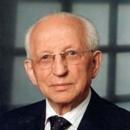
The first founding rector of the university from 1972 - 1980 was the economist Prof. Dr. Dr. h.c. mult. Artur Woll, who is still an active member of the Faculty today. At the beginning of the winter semester 1972/1973, the faculty had 143 first-year students and 27 professors. Of these, 25 had been transferred from the HWF or the University of Applied Sciences. In addition, there were two newly appointed traditional university professors. A nine-semester long-term degree course in economics, a nine-semester long-term degree course in business administration and a seven-semester short-term degree course in business administration, which was aimed specifically at prospective students with a technical college entrance qualification, were offered in the field of economics.
The Faculty in the 1980s
On 01.01.1980, the former comprehensive university was given the title of University-Comprehensive University, without this initially leading to any noticeable changes. At that time, the faculty had 847 students. The expansion of the department's staff lasted until around 1982, when the department had 16 traditional university professors (so-called a-professors) with a focus on long-term courses and 25 so-called b-professors with a focus on short-term courses in business administration. The 41 professors were offset by 28 positions for research assistants.
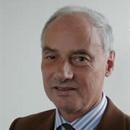
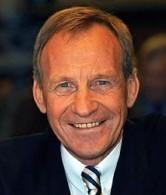
In the 1980s, the number of students increased steadily. In the winter semester of 1988/89, Prof. Dr. Manfred Grauer was appointed to the first Business Information Systems professorship. He subsequently provided numerous impulses for computer education and Business Information Systems.
The Faculty in the 1990s
In the winter semester of 1990/91, the then faculty reached a record of 850 first-year students in the core subjects of Business Administration DII (long-term course), Business Administration DI (short-term course) and Economics. The maximum number of students was reached in the winter semester 1992/93 with 3,555 students in the aforementioned core subjects (excluding teacher training students). After that, the number of students fell to less than half. During the difficult period from the mid-1990s onwards, the department demonstrated both its ability to hold together and to restructure. In 1995, the department voluntarily took part in a pilot project for external evaluation by the German Council of Science and Humanities.
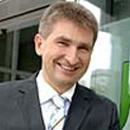
At the beginning of 1998, the newly established "SME" professorship was filled by the former Minister for Research and Innovation of the State of North Rhine-Westphalia, Prof. Dr. Andreas Pinkwart, thus establishing a promising area for the Faculty, especially from today's perspective.
A long-term and a short-term Business Information Systems course were launched in the winter semester 1998/1999. In the winter semester 1999/2000, the diploma course in German and European Economic Law began as the first university course of its kind in Germany. The Business Law course is characterized by its consistently high demand and its supra-regional appeal.
The Faculty in the 2000s
The last new enrolments for the traditional Diplom degree course in Economics took place in the summer semester 2001. A newly designed Bachelor's degree in Economics started in the winter semester 2002/2003 and the associated Master's degree in the winter semester 2003/2004. They were the first degree courses in the faculty to be accredited by an external commission.
On January 1, 2003, the University-Gesamthochschule became what is now the University of Siegen.
Since the end of the 1990s, there has been a strong rejuvenation of the teaching staff. The number of professorships fell. Teaching professorships were converted into research professorships. The proportion of better-equipped C4 professorships was increased by means of reappointment procedures. The growing strength of the department at that time is reflected in the increase in external appointments, but also in the ability to fend off many of these external appointments.

In June 2003, on the initiative of Prof. Dr. Peter Letmathe, the Siegen SME Institute (SMI) was founded on the initiative of Prof. Dr. Peter Letmathe. In 2006, Professor Letmathe succeeded in acquiring commitments for an endowed professorship for corporate succession in the SME sector, which was filled by Prof. Dr. Petra Moogin the winter semester 2007/2008. has been appointed.
With effect from September 2005, the department was renamed the Faculty of Economic Disciplines, Business Information Systems and Business Law. The new degree courses in Business Information Systems and Business Law were thus also to be recognized externally.
This made it possible for Business Law in particular to join the Association of Law Faculties and to gain approval for the award of the Dr. iur. degree, a title that is otherwise only awarded at Faculty of Law.
Students with an entrance qualification for universities of applied sciences were able to enrol for the last time in the winter semester 2005/2006 without a special aptitude test.
In January 2006, on the initiative of Prof. Dr. Volker Wulf a branch of the Fraunhofer Gesellschaft (FIT), St. Augustin, was opened at the university.
In the winter semester 2006/2007, the conversion of the business administration diploma courses to the Bachelor-Master structure began with the Bachelor of Science in Business Administration. Since the 2009/2010 winter semester, there has also been a wide range of Master's courses, including a Master's for the management of small and medium-sized enterprises. A Bachelor's and Master's in Business Information Systems began teaching in the 2007/2008 winter semester. Business Law was converted to a Bachelor's degree in the 2008/2009 winter semester.
The Faculty in the 2010s
The Research Faculty Business and Economics (RSBE) began its work on May 5, 2010. In this research Faculty, 10 doctoral students and one postdoc worked together on research topics related to the central theme of "Decentralized Organization". In particular, the RSBE takes up the idea of interdisciplinarity and brings it to life.
With the new basic regulations of the University of Siegen, with effect from 01.01.2011, the 12 departments were bundled into four Facultys. As part of this change, Department 5 was renamed Faculty of Economic Disciplines, Business Information Systems and Business Law III.
Since the winter semester 2010/2011, the faculty has been offering an Executive MBA, which is aimed at managers of small and medium-sized enterprises and is supported by the Business School. This is the first time that the Faculty has positioned itself in the increasingly important area of so-called lifelong learning. In May 2013, the first graduates of the Academy were bid farewell at the 7th annual reception of Faculty III.
The Master's degree program in German and European Economic Law with an optional focus on Corporate Law or European and International Economic Law was changed in winter semester 2011/12. Since winter semester 2009/2010, the Faculty has been offering a Master's degree course in HCI (Human Computer Interaction), the only one of its kind in Germany to date. The conversion of the teacher training courses to the Bachelor's/Master's structure took place in the winter semester 2011/12. The economics degree courses were reaccredited in the winter semester 2011/12 with a new profile, a Bachelor of Science in Economics and a Master of Science in Economic Policy, in the winter semester 2011/2012. The Business Administration degree programs were also reaccredited in the 2012/2013 winter semester and Business Information Systems in the 2013/2014 winter semester.
Faculty III enjoyed impressive success in the 2012 Handelsblatt Business Administration Ranking: three professors from Faculty III (Faculty of Economic Disciplines, Business Law, Business Information Systems) were ranked among the top 250 nationwide. The Business Information Systems specialist Prof. Dr. Erwin Pesch was ranked 23rd in terms of publications (2009: 41st) and 17th in terms of research output over the last five years, making him the third-highest ranked Business Information Systems professor in the German-speaking world. Prof. Dr. Volker Wulf is ranked 210th in terms of publications. Both are also Business Information Systems specialists.
On 24.05.2012 Prof. Dr. Volker Wulf and the Institute of Business Information Systems and New Media were honored as a "Selected Landmark 2012" in the science category at the 6th annual reception of Faculty III for the project "Landmark - safe navigation system for firefighters" in the competition "365 Landmarks in the Land of Ideas".
In November 2012, together with the Chair of Business Information Systems and New Media headed by Prof. Dr. Volker Wulf with the Institute for Media Research established the BeFIT branch of the Fraunhofer Institute for Applied Information Technology(FIT). The aim is to provide future-oriented support for SMEs in South Westphalia through practical research into the IT-supported optimization of sustainable business processes.

In the course of the new appointment in February 2013 of Prof. Dr. Friederike Welter to the Faculty III of the University of Siegen in February 2013, Ms. Welter also took over the presidency of the Bonn Institute for SME Research (IfM) at the same time. The research and teaching exchange is regulated in a cooperation agreement. A branch office of the IfM is currently being established in Siegen. Ms. Welter is ranked in the F.A.Z. economist ranking of 2016, which lists the most influential economists in Germany, in 18th place.
Since 2016, Faculty III has been offering the new Master's degree program "Plural Economics" has been offered. Plural economics examines economic phenomena using a variety of different approaches and is characterized by the discourse of alternative traditions of thought. The Pluralist Economics degree program is aimed at students who want to critically reflect on their own understanding of economics and leave familiar ways of thinking behind. The course offers two specializations: Political Economy and Management and Leadership.
In 2017, the celebration of the move of Faculty III to the Unteres Schloß campustook place. took place. Dean Prof. Dr. Volker Wulf welcomed numerous guests to the official opening of the Lower Castle Campus, where Faculty III students have been attending events since April 2016. Part of Faculty III had already moved to the former Siegen District Hospital two years earlier. The Faculty Council of Faculty III gave the former district hospital the name "Ludwig-Wittgenstein-Haus" (LWH for short).
The "SME Graduate School"was officially opened at the University of Siegen at the beginning of 2019. was ceremoniously opened. Young academics working on the topics of "SMEs" and "entrepreneurship" receive special support there.
The Faculty in the 2020s
The year 2020 was characterized by the COVID-19 pandemic, which is why teaching and science went digital. Lectures and conferences took place almost exclusively via digital communication tools, and a new way of sharing information for students and academic staff developed. From the 2020/21 winter semester, the new examination platform ECON E-Assessment was also introduced, which made it possible to conduct both result-oriented examinations in the form of written exams and process-oriented examinations with the help of portfolio work.
Dr. Dr. Björn Niehaves, who taught at Schools III from 2014 to 2022, was ranked 60th in the WirtschaftsWoche ranking 2020 and was thus listed among the TOP 100 business administration professors in the lifetime achievement ranking.
The COVID-19 pandemic was also relevant in the following year 2021, which is why teaching and exams continued to take place in virtual formats. From the winter semester 2021/22, students were able to return to campus and attend courses and examinations in person.
Three Siegen professors were among the top 100 best researchers in business administration in German-speaking countries in 2022. The highest-ranked scientist from Siegen was Prof. Dr. Marc Goerigk in 40th place, followed by Professors Dr. Erwin Pesch in 45th place and Dr. Martin Hiebl in 57th place.
Faculty Council of the Faculty of Economic Disciplines, Business Information Systems and Business Law (eighth council period since the formation of the faculty)
Group of university lecturers
- Univ.-Prof. Dr. Maximilian Becker
Junior Professor Dr. Shadan Sadeghian Borojeni - Junior Professor Dr. Svenja Flechtner
- Univ.-Prof. Dr. Ekkehard Köhler
- Associate Professor Dr. Dr. Sascha Kraus
Associate Prof. Dr. Marcus Schweitzer - Associate Professor Dr. Volker Stein
- Associate Professor Dr. Martin Thomsen
Group of academic staff members
Group of students
- Marleen Flohr
- Ninella Škoro
- Frederick Luca van Vegten
Group of employees in technology and administration
Faculty Equal Opportunities Officer
Deputy Faculty Equal Opportunities Officer
Important deadlines
-
Applications for lecturers and deputy professorships
15.05. for the following winter semester
15.11. for the following summer semester
Quality Management (QM) Committee of the Faculty of Economic Disciplines, Business Information Systems and Business Law (identical to the Student Advisory Board)
This committee deals with the need for action in the area of teaching. The QM Committee is responsible for working on prioritized problems according to the PDCA cycle (Plan - Do - Control - Act). Meetings are held on a quarterly basis. Additional meetings can also be convened by the Vice Dean if there is an acute need for action.
The committee examines and scrutinizes existing procedures and processes in the Faculty. If necessary, it develops suggestions for improvement with other experts and, if necessary, develops new or modified chains of responsibility. These may have to be approved by the Faculty Council. The committee reviews the implementation of the "Objectives of Faculty III in the area of QMS Teaching".
Vice Dean for Teaching (member qua office, belongs to the group of professors)
- Prof. Dr. Giuseppe Strina
Group of professors
- Prof. Dr. Sebastian Kessing
- Associate Professor Dr. Peter Krebs
- Dr. Steffen Lange
- Dr. Marco Rehm
- Associate Prof. Dr. Markus Rohde
- Dr. Christine Weigel
Q-Coordinator (not a member)
- Marco Durissini, M.A.
Group of academic staff members
- Dr. Anke Schüll
Group of students
- Gloria Yap Basoeki
- Jan-Hendrik Bastian
- Christina Hilburg
- Rosina Klaucke
- Manon Neuenhausen
- Sam Steinhöfer
- Elton Sulejmanov
- Alisia Walter
Ombudsman
- Prof. Dr. Dr. Sascha Kraus
User committee
The penetration of IT-based services automatically makes every member of the University of Siegen an IT user. To ensure that the central requirements are recorded from the user's perspective and to communicate structural and conceptual information to the users efficiently, groups of university members are identified who have relatively homogeneous usage requirements.
Each of these user groups delegates one member to the user committee. The user representatives have the task of making the interests of their user group heard in the committee and informing the group about relevant decisions at CIO level. The tasks of the user committee are to collect requirements from the user groups, bundle them and prioritize them. The user committee elects a spokesperson to represent it on the CIO committee, as well as a deputy.
The members of Faculty III on the University of Siegen's user committee are currently:
- Ralf Dreier - Business Information Systems
- Dr. Anke Schüll - Information Systems
- PD Dr. Michael Gail - Management
Further information on the University of Siegen's user committee can be found here
Alumni - contacts, careers & know-how
The University and the Faculty would like to stay in contact with former students, the alumni, even after they have completed their studies. With the alumni association of the University of Siegen, the alumni network is being established.
The specialist networks of the Faculty of Economics, Business Information Systems and Business Law are integrated into the alumni network of the University of Siegen.
The alumni network builds bridges between the Faculty and practice for the benefit of alumni, students and young graduates and offers opportunities for entry into professional life as well as for career reorientation.
Alumni and students of the Faculty are invited to become part of this network by registering in the alumni directory!
Not yet part of the network?
Register here in the alumni directory so that you can participate in the network and benefit from the advantages.
The direct route to the specialist networks of Faculty III:
| Alumni Econ | Economics degree program (BA/MA/Diploma Economics) |
| Alumni Finance and Bank Management | Chair of Finance and Bank Management (Prof. Wiedemann) |
| Alumni MEPS | Master in Economic Policy Siegen (MEPS) |
| Socio Informatics |
Study program HCI |
| Alumni Business Information Systems | Business Information Systems degree program |
| Marketing TransVer e.V. | Chair of Marketing and Commerce (Prof. Schramm-Klein) |
| Siegener Forum für Rechnungslegung, Prüfungswesen und Steuerlehre e.V. (Siegen Forum for Accounting, Auditing and Taxation) | Former Chair of Business Taxation and Auditing (Prof. Krawitz) |
| Siegener Wirtschaftsjuristen e.V. | Study program German and European Business Law |
| Study & Consult e.V. | Student Business Consulting Siegen |
Association for the Promotion of the Faculty of Economic Disciplines, Business Information Systems and Business Law at the University of Siegen e.V.

Purpose and objectives
From the outset, the economy of this region showed an extraordinarily strong interest in the idea of founding the Higher Business College. In order to improve competitiveness, there was a great need for well-trained, practical and capable junior staff.
The Sponsors' Association had and still has the clear objective of supporting both the institution of the State Higher Business School in the past and Faculty III in the present and future in such a way that competition with other comparable educational institutions can be conducted on equal terms. In the practical implementation of this endeavor, the focus has always been and will always be on the students, so that they - certainly also in the long-term interest of the economy - are provided with a high-quality and practice-oriented, job-related training opportunity on site. Based on the principle of subsidiarity, the Association for the Promotion of Faculty III helps in cases where state funding is insufficient or unavailable.
The Verein zur Förderung der Fakultät III der University of Siegen e.V. is a non-profit organization. The purpose and objectives are outlined as follows in § 2 para. 1 of the statutes:
-
On the basis of supporting the Faculty of Economic Disciplines, Business Information Systems and Business Law at the University of Siegen in teaching and research, the association pursues exclusively and directly non-profit purposes within the meaning of the section "Tax-privileged purposes" of the German Tax Code.
-
The association is selflessly active.
-
The aim of the association's activities is to comprehensively promote and - above all financially - support the Faculty in the fulfillment of its tasks in teaching, research and studies, e.g. also in international academic and student exchanges.
A complete version of the statutes is available here: Statutes
Historical development
The Verein zur Förderung der Fakultät Faculty of Economic Disciplines der University of Siegen e.V. emerged from the Verein zur Förderung der Staatlichen Höheren Wirtschaftsfachschule in Siegen. The most important milestones are outlined below.
|
25.01.1962: |
Founding meeting of the Association for the Promotion of the State HigherBusiness School |
|
April 1962: |
Foundation of the State Higher Business College. |
|
01.08.1971: |
Integration of the Staatliche Höhere Wirtschaftsfachschule into the Fachhoch- |
|
01.08.1972: |
The Department of Economics at Siegen/Gummersbach University of Applied Sciences |
| 01.01.1980: | The Comprehensive University of Siegen becomes the University of Siegen. |
| 01.01.2003: | The University of Siegen becomes the University of Siegen. |
| 01.09.2005: | The department is renamed the Faculty of Economic Disciplines, Business Information Systems and Business Law. |
| 01.01.2011: | As part of the restructuring of the University of Siegen into 4 faculties, the department becomes the Faculty of Economics, Business Information Systems and Business Law. |
| January 2012: |
The association celebrates its 50th anniversary. |
| November 2012: | For the first time, prizes are awarded to the best graduates under the name of Artur Woll Prize , the founding rector of the University of Siegen. |
The Artur Woll Award winners
The prizewinners are:
| Lea Schiemann (Bachelor of Business Administration) | |
| Lukas Wilzek (Bachelor of Economics) |

|
| Bob Held (Bachelor Business Information Systems) |

|
| Ruksana Safarova (Bachelor German and European Economic Law) |

|
| Sebastian Merten (Master of Business Administration) | |
| Alexander Sohl (Master of Economics) |

|
| Sarah Lange (Master Plural Economics) |

|
| Laura Grönewald (Master Business Information Systems) | |
| Vanessa Schäfer (Master German and European Economic Law) |

|
The prizewinners are:
| Daniel Rump (Bachelor of Business Administration) |

|
| Jan Robin Kleiner (Bachelor of Economics) |

|
| Luisa Müller (Bachelor Business Information Systems) |

|
| Linda Schäfer (Bachelor German and European Economic Law) |

|
| Luca Bröhl (Master of Business Administration) |

|
| Isabel Helmrath (Master of Economics) |

|
| Michael Berlet (Master Plural Economics) |

|
| Johanna Weber (Master Business Information Systems) |

|
| Theresa Heimann (Master German and European Economic Law) |

|
The prizewinners are:
| Lisa Marie Dilling (Bachelor of Business Administration) |

|
| Laura Rustige (Bachelor of Economics) | |
| Lukas Schröder (Bachelor Business Information Systems) |

|
| Vanessa Schäfer (Bachelor German and European Economic Law) |

|
| Michelle Graversen (Master Controlling and Risk Management) | |
| Thi Ngoc Nguyen (Master Economic Policy) |

|
| Anna-Katharina Flügge (Master Human Computer Interaction) |

|
| Janina Harms (Master German and European Economic Law) |

|
| Martin Middelanis (Master of Plural Economics) |

|
The prize winners are:
| Luca Bröhl (Bachelor of Business Administration) |

|
| Isabel Helmrath (Bachelor of Economics) |

|
| Malte Brockmeier (Bachelor Business Information Systems) | |
| Nicolas Schwade (Bachelor German and European Economic Law) |

|
| Daria Linke (Master Accounting, Auditing and Taxation) |

|
| Konstantinos Theocharopoulos (Master Economic Policy) |

|
| Laurine Messner (Master Human Computer Interaction) |

|
| Vanessa Dorothea Dohrmann (Master German and European Economic Law) |

|
| Martin Werner Buchner (Master of Plural Economics) |

|


Dean's List
The Dean's List is the best list of our 10 Master's degree programs. Every semester (winter and summer semester), the 2 best students are selected on the basis of their achievements to date. The aim is to give public visibility and recognition to the outstanding achievements of these Master's students in our Faculty. As a small financial reward, the Förderverein also honors the achievement with a bonus of € 100.00 per student.
The criteria for determining the list can be found here. The list is created automatically with the help of the Examinations Office.
| Controlling and risk management | |
|
© Fak. III

|
|
| German and European Economic Law | |
|
© Fak. III

|

|
| Economic Policy | |
|
© Fak. III

|
|
| Entrepreneurship and SME Management | |
|
© Fak. III

|
|
| Human Computer Interaction | |
|
© Fak. III

|
© Fak. III

|
| Management and Markets | |
|
© Fak. III

|
© Fak. III

|
| Plural Economics | |
|
© Fak. III

|
© Fak. III

|
| Business Information Systems | |
|
© Fak. III

|
© Fak. III

|
| Accounting, Auditing and Taxation | |
|
© Fakultät III

|
© Fakultät III

|
| Business Analytics | |
|
© Fakultät III

|
|
| Controlling and Risk Management | |
|
© Fakultät III

|
© Fakultät III

|
| German and European Economic Law | |
|
© Fakultät III

|
© Fakultät III

|
| Entrepreneurship and SME Management | |
|
© Fakultät III

|
© Fakultät III

|
| Human Computer Interaction | |
|
© Fakultät III

|
© Fakultät III

|
| Management and Markets | |
|
© Fakultät III

|
© Fakultät III

|
| Plural Economics | |
|
© Fakultät III

|
|
| Business Information Systems | |
|
© Fakultät III

|
© Fakultät III

|
| Accounting, Auditing and Taxation | |
|
© Fakultät III

|
© Fakultät III

|
| Business Analytics | |
|
© Fakultät III

|
© Fakultät III

|
| Controlling and Risk Management | |
|
© Fakultät III

|
© Fakultät III

|
| German and European Economic Law | |
|
© Fakultät III

|
© Fakultät III

|
| Economic Policy | |
|
© Fakultät III

|
© Fakultät III

|
| Entrepreneurship and SME Management | |
|
© Fakultät III

|
© Fakultät III

|
| Human Computer Interaction | |
|
© Fakultät III

|
© Fakultät III

|
| Management and Markets | |
|
© Fakultät III

|
© Fakultät III

|
| Plural Economics | |
|
© Fakultät III

|
© Fakultät III

|
| Business Information Systems | |
|
© Fakultät III

|
© Fakultät III

|
| Accounting, Auditing and Taxation | |
|
© Fakultät III

|
|
| Business Analytics | |
|
© Fakultät III

|
© Fakultät III

|
| Entrepreneurship and SME Management | |
|
© Fakultät III

|
© Fakultät III

|
| Human Computer Interaction | |
|
© Fakultät III

|
© Fakultät III

|
| Management and Markets | |
|
© Fakultät III

|
© Fakultät III

|
| Business Information Systems | |
|
© Fakultät III

|
© Fakultät III

|
| Accounting, Auditing and Taxation | |
|
© Fakultät III

|
© Fakultät III

|
| Business Analytics | |
|
© Fakultät III

|
|
| Controlling and Risk Management | |
|
© Fakultät III

|
|
| German and European Economic Law | |
|
© Fakultät III

|
© Fakultät III

|
| Economic Policy | |
|
© Fakultät III

|
© Fakultät III

|
| Entrepreneurship and SME Management | |
|
© Fakultät III

|
© Fakultät III

|
| Human Computer Interaction | |
|
© Fakultät III

|
© Fakultät III

|
| Management and Markets | |
|
© Fakultät III

|
© Fakultät III

|
| Plural Economics | |
|
© Fakultät III

|
© Fakultät III

|
| Business Information Systems | |
|
© Fakultät III

|
© Fakultät III

|
| Accounting, Auditing and Taxation | |
|
© Fakultät III

|
© Fakultät III

|
| Business Analytics | |
|
© Fakultät III

|
© Fakultät III

|
| Controlling and Risk Management | |
|
© Fakultät III

|
Victor Hugo De La Fuente Heisel |
| Entrepreneurship and SME Management | |
|
© Fakultät III

|
© Fakultät III

|
| Human Computer Interaction | |
|
© Fakultät III

|
© Fakultät III

|
| Management and Markets | |
|
© Fakultät III

|
© Fakultät III

|
| Business Information Systems | |
|
© Fakultät III

|
© Fakultät III

|
| Accounting, Auditing and Taxation | |
|
© Fakultät III

|
© Fakultät III

|
| Business Analytics | |
|
© Fakultät III

|
© Fakultät III

|
| Controlling and Risk Management | |
|
© Fakultät III

|
© Fakultät III

|
| German and European Economic Law | |
|
© Fakultät III

|
© Fakultät III

|
| Economic Policy | |
|
© Fakultät III

|
© Fakultät III

|
| Entrepreneurship and SME Management | |
|
© Fakultät III

|
© Fakultät III

|
| Human Computer Interaction | |
|
© Fakultät III

|
© Fakultät III

|
| Management and Markets | |
|
© Fakultät III

|
© Fakultät III

|
| Plural Economics | |
|
© Fakultät III

|
© Fakultät III

|
| Business Information Systems | |
|
© Fakultät III

|
© Fakultät III

|
| Accounting, Auditing and Taxation | |
|
© Fakultät III

|
|
| Business Analytics | |
|
© Fakultät III

|
© Fakultät III

|
| Controlling and Risk Management | |
|
© Fakultät III

|
© Fakultät III

|
| Entrepreneurship and SME Management | |
|
© Fakultät III

|
© Fakultät III

|
| Human Computer Interaction | |
|
© Fakultät III

|
© Fakultät III

|
| Management and Markets | |
|
© Fakultät III

|
© Fakultät III

|
| Business Information Systems | |
|
© Fakultät III

|
© Fakultät III

|
| Accounting, Auditing and Taxation | |
|
© Fakultät III

|
© Fakultät III

|
| Business Analytics | |
|
© Fakultät III

|
|
| Controlling and Risk Management | |
|
© Fakultät III

|
© Fakultät III

|
| German and European Economic Law | |
|
© Fakultät III

|
© Fakultät III

|
| Economic Policy | |
|
© Fakultät III

|
© Fakultät III

|
| Entrepreneurship and SME Management | |
|
© Fakultät III

|
© Fakultät III

|
| Human Computer Interaction | |
|
© Fakultät III

|
© Fakultät III

|
| Management and Markets | |
|
© Fakultät III

|
© Fakultät III

|
| Plural Economics | |
|
© Fakultät III

|
© Fakultät III

|
| Business Information Systems | |
|
© Fakultät III

|
© Fakultät

|