Study Focus: Visual Computing
The term "visual computing" encompasses all computer science disciplines that deal with images and 3D models, including computer graphics, computer vision, image processing, visualization, virtual and augmented reality, and video processing. Other related fields include pattern recognition, human-computer interaction, and machine learning. Visual computing systems address one or more of the following aspects: the acquisition, processing, and analysis of visual information—such as images and videos, as well as data from medical imaging technologies—and the rendering of visual information, such as the generation of images from visual or other data. Application areas include, but are not limited to, quality control, medical image processing and visualization, autonomous robotics, multimedia systems, the film and television industries, and computer games.
Computer Vision
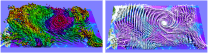
Computer vision is concerned with the automatic extraction, analysis, and understanding of application-related information from single images or videos. In the general sense, the term "image" encompasses classical digital photographs as well as areal, i.e., matrix-like data captured from real-world scenes, such as range or microscopic images. Computer vision involves the development of a theoretical and algorithmic basis to achieve automatic understanding of this kind of data. Sub-domains of computer vision include, but are not limited to, scene reconstruction, event detection, camera tracking, object recognition, 3D pose estimation, (machine) learning, motion estimation, and image restoration.

Computer Graphics
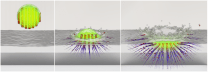
In the narrower sense, computer graphics comprises methods for generating images from digital data, whereas the broader sense of computer graphics also includes any kind of system—whether interactive or not—that involves image generation as an essential core component, such as special effects in the film industry, virtual reality, or medical visualization. The main components of any (or at least most) computer graphics systems are the generation and manipulation of 3D models of complex objects and scenes (modeling), the creation of geometric representations from abstract data fields(visualization), the simulation of visual natural phenomena including physically based illumination effects, and efficient algorithms for image generation (rendering).
Curriculum
The curriculum and module list for the Visual Computing specialization are available starting on page 11 of the examination regulations. Detailed module descriptions can be found later in the appendix.