A Journey into the Past: Historical Tourism in the 19th and 20th Centuries
Conference at the University of Siegen
November 6–8, 2014
Organizers: Univ.-Prof. Dr. Angela Schwarz, Dr. des. Daniela Fleiß
Historical sites are not only very popular today; they have always been so. Throughout history, people have chosen places from the past as travel destinations. This conference explores various aspects of these journeys into the past: Why did travelers visit certain places as remnants of the past? What role does history play in these particular forms of the tourist experience? How can the tourist appeal of a place be characterized in relation to the past? What are the effects of viewing the past from a tourist’s perspective? In what ways and for what purpose does this process construct conceptions of the past or even of history? The conference presentations will examine the nature, role, and function of this particular type of tourism as a means of popularizing history.
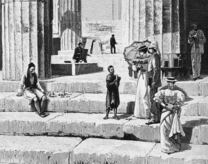
The term “historical tourism” is on everyone’s lips, as evidenced by the 65,900 results for the German term alone in a Google keyword search. However, this is merely a popular usage of the term; historical research has neither made greater use of the term nor presented a corresponding concept to date. While there are many specific studies on individual historically significant sites and their popular presentation—most notably research on memorials to armed conflicts—there are hardly any studies on historical tourism in the past or conceptual reflections on its role and functioning. Both are, however, extremely important when it comes to identifying the reasons why people, both in the past and the present, have spent their leisure time visiting places that display remnants of the past or where specific events took place. What role does history play in a tourist experience? What defines the tourist-oriented quality of engaging with history at a specific location? What effect does the tourist’s perspective on the past have? How does an image of history emerge in this process, and what purposes does this history serve?
Such considerations suggest that historical tourism is a form of the popularization of history. However, historical tourism is absent from the thoroughly analyzed forms of historical popularization, which have fulfilled diverse functions—particularly since the 19th century—including the negotiation of national, ethnic, and regional identities. A look at research on historical culture, as well as at relevant anthologies on the popularization of history, confirms this impression.
Yet there are significant similarities between what generally occurs in tourism and what the popularization of history achieves. In both cases, the focus is on an experience—an adventure, an encounter with the unfamiliar and the “other”—that includes an element of entertainment. In both cases, these are constructions aimed at identity formation. One’s own history is necessary for both the individual and the social group to define their place in the present; it provides individual, regional, or national self-affirmation as well as social and political legitimation. Tourism constructs artificial worlds, the experience of which also serves primarily to define one’s own identity. Both the popular production of history and tourism seek the extraordinary; they fulfill the need to leave everyday reality behind and to travel into the distance (whether temporal or spatial).
The Austrian historian Valentin Groebner recently highlighted the connection between history and tourism. Based on the assumption that historical tourism has only become possible due to a recent shift in historical consciousness, he examines it primarily as a contemporary phenomenon. The conference planned for November 2014 at the University of Siegen, however, assumes that historical tourism is an older phenomenon. While the desire to visit “sites of the past” and have a special experience there can be found in nearly every era, However, social, economic, and media-related developments—at the latest since the early 19th century—gave rise to a distinct form of production and dissemination of historical knowledge, thereby sparking a unique boom in historical tourism and shaping it in a way characteristic of that era.
This conference aims to explore this phenomenon, its specific characteristics, and its functions. Contributions from various disciplines will examine journeys into the past during different phases of European and North American modernity and analyze how the historical sites visited, the motives behind the act of historical tourism, and the resulting experiences were reflected in contemporary sources.
Among the aspects that help shed light on this topic and that could be addressed in presentations are:
- the eras that were considered attractive at the time and their historical contexts
- the categories of monuments that were visited, as well as their physical and spatial characteristics
- the various agents of historical tourism across different periods and countries
- the perspectives and behaviors that transformed relics of the past into tourist attractions
- the social or political role of the tourist use of the past
- the media coverage of historical tourism
- the type of history (history of rule, social history, national history, etc.) created through the use of the past for tourism.
These and other aspects can be examined using case studies; however, rather than merely compiling descriptions of various “journeys into the past,” the aim is to keep the phenomenon of historical tourism itself—as it has manifested in different periods of modernity—in focus and to link general considerations with specific findings.
A subsequent publication of the conference proceedings in an anthology is planned.
The conference will take place November 6–8, 2014, in Room AE-A 103 of the Artur-Woll-Haus at the University of Siegen. It begins on Thursday (November 6, 2014) at 10:00 a.m. and on Friday (November 7, 2014) and Saturday (November 8, 2014) at 9:30 a.m. The conference will end on November 8 at approximately 1:30 p.m.
The conference will focus on the following topics:
- Conceptual Remarks
- Religious Sites
- Dark Tourism
- Nation and Identity: The European and Non-European Periphery
- Nation and Identity: The Western and Central European Context
- The Past as a Romantic Attraction
Conference Program, Day 1
| 9:30–10:00 a.m. |
Welcome Coffee |
| 10:00 – 10:30 a.m. | Starting Out and Arriving – By Way of Introduction Angela Schwarz (Siegen) |
|
Section I: Conceptual Remarks
Room: AE-A 103 |
|
| 10:30 a.m. – 12:30 p.m. |
"The Past is a Foreign Country" – History and/as Colonialism Jerome DeGroot (Manchester) |
| A Picturesque Atrocity: Canadian Tourism/History and the Romance of Evangeline, 1840s–1960s Ian McKay (Kingston, Ontario) |
|
| 12:30 – 1:30 p.m. |
Lunch Break |
|
Section II: Religious Sites
Room: AE-A 103 |
|
| 1:30 – 3:00 p.m. |
From the Konzilgebäude to Imperia – A City Tour Through the Historic Imaginations of Constance Christoph Luzi (Lucerne) |
| Protestant Pilgrims on Routes to Luther Silvio Reichelt (Heidelberg) |
|
| 3:00 – 3:30 p.m. |
Coffee break |
|
Section III: Dark Tourism
Room: AE-A 103 |
|
| 3:30 – 5:00 p.m. |
"Very, very interesting as well as disgusting." Torture Museums and Dark Tourism Sylvia Kesper-Biermann (Cologne) |
| Visiting Cemeteries: Between Memento Mori and the Cult of Personality Daniela Fleiß (Siegen) |
|
| 5:00 – 5:15 p.m. |
Coffee break |
| 5:15 – 6:00 p.m. |
The "Führer" in Private: Historical Tourism at Obersalzberg and the "Eagle's Nest" Between Nazi Folklore and the Politics of Remembrance Axel Drecoll (Munich) |
| 7:00 p.m. |
Dinner |
Conference Program, Day 2
|
Section IV: Nation and Identity: The European and Non-European Periphery
Room: AE-A 103 |
|
| 9:30–11:00 a.m. |
Patriotic Itineraries – History Tourism and Nation-Building in Nineteenth-Century Italy Robert Lukenda (Mainz/Erlangen) |
| Journeys as a National Duty: The Case of Kraków, Poland Hanna Kozinska-Witt (Rostock) |
|
| 11:00 – 11:30 a.m. | Coffee break |
| 11:30 a.m. – 1:00 p.m. | "New Interest in Old Russian Things": History Tourism in the Soviet Union in the 1960s and 1970s Katharina Haverkamp (Jena) |
| History in the Making: Visiting Revolutionary Sites in Republican China (1912–1949) António Barrento (Lisbon) |
|
| 1:00 – 2:30 p.m. | Lunch break |
|
Section V: Nation and Identity: The Western and Central European Context
Room: AE-A 103 |
|
| 2:30 – 4:00 p.m. | "Spots in Which the Past Is Most at Home": Popular Periodicals and Anglo-German History Tourism in the Mid-Nineteenth Century Tobias Scheidt (Siegen) |
| Facing History? Imagination and Irritation on Visiting Morgarten Silvia Hess (Lucerne) |
|
| 4:00 – 4:30 p.m. | Coffee break |
| 4:30 – 6:00 p.m. | Celtic Sites in Franconia: Archaeological (Re-)Constructions and Identity Modeling Timo Saalmann (Bamberg) |
| In Search of the Authentic Past: Tourism and Identity in Postwar Bavaria Adam Rosenbaum (Houston) |
|
| 7:00 p.m. | Dinner |
Conference Program, Day 3
|
Section VI: The Past as a Romantic Attraction
Room: AE-A 103 |
|
| 9:30 a.m. – 11:00 a.m. | Landscape and Three Kinds of Past. The Mallorca of 1845 in the Travel Diary of Spanish Historian Juan Cortada Ekkehard Schönherr (Jena) |
| More Than Ruin Romanticism? Religious Tourism to Holy Places in the Nineteenth Century Angela Berlis (Bern) |
|
| 11:00 a.m. – 11:30 a.m. | Coffee break |
| 11:30 a.m. – 1:00 p.m. | The Lure of History: French Romantic Home Tours and the Making of Historical Landscapes Alexandre Bonafos (New York) |
| Civilizations of the Mind: French Travelers and the History of the Rhine, 1945–1955 Drew Flanagan (Waltham) |
|
| 1:00 – 1:30 p.m. | Concluding Discussion Moderators: Angela Schwarz/Daniela Fleiß |
Participation in the conference is free of charge; registration via the conference website is required. Coffee, pastries, and cold beverages will be provided free of charge to all registered conference attendees. Attendees may participate in lunch and/or dinner on the first two days for a fee. You can sign up for meals directly during registration. The fee of approximately €10 per lunch and approximately €25 per dinner is to be paid on site at the start of the conference. Participation in meals is free for the conference speakers and moderators.
If you have any further questions, the organizers will be happy to assist you by email at fleiss@geschichte.uni-siegen.de or by phone at 0049-(0)271-740-4623 (Daniela Fleiß) or (0)271-740-4502 (Petra Schöppner).
On this page, you can register to participate in the conference “A Journey into the Past: Historical Tourism in the 19th and 20th Centuries.” You will also find all the information you need for registration here
Participation:
Participation in the conference is open to all interested parties. Registration is mandatory. You can register from September 1 through October 24, 2014, using the registration form on the website. There is no conference fee. Speakers and moderators do not need to register separately for the conference.
Program:
You can find the conference program in the “Program” section. The program is subject to change, even at short notice. The conference organizers will provide updates on any changes on-site.
Accommodations:
The organizer does not provide accommodation for guests. You can find information about hotels in Siegen on the page with details on travel and accommodation (which will be available once the registration period begins). In addition, the City of Siegen’s website offers further information on hotels and guesthouses. Speakers and moderators will be accommodated by the organizer at the Hotel HAUSPATMOS. The organizer will cover the costs of accommodation for speakers and moderators.
Catering:
During the conference, the organizer will provide cold beverages free of charge to all guests, as well as coffee and pastries during coffee breaks. In addition, a meal will be served during the lunch break on the first two days of the event. All guests may participate in the lunch for a fee. You can order your lunch for each day individually during registration. The cost is a maximum of 10 € per person per meal. Dinner on the first and second days of the event can also be booked individually for each guest. The cost for this is a maximum of 25 € per meal. You can pay in cash on the first day of the conference at the conference desk. Registration for meals is only possible when registering for the conference. Late registrations cannot be accommodated. Participation in all meals is free of charge for speakers and moderators. Please note that there are no restaurants or grocery stores at the conference venue. The nearest university cafeteria is about a 10-minute walk from the conference venue.
Personal Information:
The personal information you are required to provide for successful registration will be used by the organizer exclusively for the purposes of the conference and will not be shared with third parties. The information will be deleted after the conference concludes.
To the registration form [Unfortunately, registration is no longer possible.]
Conference Publication:
Angela Schwarz/Daniela Mysliwietz-Fleiß (eds.): Journeys into the Past: Historical Tourism in the 19th and 20th Centuries, Cologne/Vienna/Weimar 2019
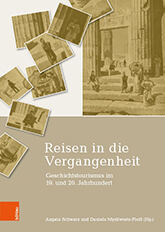
The past is like a foreign country that one can travel to. Although the phenomenon of historical tourism has a long history, it was not until the 19th century that new modes of transportation, improved infrastructure, and—not least—rising incomes created the conditions necessary to promote history as a travel destination through mass media and ultimately turn it into a mass phenomenon. The authors of this volume examine various stages of this development—romantic journeys, holy sites, national monuments, battlefields, cemeteries, and other dark places—and describe how history was constructed and perceived as a tourist attraction.
Publisher’s website and ordering information
Source: Tim Bernshausen/Jan Pasternak: Conference Report: “Journeys into the Past: History as a Tourist Attraction in the 19th and 20th Centuries” at the University of Siegen, November 6–8, 2014, in: H-Soz-u-Kult, Conference Reports, March 7, 2015, URL: https://www.hsozkult.de/searching/id/tagungsberichte-5857
Historical sites have always been popular travel destinations. Especially with the advent of modern tourism in the 19th and 20th centuries, more and more people began visiting places considered to have historical significance. In doing so, travelers often went to great lengths to reach their destination. It didn’t even matter whether traces of the past were actually still present at the time of the visit or whether such traces had ever existed at the site. For tourists embarking on a “journey into the past,” it was often enough simply to see the relevant locations—even without visible signs of the past—and just to be there. At times, it could even be enough simply to read about the travels of others.
The international and interdisciplinary conference “Journeys into the Past: History as a Tourist Attraction in the19th and20th Centuries” examined this phenomenon from various angles, although the historical perspective was given a central role. The focus was not only on the reasons for and effects of historical tourism in various national and international contexts during the 19th and 20th centuries, but also on the practices involved and its social functions. In doing so, the conference deliberately distanced itself conceptually from the assumption that historical tourism is a phenomenon that has emerged only recently. The striking similarities between tourist and popular historical perceptions—as already demonstrated in numerous individual studies, particularly regarding the 19th century—suggest that there are further commonalities between these two fields of research, the systematic investigation of which has, however, remained a gap in the literature to date. Common to both fields is that they involve an encounter with something foreign, often exotic, which ultimately serves only to satisfy a variety of needs on the part of those who undertake the “journey” into spatial or temporal distance. Just as essential as motives and needs was—and remains to this day—in historical tourism the ceaselessly emphasized authenticity of what appeared to be history. The complex process of the emergence, construction, and maintenance of the fiction of authenticity—a continuous authentication of the past at a tourist site—was therefore, as a characteristic element of historical tourism, not coincidentally the focus of the individual presentations at this conference. Construction, preservation, and interpretation are inconceivable without media, so the media-driven presentation of history, in turn, played a prominent role at the various locations on the conference itinerary.
In her opening remarks, ANGELA SCHWARZ (Siegen) identified the central elements of the process of popularizing history, which are necessary for transforming historical sites into a tourist experience. She emphasized the essential role of these very specific sites, which are imbued with historical significance in various ways and are then regarded as places that serve as a link between the past and visitors’ own present. Furthermore, she argued, such a site must possess a second important characteristic: an aura of historical authenticity. Only in this way can the historicity of the site be accepted by the vast majority of tourists and thus essentially be recreated or even constructed as a site of historical tourism. In this context, Schwarz emphasized the particular significance of the media, especially their ability, on the one hand, to modify historical meanings and, on the other, to generate tourist interest.
JEROME DE GROOT (Manchester) continued the conceptual discussion of this phenomenon and viewed the tourist engagement with the past as part of a relationship in which the contemporary present dominates the past—which is often perceived as outdated. Referring to genealogical research—which, in today’s information age, can be conducted and commercialized using different resources and, above all, with significantly greater intensity than in the era before the digital revolution—he argued against David Lowenthal’s thesis of the past as a foreign land. In his view, the past is not an alien travel destination, but rather something that was once real and has been translated into a fictional representation in order to give those who undertake these interpretations an opportunity to influence the present and future of their own time. Building on these fundamental ideas, IAN MCKAY (Kingston, Ontario) demonstrated in his presentation that even the “memory” of something purely fictional can have a major influence on the tourist promotion of a region. He used as a case study the story of Evangeline, conceived by the American writer Henry Wadsworth Longfellow, an Acadian girl whose story is set during the expulsion of her people from Nova Scotia in the mid-18th century. Longfellow’s 19th-century poem quickly became a bestseller, especially in the U.S. The popularity of the fictional Evangeline subsequently triggered a wave of mass tourism to Nova Scotia. Tourists hoped to explore the protagonist’s real-world setting there, even though the actual landscape differed significantly from the romantic ideal depicted in the poem. Gradually, as part of efforts to market the region as “Evangeline’s homeland,” many locals adopted these constructed and already widely disseminated historical narratives as their own, supposedly authentic historical experience. This pattern reveals fundamental mechanisms in the construction of popular historical narratives derived from fiction, which are further disseminated and reinforced through tourism.
The building in which the Council of Constance was held from 1414 to 1418 was the focus of the presentation by CHRISTOPH LUZI (Lucerne). The historical significance of the Council building lay primarily in the fact that it was—and remains to this day—the only site of a papal election north of the Alps. Since the advent of modern mass tourism around 1800, it has been marketed as a major tourist attraction in the city of Constance. This marketing of the Council and the papal election was complemented in 1993 when the “Imperia” statue was erected in the harbor, creating an additional landmark to commemorate this specific aspect of Constance’s history. By comparing past and present constructions of the historical event, Luzi highlighted the dual constructed nature of this form of historical representation. The tourist presentation was achieved by transferring the older tourist narrative onto a new and significantly more recent manifestation of the same. At the same time, he highlighted the most important forms of authentication in the process of conveying the history of the Council, such as the preservation of the historic structure of the Council building. SILVIO REICHELT (Heidelberg) demonstrated that it is not only Catholic sites that can generate historical tourism, citing Lutheran sites that—despite the otherwise rather uncommon emphasis on specific locations within the Protestant faith—have been transformed into tourist attractions. These sites offered—and continue to offer to this day—Protestants a “tangible” access to Luther’s time and to the key figures of the Reformation active at that time, an experience that would have remained hidden through a purely intellectual engagement with the subject. Due to the religious motivation behind these trips, they are in some ways reminiscent of Catholic pilgrimages; these sites could be viewed as the Protestant counterpart to places of pilgrimage.
SYLVIA KESPER-BIERMANN opened the session on the increasingly popular “dark side” of tourism with a lecture on torture museums. Drawing on several institutions of this kind in various European countries during the late 19th and early 20th centuries, she explained that the historicization and display of early modern instruments of torture served as a symbol of Europe’s supposedly overcome dark past. As an expression of modernity, the abandonment of torture was often embedded in the context of national narratives to establish the condemnation of torture as a universal legal and moral norm. The presentation by DANIELA FLEIß (Siegen) explored another “dark place” of remembrance. She analyzed visits to cemeteries as a form of tourist experience that is secularized and liberated from traditional memorial culture. Among the numerous different motives and functions that such a journey could have, she emphasized that of forming or strengthening one’s own identity—a central concern, especially for the bourgeoisie, when visiting gravesites in the 19th century. Cemetery tourism offered not only orientation in an ever-changing modern world, but also role models who, while rooted in the past, were nonetheless part of the present, and whose graves could be seen as mediators between the present and the past. AXEL DRECOLL (Munich) presented a special form of “dark tourism.” His lecture focused on the Obersalzberg region, which, on the one hand, was—and still is—marketed as a tourist destination featuring numerous private vacation homes owned by leading figures of the Nazi regime, but on the other hand also serves as an educational center that has sought—and continues to seek—to explore and convey insights into the power structures of National Socialism to visitors. According to Drecoll, the diverse and sometimes even contradictory tourist uses of the historical site ‘Obersalzberg’ revealed, according to Drecoll, various approaches and developments in historical education that exist not only with regard to Obersalzberg in particular, but also in relation to the general engagement with the Nazi past.
The presentations on the second day of the conference focused on the connection between historical tourism and national identity. ROBERT LUKENDA (Mainz/Erlangen) examined 19th-century domestic tourism in Italy, which, facilitated by new forms of mobility, had evolved into “patriotic tourism.” This new form of travel, Lukenda emphasized, served—prior to the creation of a unified Italian state in 1861—as a symbolic representation of national unity that transcended internal geographical and political boundaries. This image was disseminated not only through personal travel but also through numerous travelogues, which were widely circulated in books and magazines. Books also played a central role in the lecture by HANNA KOZIŃSKA-WITT (Rostock), as travel guides about Kraków—to use the example cited—could be utilized as a tool in the process of national identity formation in Poland. Following the dissolution of the Polish state at the end of the 18th century, the national movement of the 19th century declared the city of Kraków the “spiritual capital” of a future Poland. In doing so, Polish nationalist forces simultaneously elevated visiting the city as a tourist destination to the status of a national duty. Kozińska-Witt highlighted which specific “histories” were conveyed to the Polish public in the travel guides and which pieces of information were apparently deliberately omitted. She explained the problem of national identity construction as a selection criterion in the choice of topics, using the portrayal of the Jewish quarter in the guidebooks as an example. KATHARINA HAVERKAMP’s (Jena) journey took her even further east; she examined Soviet domestic tourism in the 1960s and 1970s as part of a specific identity-formation process within the Soviet state. Triggered by protests from the Russian nationalist movement and intellectual circles following the destruction of religious sites during the Khrushchev era, calls emerged in the mid-1960s from across society for the preservation of pre-Soviet monuments and their use for tourism. Haverkamp argued that the subsequent rise of mass tourism to sites that had been elevated to places of remembrance of pre-communist Russian history could be viewed as an escape from everyday life and from the seemingly endless wait for a better communist future—an escape into an honorable and memorable past. ANTONIO BARRENTO (Lisbon) addressed a comparable phenomenon in his analysis of the effects produced by the touristification of revolutionary sites in the Republic of China between 1912 and 1949. The revolutionary monuments erected at that time were perceived by the local population as attractions to a far lesser extent than the political leaders of the young republic had intended. This was due in no small part to the fact that traditional sites, such as the Great Wall—which were regarded as relics of a glorious, imperial, even exotic-seeming past—continued to enjoy great popularity. TOBIAS SCHEIDT (Siegen) demonstrated, through his comparison of British and German illustrated magazines, that people did not necessarily have to travel themselves to have a tourist experience. These magazines made such “armchair tourism” possible as early as the 19th century—long before the invention of cinema, television, or even the internet. Through these “reading journeys,” the magazines helped to popularize the phenomenon of historical tourism in the media, thereby further establishing and promoting it. Using the example of the German writer Julius Rodenberg, who wrote about his trips to England in numerous articles in the British press, Scheidt highlighted the transnational character of travel writing, both in terms of the canonization of tourist destinations and practices, and with regard to the popularization of history.
Just as it is legitimate to ask how much tourism, as a change of location, requires historical tourism, it is equally legitimate to ask how much history it actually needs. In fact, among the destinations of this type of travel, there are “historical sites” where the associated events may never have taken place. SILVIA HESS (Lucerne) examined one such site in her analysis of the tourist use of the area where the medieval Battle of Morgarten is said to have taken place. As early as the 19th century, Swiss national historiography promoted the battle as the first struggle for Swiss independence from Habsburg rule and pinpointed the supposed site of the battle with great precision. However, the landscape depicted in pictures, schoolbooks, and other media differed significantly from the actual appearance of the site at the time these visual records were created. Hess explained that the historical narratives of the battle—which had continued to evolve over the course of oral tradition—and the tourist attractions of the site known as “Morgarten” had come to align with one another, thereby allowing the existing gaps in the history of the Battle of Morgarten to be filled despite insufficient source material. In his presentation, TIMO SAALMANN (Bamberg) examined the interplay between tourism and archaeology. He demonstrated that, throughout history, Celtic sites in Franconia have been used to shape political identities, and explained how this occurred. Saalmann illustrated, for example, how King Ludwig I of Bavaria used these archaeological sites as a means of integrating new regions into his realm. The process of reinterpreting such sites continues to the present day. For example, since the 1980s, reconstructions of Celtic artifacts have served to promote the image of Celtic culture as a premodern model of European unity—a very different case of integration and the formation of a shared identity—in which Europe has taken the place of the nation. ADAM ROSENBAUM (Grand Junction, CO) examined the tourism industry in postwar Bavaria. From the late 1940s and early 1950s onward, official tourism advertising placed a clear emphasis on the region’s provincial character. The goal was reconciliation between the defeated German civilian population and American occupation forces as well as other American tourists, but at the same time it served as a distraction from Bavaria’s Nazi past. Although they certainly embraced the regional tourism industry’s offerings of rural idyll, many American visitors to Bavaria remained interested in sites such as the former concentration camp in Dachau or the Obersalzberg region, where Nazism had left particularly clear traces. In this way, a hybrid tourist culture—in terms of its political messages—subsequently developed in postwar Bavaria.
The third day of the conference focused on the past as a romantic or romanticized tourist attraction. EKKEHARD SCHÖNHERR (Jena) opened this thematic section with an examination of the perception of Mallorca in the travel diaries of the Spanish historian Juan Cortada, who traveled to the Mediterranean island in the 19th century. Cortada failed in his attempt to retrace the route taken by the Christian conquerors of the island in the Middle Ages—a result that, according to Schönherr, was symptomatic of tourism in Mallorca during the second half of the 19th century. He further argued that despite visitors’ stated interest in Mallorcan history, historical sites were in fact only visited if they were scenically attractive and, in that sense, offered a “picturesque” travel experience. ANGELA BERLIS (Bern) once again brought religious aspects of historical tourism into focus, specifically using the example of the supposed or actually felt romanticism of a monastery ruin. Drawing on the example of the ruins of the Port Royal monastery in France and their highly romanticized descriptions in the travelogues of the British author Mary Anne Schimmelpennick, Berlis emphasized that historical tourism can always imply ethical and religious significance, especially when the sites, as in the case of Port Royal, point to a history of conflict and destruction. She advocated for a relaxation of the strict separation between the categories of “pilgrimage” and “travel.” DREW FLANAGAN (Waltham, MA) examined the French discourse on travel to the French occupation zone of Germany during the postwar period from 1945 to 1955, when, following the restoration of Germany’s sovereignty, the occupation statute in effect since 1945 was repealed. Using a wide range of examples, he demonstrated how the history of long-standing rivalry between the two nations and the military occupation of southwestern Germany significantly shaped the travel experiences of French military personnel and civilians in that region during the decade in question. Flanagan emphasized that the primary goal of the French travelers had been to gain a better understanding of Germany’s and France’s shared past while simultaneously overcoming their fears of Germany and the Germans. In the final thematic presentation, ALEXANDRE BONAFOS (Columbia, SC) analyzed domestic travel in early 19th-century France. Drawing on the travel accounts of selected Romantic writers, he explained how travel itself was driven by travelers’ desire for a personal encounter with the past. Bonafos emphasized how greatly these early tourist practices were influenced by the search for history. Over the course of the rest of the 19th century, he argued, this played a major role in enabling the French nation to construct its image of France as a country full of sites of historical significance.
The numerous “journeys into the past” presented and constructively discussed in Siegen revealed a multitude of travelers over the past two centuries, each with their own distinct motives, expectations, and media-based concepts. In this context, the authenticity of a historical tourist site was of paramount importance. If this authenticity was not already present in the form of a distinct building or object, it could be newly created or recreated in a variety of ways. The presentations on nation and identity formation in the Western and Central European context, in particular, demonstrated that tourist infrastructure was created at “historical sites” where, until then, few or no remnants of an event or a person were visible. Constructions of memory could be transferred to new sites or objects, or they were created beyond the actual site and independently of it—for example, in the form of literary fiction or travel literature. Equally significant as a second element was the media presentation of a tourist destination. The media, for example, promoted certain places, ascribed tourist attributes to them, and evoked specific images in the minds of a target audience. Travel guides, narratives, magazines: Various presentations across sections examined individual media formats, all of which, in different ways, helped tourists form very precise ideas about a destination. The originators could be the regions themselves, which sought to market themselves as tourist destinations in a specific way. At the same time, however, the media also projected external images onto these places, which might have evoked entirely different ideas. Entirely in line with the “tourist gaze,” the media not only created clear expectations even before a trip, but could even make these expectations seemingly tangible through corresponding “virtual journeys.” Closely linked to this media presentation was a third factor: the experiential nature that was often inherent to the travel destinations. Historical tourism always required a certain curiosity on the part of travelers, as the goal was to discover and seemingly experience a world that felt foreign precisely because it belonged to the past. In particular, the papers in the section on historical tourism and the formation of national identity made it clear that the experience of history was often embedded in a process of constructing or reinforcing collective identity. Thus, the desire to experience history became an essential strategy for appropriating history, which takes on a distinct form in tourism, significantly shaped by its portrayal in the media.
The “journeys into the past” presented and discussed at the conference could help to further refine the still-vaguely defined concept of “historical tourism.” Furthermore, they highlighted the extraordinary quality of the historical tourism experience as a historical source by categorizing destinations and forms of tourist travel and by thoroughly examining the relationship between the more recent past and the more distant past. Education, entertainment, the desire for an “authentic experience,” and the construction of identities emerged at the conference as some of the motives that may explain why people over the past two centuries have sought to experience and explore history through tourism—and why they continue to do so today. Research into this complex set of motives must, of course, be intensified; the conference has opened up avenues for this as well and taken the first steps in this direction. Further research into historical tourism will depend heavily on the availability of accounts from those tourists who visited historical sites in the past. It is therefore essential to continue working to ensure that precisely such personal accounts or travelogues are made accessible as historical sources in various media, just as political and economic documents from earlier times are. They reveal both history and the consumption of history—both of which are clearly worth the journey.
Tim Bernshausen and Jan Pasternak
Department of History, University of Siegen