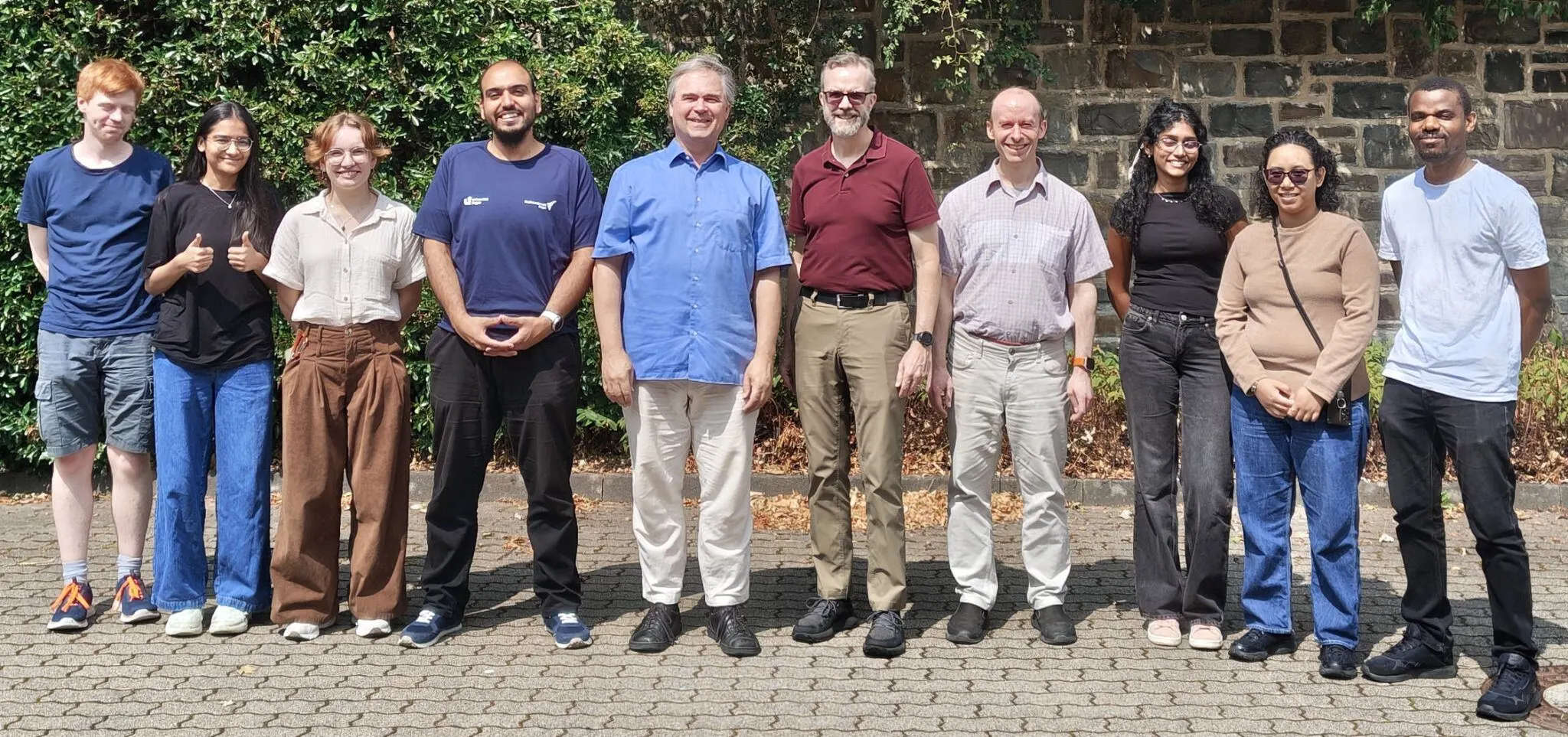
We recently had the distinct pleasure of hosting Prof. Todd Peterson from the Vanderbilt University Institute of Imaging Science for a highly productive two-week research visit at the University of Siegen.
Prof. Peterson is a leading expert in medical imaging. His research drives innovation in two major areas: the development of high-resolution, multi-pinhole SPECT capabilities utilizing novel semiconductor radiation detector technology, and the advancement of quantitative CT, SPECT, and PET techniques for preclinical research applications.
During his stay, Prof. Peterson collaborated closely with two key research groups at the University of Siegen:
⚛️ 𝐄𝐱𝐩𝐞𝐫𝐢𝐦𝐞𝐧𝐭𝐚𝐥 𝐏𝐚𝐫𝐭𝐢𝐜𝐥𝐞 𝐏𝐡𝐲𝐬𝐢𝐜𝐬 𝐚𝐧𝐝 𝐌𝐞𝐝𝐢𝐜𝐚𝐥 𝐈𝐦𝐚𝐠𝐢𝐧𝐠 (Department of Physics, led by Prof. Ivor Fleck)
💻 𝐄𝐦𝐛𝐞𝐝𝐝𝐞𝐝 𝐒𝐲𝐬𝐭𝐞𝐦𝐬 (Department of Electrical Engineering and Computer Science, led by Prof. Roman Obermaisser)
It was fantastic to see our PhD students— Yazeed Balasmeh, Lars Maczey, Aravinda Lasya Indukuri, Kritima Rajbanshi and Charles Onuoha—actively participating in these cross-disciplinary discussions.
𝐓𝐡𝐞 𝐅𝐨𝐜𝐮𝐬: 𝐏𝐢𝐨𝐧𝐞𝐞𝐫𝐢𝐧𝐠 𝐚 𝐍𝐨𝐯𝐞𝐥 𝐂𝐨𝐦𝐩𝐭𝐨𝐧 𝐂𝐚𝐦𝐞𝐫𝐚
The primary goal of the visit was a deep dive and exchange of ideas regarding our DFG-funded project to develop a next-generation Compton Camera. This new camera will successfully detect gammas above 1 MeV opening up entirely new fields of study and allowing a broader range of isotopes to be detected.
This is a massive system-level challenge requiring cutting-edge hardware and software:
𝐏𝐫𝐞𝐜𝐢𝐬𝐢𝐨𝐧 𝐇𝐚𝐫𝐝𝐰𝐚𝐫𝐞: Utilizing SiPMs connected to ASICs for charge integration and ultra-precise 200 ps resolution timestamping.
𝐑𝐞𝐚𝐥-𝐓𝐢𝐦𝐞 𝐏𝐫𝐨𝐜𝐞𝐬𝐬𝐢𝐧𝐠: Using FPGAs to process signals in real-time, performing critical data reduction by sorting signals by production time at ultra-low latency.
𝐑𝐞𝐜𝐨𝐧𝐬𝐭𝐫𝐮𝐜𝐭𝐢𝐨𝐧: Developing reconstruction algorithms and physics-based system models for accurate 3D localization of radioactive sources.
𝐀𝐈 𝐈𝐧𝐭𝐞𝐠𝐫𝐚𝐭𝐢𝐨𝐧: Training a neural network on data from known radioactive sources to accurately reconstruct the position of the source, ultimately enabling real-time imaging.
We want to extend our most sincere thanks to Prof. Peterson for his time, his invaluable expertise, and the fantastic exchange of ideas over the last two weeks. Collaborative discussions like these are exactly what push the boundaries of science and engineering forward!