Information event and excursion to Attendorn Prison

Behind bars - insights into everyday prison life
Information event and excursion to Attendorn Prison offer students practical perspectives on psychological and social work in prisons
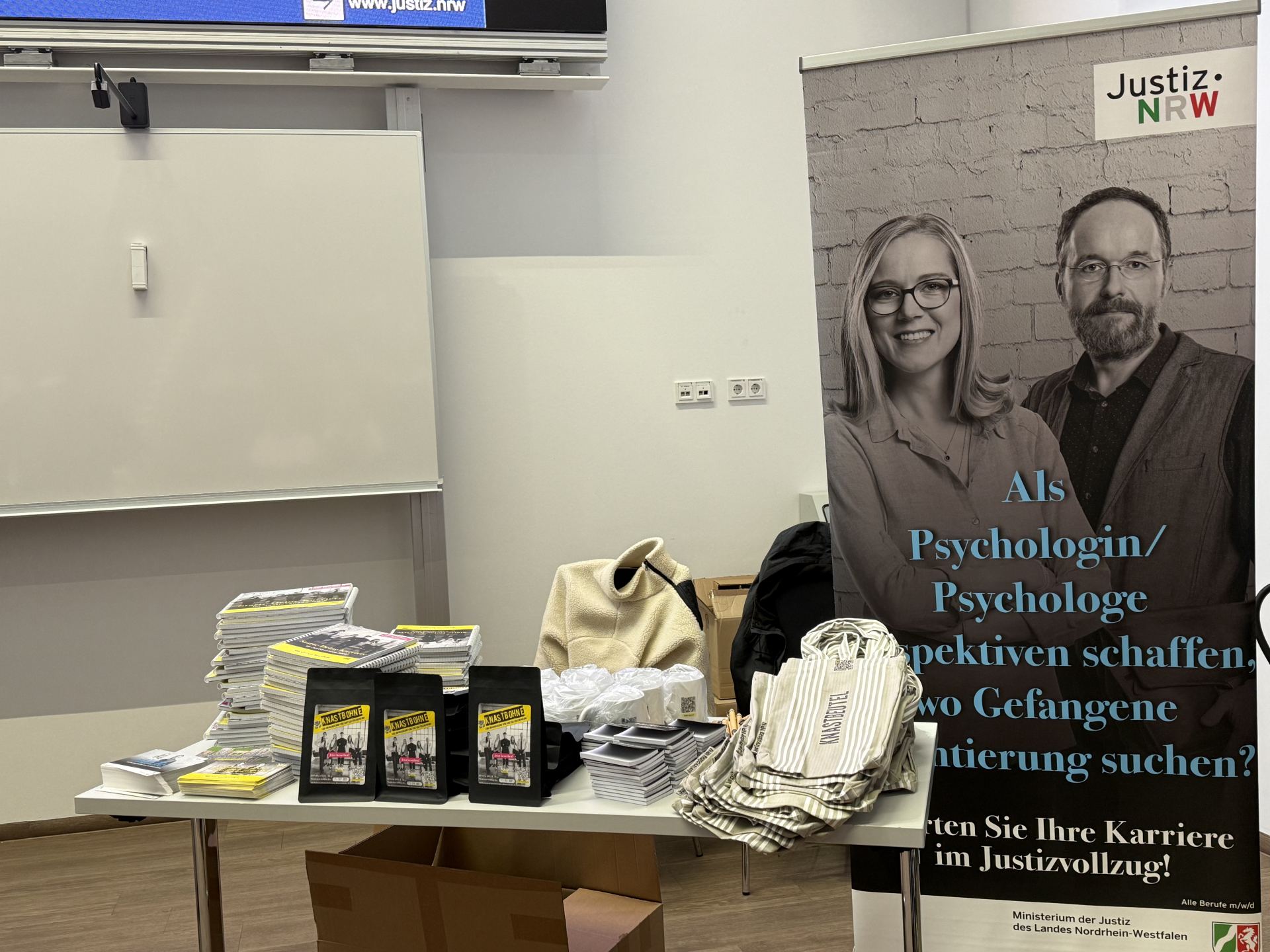
For the third time in a row, Prof. Dr. Andreas Kastenmüller's Chair of Social and Economic Psychology hosted an information event about the prison system on 13 May 2026. Under the title "Insight into everyday prison life - psychological and social service work in Attendorn Prison", students from the University of Siegen and other interested guests were given an impressive insight into a field of work that is highly relevant to society, but at the same time hardly known to many people, in lecture hall US-C 114 on the Lower Castle campus.
Prof. Dr. Andreas Kastenmüller opened the event, which took place as part of the joint psychology colloquium. Representatives from various professional groups at Attendorn Prison presented everyday life in open and closed prisons and spoke openly about the challenges, responsibilities and human encounters "behind bars". Employees from the psychological service, social services, addiction counseling and the general prison service were also present.
The focus was on the diverse areas of responsibility of psychological and social service work in prison. Among other things, diagnostic and therapeutic activities, suicide prevention, addiction counselling, resocialization and preparing prisoners for release were presented. It became clear that imprisonment means much more than mere custody: the aim is to stabilize people under difficult conditions, prevent relapses and enable social reintegration.
The openness with which the speakers spoke about the ethical and emotional challenges of their profession was particularly impressive. The question from the audience as to whether stressful events from everyday working life continue to affect employees in their private lives also led to an intensive exchange. Overall, the students' interest was exceptionally high; numerous differentiated questions were asked, which showed the participants' high level of attention and willingness to reflect.
In addition to the insights into the content, Attendorn Prison also provided information about specific career and entry opportunities in the prison system. The requirements, career paths and earning opportunities in both the psychological and social services were presented. This gave students of psychology and social work in particular a practical insight into a professional field that combines challenging activities with social responsibility.
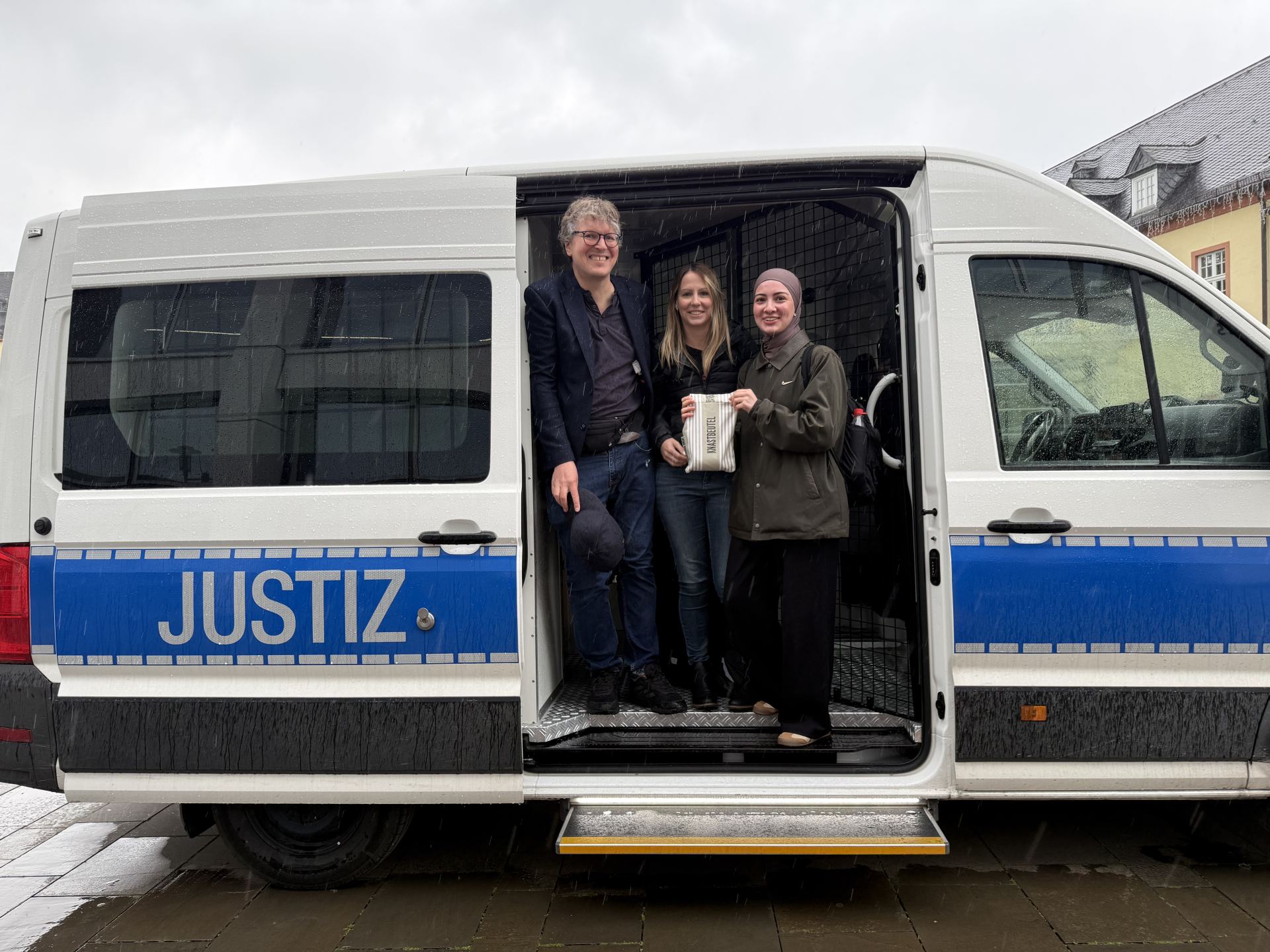
The prisoner transporter presented on the Schlossplatz was once again a particular highlight. Participants were able to view the vehicle from the inside and learn about the security equipment used by the prison service. The practical insight complemented the presentations in a vivid way and ensured numerous conversations and discussions even after the official end of the event.
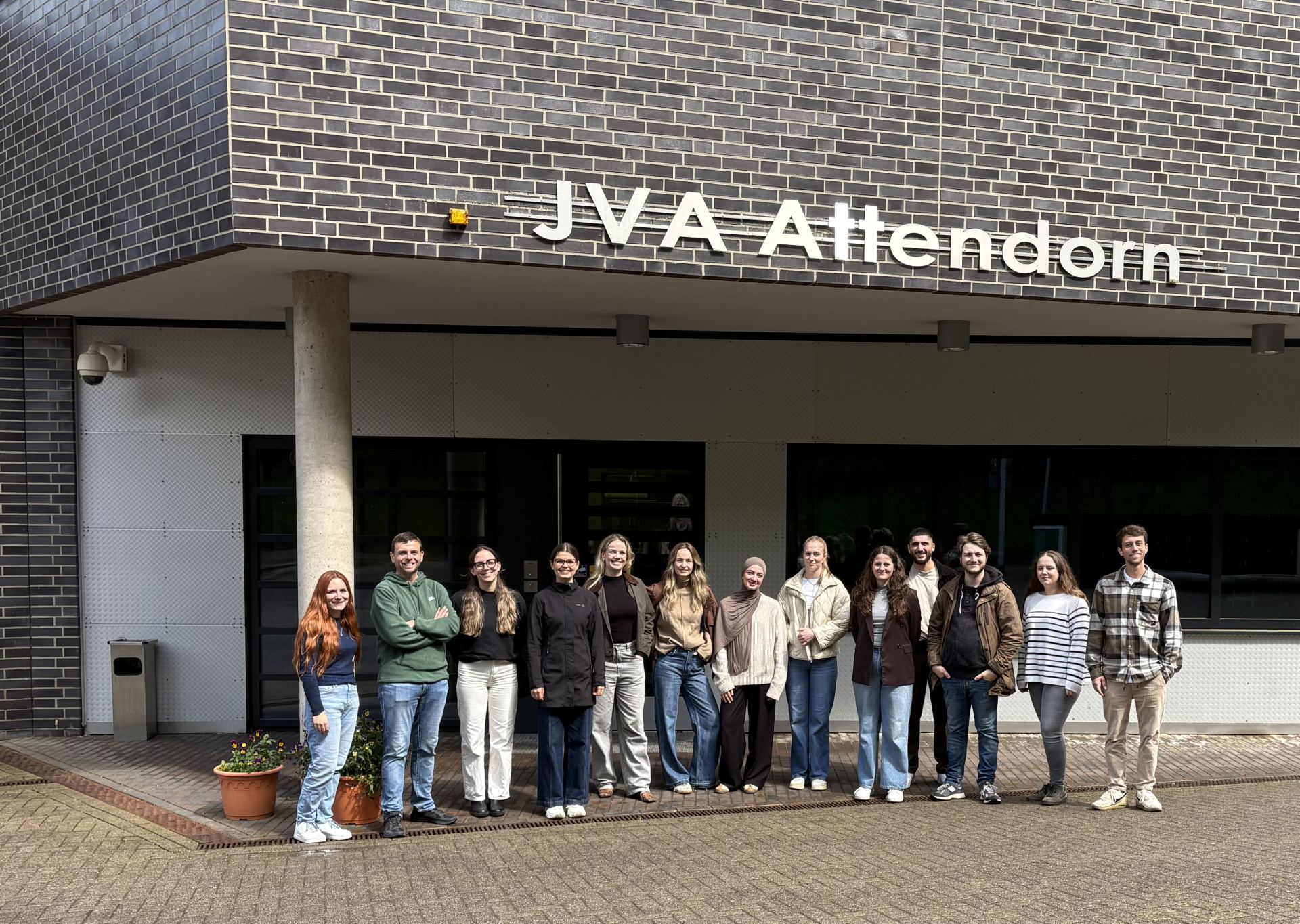
A week later, on 20 May 2026, an excursion to Attendorn Prison followed for particularly interested students. A total of eleven psychology students and two members of staff from the University of Siegen took part. The three-hour tour provided rare insights into both the closed and open prisons.
After the security check in the closed prison, the participants were first given a brief introduction to the structure and organization of the prison. They were then able to visit various areas of the facility, including the premises of the psychological service, unoccupied detention rooms, solitary confinement cells and a specially secured detention room in which, among other things, detainees at risk of suicide can be accommodated. The library, the sports hall and the inner courtyard were also shown. There were no detainees to be seen during the tour.
Many participants found the subsequent visit to the open prison particularly impressive. The living areas were sometimes more reminiscent of youth hostels than traditional prisons, and the extensive grounds with mature trees, greenhouses, sports facilities, chicken coops, ducks and beehives made it clear how strongly the open prison is geared towards personal responsibility and resocialization. Most of the inmates there work within the prison. Some even have regular jobs and only return to the facility after work. This difference between open and closed prisons in particular illustrates the central role that psychological and social work support plays in preparing prisoners for an independent life after prison, including the premises of the psychological service, unoccupied detention rooms, solitary confinement cells and the so-called "block", where suicidal prisoners are housed. The library, the sports hall and the inner courtyard were also shown. There were no prisoners to be seen during the tour. At the end of the visit to the closed prison, staff from the general prison service also demonstrated the extensive security equipment used in particularly dangerous situations. One student was allowed to put on the complete protective clothing, which consists of numerous individual elements and protects sensitive areas of the body in particular. The accompanying expert explained that the equipment has to be put on very quickly in an emergency - with sufficient practice, this is even possible in less than three minutes, but often with the support of colleagues. The student was surprised at how agile they remain despite the massive protective clothing. The tactical use of protective shields was also explained, for example when they are used jointly by several prison officers.
Many participants found the subsequent visit to the open prison particularly impressive. The living areas were sometimes more reminiscent of youth hostels than traditional prisons, and the extensive grounds with mature trees, greenhouses, sports facilities, chicken coops, ducks and beehives made it clear how strongly the open prison is geared towards personal responsibility and resocialization. Many inmates there pursue regular professional activities and only return to the facility after work. It was precisely this difference between open and closed prisons that highlighted the key role played by psychological and social work support in preparing for an independent life after prison.
The response to the excursion and information event was consistently positive. Several students expressed the desire to offer similar excursions on a regular basis in the future; individual participants have already made specific enquiries about application and entry opportunities in the prison system.
The Chair of Social and Economic Psychology would like to thank Attendorn Prison and all the staff involved for their committed cooperation and the open, practical insights into a professional field that often works in secret and at the same time fulfils an important social function. Due to the great response, there are already plans to offer the information event again in spring 2027.