Why Learn Dutch?
Learning Dutch gives you the opportunity to understand the language directly in everyday life, the media, and culture. In our courses, you’ll practice speaking, listening, reading, and writing in a practical way and gain insights into Dutch literature, music, and current topics. This way, you can put what you’ve learned to immediate use—whether in your studies, while traveling, or when interacting with people from the Netherlands.
This is what Dutch sounds like:

Registration and Deregistration

Registration for our Dutch courses in the 2026/27 winter semester takes place via unisono and is open during the first and second registration periods:
Registration Phase 1: August 17 – September 6, 2026
Registration Phase 2: September 21 – October 4, 2026

If you are unable to attend a course after all, you can drop the course via unisono from September 7 through September 20, 2026. After this date, please send an email to sprachenzentrum@spz.uni-siegen.de to drop the course.
Placement Test

If you have not yet taken a Dutch course at the Language Center in the past two semesters, please register for a Dutch course (“preferred course”) via unisono during the registration periods.
You should select your preferred course based on your personal assessment using the self-assessment grid of the Common European Framework of Reference for Languages (CEFR).
If you have valid proof or a valid certificate of your language proficiency, a placement test is not required.
Our Dutch teacher
Stefanie Gsell teaches Dutch at the Language Center at the University of Siegen. She finds the Dutch language particularly fascinating because of its similarity to German, yet at the same time because of its unique sound and culture. In her courses, she places great emphasis on practical learning, authentic materials, and a lively approach to the language—from correct pronunciation to the cultural nuances of everyday life in the Netherlands. The focus is always on how to communicate in Dutch while developing a feel for the language and culture. Welkom!


Dutch nouns have two grammatical genders: “de” for common gender and “het” for neuter gender.

There are about 30 regional dialects in the Netherlands and Flanders.

With so many vowels, pronunciation becomes interesting—and sometimes tricky.

Some people speak Dutch as their native language.



I've been interested in the Dutch language for a long time, and the course helped me get to know the language and culture better.
The lessons are well-structured and easy to understand, offering a clear learning path for effectively learning Dutch.
A trip to the Netherlands is always worth it! It’s a real joy to connect with people there and chat about everyday things. That’s exactly what this course prepares you for. Step by step, you’ll learn to find your way around and gain the confidence to have real conversations in Dutch.
It's fun to learn a new language. If you already know German, Dutch isn't that hard. That's why you make progress pretty quickly. The class is really fun sometimes, too.
I really enjoyed learning Dutch. The instructor is very nice, and there's a great learning environment. It was a lot of fun.
When you choose Dutch, you're choosing a unique language! It's easy to learn if you already know German, and people understand it quickly. You'll meet lots of cool new people from completely different majors.
Do you have any questions? Feel free to contact us:
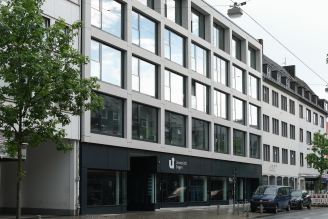
Language Center at the Student Services Center (Building F-S)
Sandstraße 16-18
57072 Siegen

Office
Andrea Süßmann
Room: F-S 304
Phone: +49 271 / 740 3002
sprachenzentrum@spz.uni-siegen.de
Come visit us on the 3rd floor—we’d be happy to assist you.