New Perspectives on Neokantianism and the Sciences
March 14-17, 2022
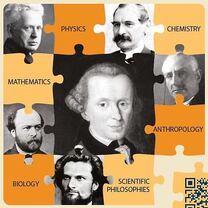
It is undisputed that Neokantianism plays an important role for the development of the (German) academic philosophy and, especially, of the philosophy of science during a period of dynamic growth within the sciences in general. This international conference will shed a fresh light on Neokantian philosophy encompassing an approximate time period between about 1865 and the First World War.
It will bring together historians and philosophers of science working on the Neokantianism and the history of science in the 19th and 20th century in order to Enfold the interplay between philosophy and the sciences It will work in the spirit of an ‛Integrated History and Philosophy of Science’. This conference is organised by Helmut Pulte and Jan Baedke (Ruhr University Bochum), and Gregor Nickel and Daniel Koenig (University of Siegen).
- March 14-16: 9am - 6pm Beckmanns Hof, Bochum
-
March 17: 9am - 5pm Zeche Zollern, Dortmund
Abstract
The great importance of Neo-Kantianism for German university philosophy in the late 19th and early 20th centuries is undisputed. Equally undisputed is the considerable influence this direction had on the formation of philosophy of science in general: Without Neo-Kantianism, the development of a German-Speaking philosophy of science up to logical empiricism (Vienna Circle, Berlin Group) is inconceivable. Moreover, the emigration of most representatives of this science-oriented tradition in the 1930s had a considerable influence on the further development of Anglo-Saxon analytical philosophy. In recent times, not least for this reason, a strong interest in Neo-Kantianism has developed worldwide. This interest is not only due to its mediating role between the older Kantian tradition and analytical philosophy, but also takes into account its genuine philosophical achievements in the exchange with the sciences.
The project brings together more than 20 international experts of Neo-Kantianism as authors of a volume that reveals the fruitful trade-off relations between the extremely dynamic development of the sciences in the period from about 1865 to the first world war on the one hand and the theories of Neo-Kantianism on the other from the point of view of an ‘Integrated History and Philosophy of Science’. An important specific aim is to clarify the question of whether and to what extent a certain modernization process takes place within Neo-Kantianism, but also within the participating sciences themselves. The latter are not restricted to mathematics and physics, which are at the center of earlier investigations, but include also areas like biology, chemistry and technology as well as psychology and anthropology. The ‘fact of science’ is represented in this volume in all its breadth and diversity as Neo-Kantianism perceived it.
Publication and funding: The ↗volume will be published by Routledge (London) in 2024. The project was funded by the Fritz Thyssen Stiftung.
Program
| 9:15am | Paul Ziche: Systems After the Systems. The Transmission and Transformation of Scienticity Between the Idealists and the Neo-Kantians |
| 10:15am | Gerhard Heinzmann: ‘Critique de la Science’ and Conventionalism in France |
| 11:00am | Coffee break |
| 11:15am | Sebastian Luft: Factum and Region. Neo-Kantian and Phenomenological Paradigms for a Philosophy of Science |
| 12:00pm | Michael Stoeltzner: Positivism and Empirical Realism – Episodes from a Changing Relationship |
| 12:45pm | Neokantianism in Context: Section discussion |
| 1:00pm | Break for lunch |
| 2:00pm | Volker Peckhaus: (Neo-)Kantian Foundations of Foundations: The Göttingen Case |
| 3:00pm | Klaus Volkert: Non-Euclidean Geometries and Axiomatics |
| 3:45pm | Coffee break |
| 4:15pm | Dolf Rami: The Legacy of Kant's Conception of Existence |
| 5:00pm | Francesca Biagioli: Cassirer on the Concept of Number: A Neo-Kantian Perspective on Dedekindian Abstraction |
| 5:45pm | Daniel Koenig: From Magnitudes to Real Numbers. Cantor's and Dedekind's Number Extensions and Their Reception in Neo-Kantianism |
| 6:30pm | Mathematics: Section discussion |
| 8:00pm | Dinner |
| 9:15am | Georg Toepfer: Philosophy of Biology in Neokantianism — A Comprehensive and Systematic Account Parallel to and Apart from the Formation of the Field |
| 10:15am | Myriam Gerhard: Hypothesis vs. Fact. Theories of Evolution Following Darwin and Haeckel |
| 11:00am | Coffee break |
| 11:30am | Christian Reiß: Laying the Foundation for a Science of Life — The Role of Neo-Kantian Philosophies and Philosophers in the Project of a "Allgemeine Biologie" and a "Theoretische Biologie", 1880–1914 |
| 12:15pm | Marco Tamborini: Organic Form and Teleology — The Principle of Analogy |
| 1:00pm | Break for lunch |
| 2:00pm | Social Event (Botanical Garden) |
| 3:00pm | Jan Baedke: The Decline of Neo-Kantianism and the Rise of Theoretical Biology in the Interwar Period |
| 3:45pm | Biology: Section discussion |
| 4:00pm | Coffee break |
| 4:30pm | Christian Krijnen: The Problem of Psychology in Neo-Kantianism — On the Relevance of Richard Hönigswald |
| 5:30pm | Michele Vagnetti: Hermann Lotze and His Reception by the Neo-Kantians |
| 7:00pm | Dinner |
| 9:15am | Jörn Bohr: Why Psychology in Neokantianism? Some Remarks on "Southwestern" Contributions |
| 10:00am | Stefan Reiners-Selbach: The Challenge of "Leipziger Völkerpsychologie"? The Neokantian Reception of Wundt's "Psychology of Peoples" |
| 10:45am | Coffee break |
| 11:15am | Hans-Ulrich Lessing: Descriptive or Reconstructive Psychology — On Natorp's Critique of Dilthey Mathematics: Section discussion |
| 12:00pm | Psychology & Anthropology: Section discussion |
| 12:15pm | Break for lunch |
| 1:15pm | Helmut Pulte: Clouds over Classical Physics? Some Neokantian Perspectives on Kant's Preeminent 'Science of Principles' and 'System of the Empirical' |
| 2:15pm | Marij van Strien: Did Thermodynamics and Statistical Mechanics Weaken the Classical Worldview? |
| 3:00pm | Coffee break |
| 3:30pm | Marco Giovanelli: Substantiality vs. Variability — Kurd Lasswitz and His Influence on Marburg Neokantianism |
| 4:15pm | Gregor Schiemann: Hermann von Helmholtz on the Unification of Science |
| 5:00pm | Robert DiSalle: Intuition, Evidence, and the World of Modern Physics |
| 5:45pm | Physics: Section discussion |
| 7:00pm | Dinner |
8:15am // Departure hotel
| 8:45am | Alfred Nordmann and Cheryce von Xylander: Kantian Themes in Impure Science (Neokantianism and the Sciences of Technology and Synthetic Chemistry) |
| 9:45am | Ralph Cahn: Little Affinity, Even Less Appreciation — The Relationship of Chemistry and Philosophy Reflected in the Works and in the Reception of Gustav Tschermak (1860) and Ernst Cassirer (1910) |
| 10:30am | Coffee break |
| 10:45am | Rudolf Meer: Between Physical and Chemical Atomism — On the Status of Chemical Elements and Classifications in Helmholtz and Cassirer |
| 11:30am | Henny Blomme: Cassirer's Relational Conception of Chemistry |
| 12:15pm | Break for lunch |
| 1:15pm | Tim-Florian Steinbach: Technology in Neo-Kantianism — Challenge in Times of Cultural Change or Just a Tool for Applied Sciences? |
| 2:00pm | Chemistry & Technology: Section discussion |
| 2:15pm | Social Event (Tour Zeche Zollern) |
| 3:30pm | Final discussion |
| 4:00pm | End |