Childless in Old Age: This Can Be Particularly Difficult for Men

“Let’s be honest, is it worth having kids?” When Maximilian Tolkamp goes to parties, his friends often ask him this question. That’s because they know he’s an expert on the subject—from a scientific perspective. Are mothers and fathers of adult children happier than childless women and men? What does it mean for people in old age to not have children? Tolkamp, a research associate in Empirical Social Research at the University of Siegen, is not only familiar with the most important studies on the subject; he has spent years conducting his own research on these questions. His studies focused on comparing parents of adult children with childless older adults. In the process, he came across results he hadn’t anticipated himself.

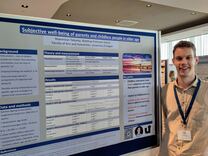
“The most surprising finding of our studies is that, in old age, men tend to benefit more from parenthood than women do, at least in terms of subjective well-being,” explains the Siegen-based sociologist. Mothers do not score any higher on subjective well-being than childless women. For men, on the other hand, not having children is associated with significantly lower life satisfaction, fewer positive feelings, and more negative feelings.
Why men and women benefit differently
There may be several reasons for this, which are also reflected in scientific findings. “In men’s lives, rigid notions of masculinity, strength, and fertility often prevail. As a result, childlessness is often viewed as a personal weakness and a flaw. There is definitely a certain stigma attached to it,” explains Tolkamp. At the same time, the consequences of parenthood—which are experienced as negative—apparently carry less weight for men than for women. On average, men experience less loss of autonomy and less strain from caregiving during the early years of parenthood than mothers do. Later on, they also have little to expect in terms of negative effects on their retirement benefits. Because of these high costs of parenthood, mothers may be somewhat unhappier than fathers. In addition, men are often less adept at establishing and maintaining social connections. While childless women often maintained friendships in old age, men frequently had fewer contacts beyond their immediate family members.

The basis for the analyses, which Tolkamp conducted together with Prof. Dr. Matthias Pollmann-Schult from the Department of Sociology, is the German Ageing Survey (DEAS). Tolkamp analyzed the responses of more than 10,000 people aged 60 to 85 who were surveyed between 1996 and 2021 and who either had children of their own or were childless. The study thus reflects the perspectives of people born between 1911 and 1961. It is not possible to distinguish between those who are childless by choice and those who are childless involuntarily.
It’s All About the Quality of the Relationship
Previous studies had already shown that parents with young children may be slightly less satisfied with their lives than childless young adults. However, researchers assumed that parents increasingly benefit from their relationships with their children once those children reach adulthood. This could result in a “parenting bonus” for social well-being. The underlying assumption: Children provide emotional and practical support, including care in old age. Positive events in the children’s lives could also bring happiness—such as a wedding or the arrival of a grandchild. The Siegen studies now show that this correlation does not apply equally to everyone. It depends heavily on individual circumstances and also varies significantly among European countries.

A key finding of the Siegen studies is that having a poor relationship with one’s own adult children can be worse for subjective well-being than having no children at all. “At first glance, that’s relatively obvious,” says Tolkamp. “The interesting thing is that it’s enough to have a poor relationship with just one of several children. A good relationship with the other children cannot make up for it.”
Even frequent contact with adult children does not automatically lead to greater subjective well-being. Earlier studies had assumed this would be the case. Frequent contact could also stem from other reasons, such as conflicts or a child’s financial hardship. Tolkamp and Pollmann-Schult found that what matters most is whether parents feel truly emotionally close to their children. The quality of the relationship with adult children is significantly more important for older adults’ well-being than the frequency of contact.
One argument that frequently comes up in the discussion about childlessness is: Who’s going to take care of you when you’re old? Tolkamp: “Our study found that actual care isn’t really that relevant. It’s more about the emotional knowledge that there is someone who would make sacrifices for you in old age. It’s purely a matter of mindset. Without children, that perspective is missing. However, there is no evidence that childless people are actually worse off in old age.” Strong societal expectations of family care alone do not lead to a significant difference between parents and childless people. Only when such social expectations coincide with the economic vulnerability of older adults—for example, a high risk of poverty in old age—does the difference become particularly pronounced. This is the case, for example, in many Eastern European countries, such as Bulgaria, Estonia, Latvia, and Croatia. The Scandinavian countries and Iceland, on the other hand, serve as examples of countries where the economic situation in old age is favorable and where societal expectations of adult children regarding care are low. Here, the difference between parents and childless people is negligible. Prof. Pollmann-Schult discovered this based on data from the European Social Survey.
So what does Tolkamp tell his friends at the party? Should they decide for or against having children? “I can’t give such a clear-cut answer, because our study does not prove causality,” Tolkamp makes clear. The reason for higher well-being could, for example, also lie in the fact that people who are unemployed or in precarious employment situations have fewer children and, in old age, a lower standard of living, which reduces life satisfaction. There are several reasons that could be cited as explanations. “So we cannot automatically conclude that children make people happy or unhappy.”


