With money, you can shop, you can count on it, and you can save it
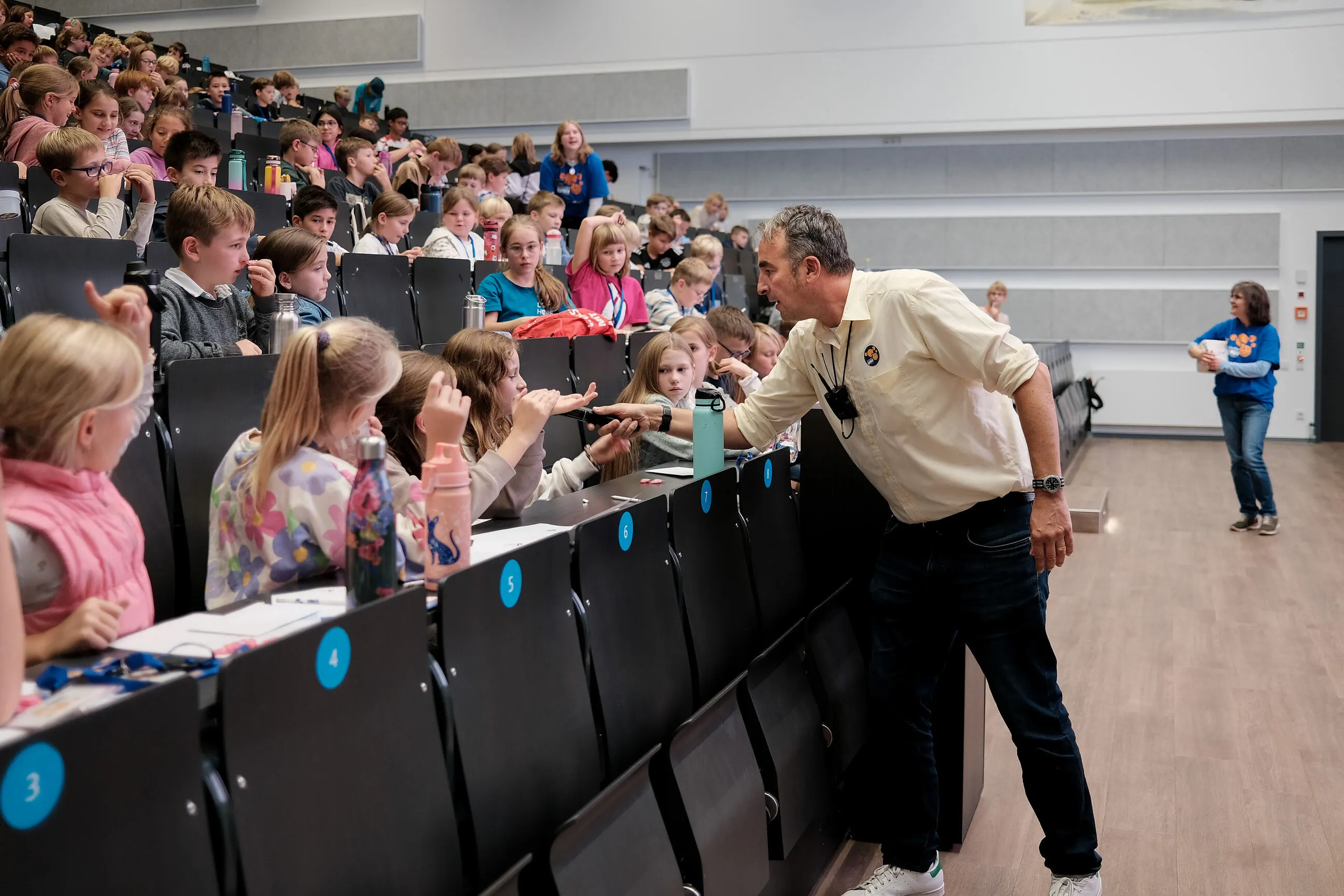
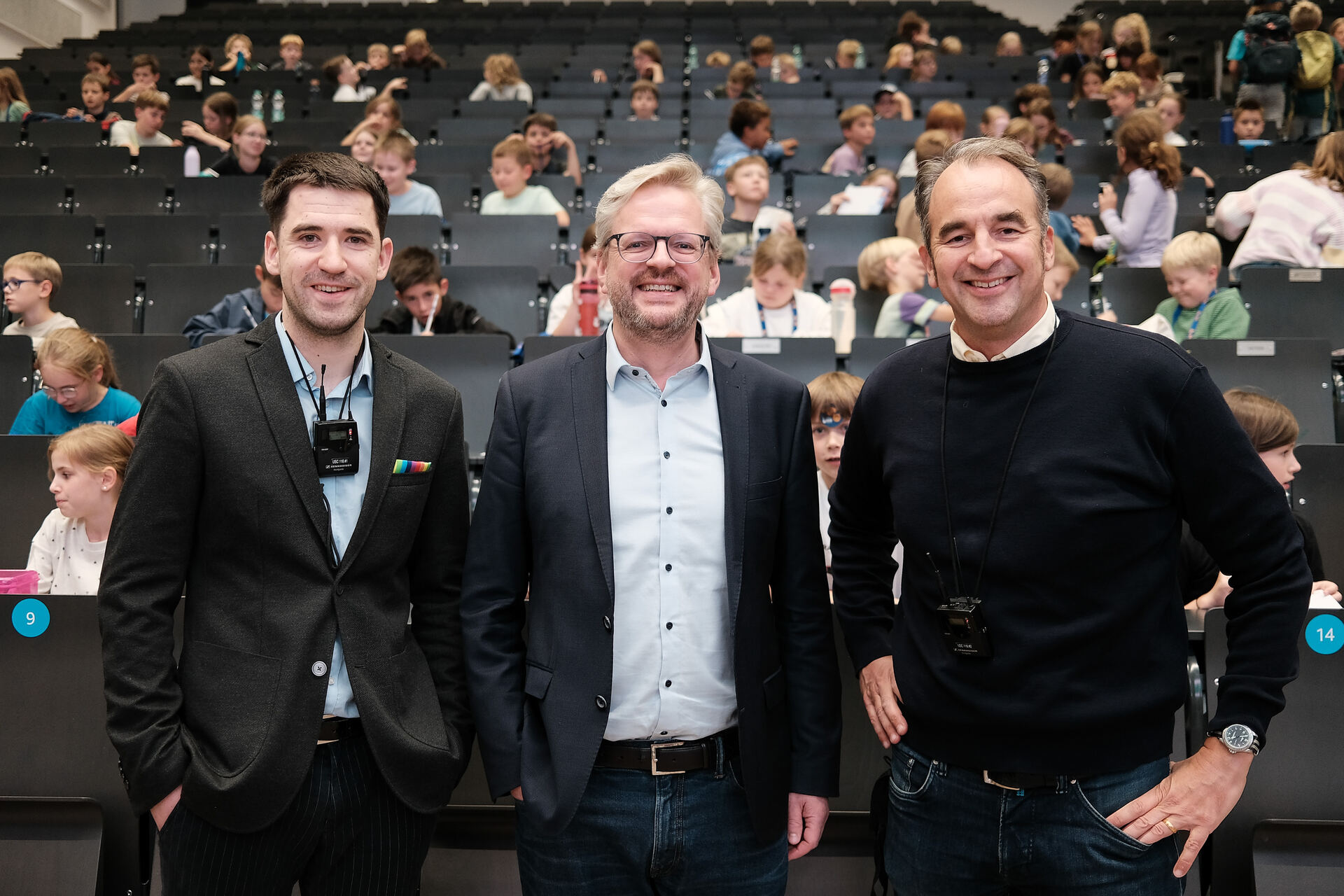
Prof. Dr. Ekkehard Köhler from ZÖBIS was a guest at the Siegen Children's University.
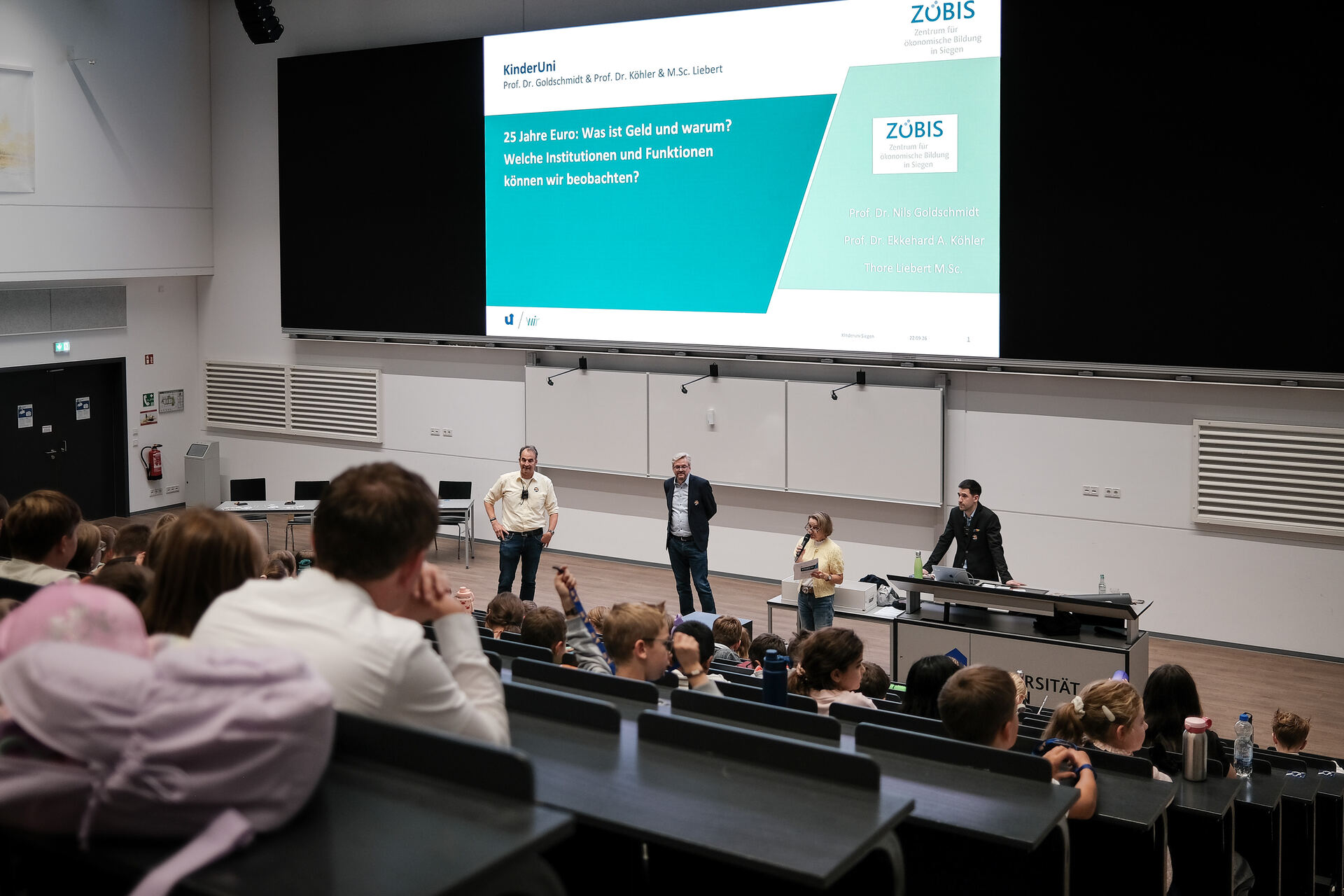
Money, money, money… Must be funny. In a rich man’s world… This song by the pop group “ABBA” dates back to the 1970s and is no longer familiar to the children at Kinderuni today. However, even eight- to twelve-year-olds in the 2020s know that money is necessary for a great many things. It’s no surprise that quite a few girls and boys were well-informed on the topic “The Euro: Origins, Development, and the Digital Future of Our Money.” Prof. Dr. Nils Goldschmidt and Prof. Dr. Ekkehard Köhler from the Center for Economic Education in Siegen (ZöBis) at the University of Siegen, together with their team, introduced the young students to the topic in a playful way. “Who among you went on vacation during summer break?” Almost all the hands went up. “Where did you go, and how did you pay there?” In the EU, you can pay with euros almost everywhere. In the United Kingdom, you need British pounds; in Egypt, Egyptian pounds. In Romania, people pay with lei, even though the country is a member of the EU. “Who among you has a piggy bank?” Once again, nearly all hands shot up. Money is kept in the piggy bank to be taken to a bank or savings bank later.
Building on this foundation of knowledge, the first game began, with five children participating. In the scenario, this group was stranded on a fictional island and had to ensure their survival. Each child was symbolically given an item—herbs, a clay pot, grain, fish, and flint stones. The children were to trade among themselves so that everyone would get what they needed. One girl in the small group needed four rounds of trading to obtain the coveted item. The conclusion reached by the girls and boys: “Trading works in a small group. In a large group, it becomes difficult.”
In the lecture hall, the idea quickly emerged that a medium of exchange accepted by a great many people is needed—money, for example. With money, you can shop, you can count on it, and you can save it (see piggy bank).
Nils Goldschmidt: “We don’t live on an island, but in the Eurozone.” The children had learned while on vacation that you can pay with euros in most EU countries. The currency was introduced on January 1, 1999, as book money and two years later as cash. The “parents” of the euro are Christine Lagarde, head of the European Central Bank, and the Governing Council of the ECB. The euro is based at the ECB in Frankfurt. The euro has a hobby: being spent. And: The euro likes a stable banking system.
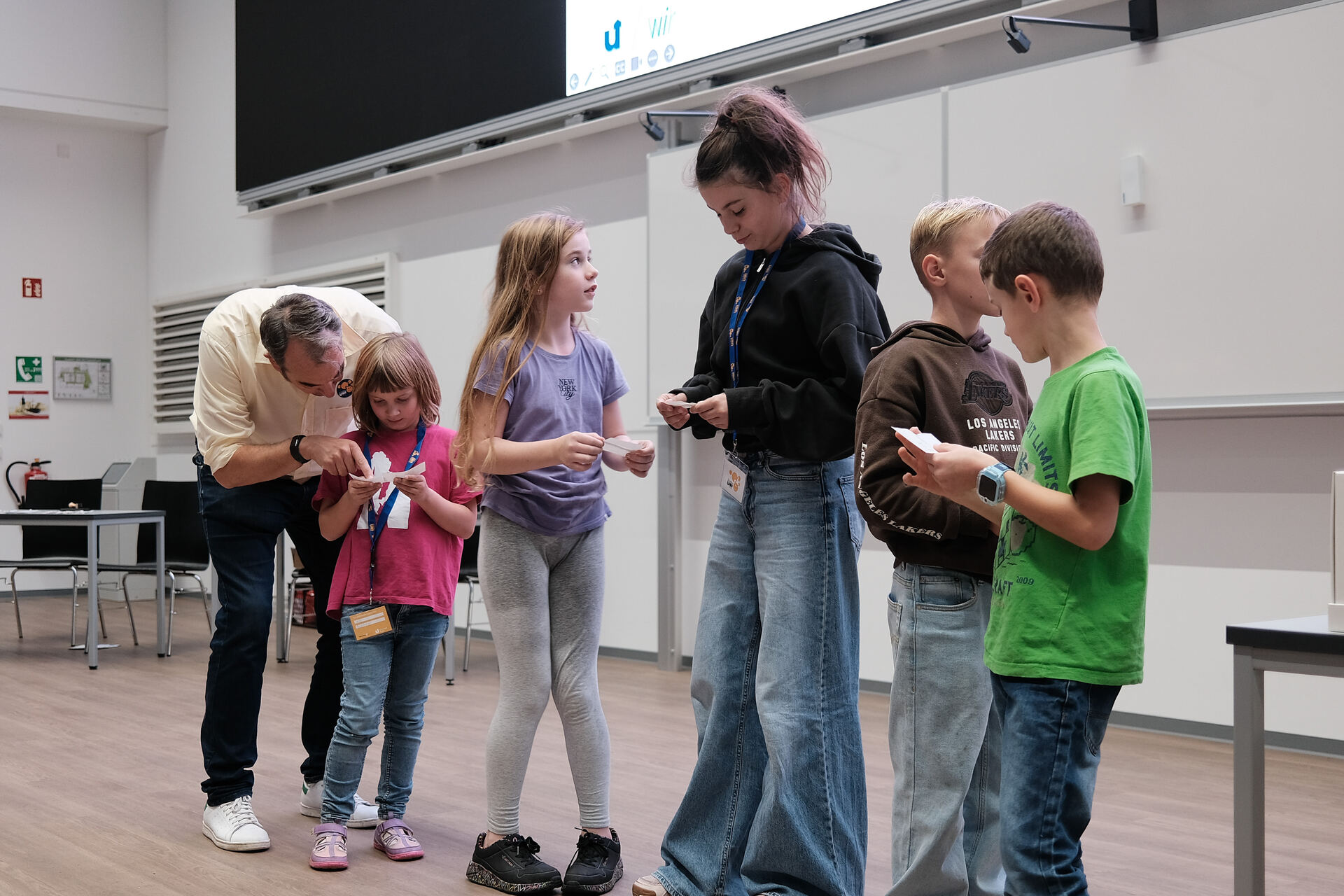
What determines the value of an object? The children discovered the answer through play. Pairs of children each received an envelope with different contents: either ten glucose candies, ten paper clips, or one euro in 10-cent coins. One child was to make a proposal to the other on how to split the contents. Only if both parties agreed to the proposed division could they keep the contents of the envelope. With the candies, they shared like siblings—fifty-fifty. With the paper clips, the offerers were generally generous, wanting to keep less than half for themselves. With the euro, however, the offerer tried to keep a larger share for themselves and give away less than half. Köhler: “Money is freedom in a nutshell.” With money, you can fulfill your wishes; it gives you more possibilities than candy or even paper clips.
Are bank cards also money? If your account has sufficient funds, you can pay with debit cards. The money transfer ensures that euros move from one account to another without you seeing the money. Money in accounts is called book money; money in a wallet is called cash. A total of about 1.62 trillion euros are in circulation, 1.59 trillion of which are in bills and 34.5 billion in coins. To wrap things up, the children got to vote on the new banknotes—birds and rivers or people? The Children’s University students voted overwhelmingly for the design featuring birds and rivers. On the way out, each child received a chocolate euro, which ended up in their stomachs rather than in a savings account….