Studio for post-digital creativity research (SpK)
The Studio for Postdigital Creativity Research (SpK) at the University of Siegen, led by Jun.-Prof. Dr. Lawrence Wilde, is an artistic-scientific research space dedicated to the study of creativity in the context of post-digital culture. By combining music technology, artistic research and educational theory, the SpK investigates how digital technologies, AI-supported systems, musical interfaces and hybrid learning environments shape creative processes. A particular focus is on the close connection between empirical research and artistic practice, investigating how creative agency emerges in human-machine constellations through longitudinal case studies, artistic experiments, compositions, sound installations and multimedia performances. The SpK contributes to the development of the Institute of Music as a center for artistic research and post-digital innovation in teaching and learning by strengthening interdisciplinary collaboration and supporting future-oriented curriculum development. By combining theory building, artistic production and pedagogical innovation, the studio provides a sustainable framework for the exploration of post-digital creativity.
English:
The Studio for Postdigital Creativity Research (SpK) at the University of Siegen, directed by Jun.-Prof. Dr. Lawrence Wilde, is an artistic and scholarly research space dedicated to investigating creativity in the context of postdigital culture. Bringing together music technology, artistic research, and educational theory, the SpK examines how digital technologies, AI-supported systems, musical interfaces, and hybrid learning environments shape creative processes. It places particular emphasis on the close connection between empirical research and artistic practice, investigating how creative agency emerges in human-machine constellations through longitudinal case studies, artistic experiments, compositions, sound installations, and multimedia performances. The SpK contributes to the development of the Institute of Music as a center for artistic research and postdigital innovation in teaching and learning by strengthening interdisciplinary collaboration and supporting future-oriented curriculum development. By combining theory-building, artistic production, and pedagogical innovation, the Studio provides a sustainable framework for researching postdigital creativity.
The Postdigital Laptop Ensemble at the University of Siegen (PULSE)
The Postdigital Laptop Ensemble at the University of Siegen (PULSE) is an innovative, technologically mediated music ensemble and a post-digital educational space for teacher training. PULSE responds to the needs of future educators by combining the practical application of digital technologies with a critical reflection on their role in musical design, teaching and learning.
The ensemble was founded in the winter semester of 2023 with the support of the University of Siegen's "Besser innovativ!" funding line. As the university's newest musical ensemble, PULSE stands for a combination of music, technology and education. The aim of the ensemble is to equip future musicians and teachers with the skills, knowledge and critical reflection required to integrate digital technologies into artistic and pedagogical practice. Building on models such as the Princeton Laptop Orchestra (PLOrk), the Stanford Laptop Orchestra (SLOrk) and other laptop ensembles, PULSE understands laptops, iPads and other portable digital devices as effective musical and pedagogical tools. The project integrates both digital and analog technologies and engages students in a variety of digital music composition, production, improvisation and performance activities.
A central feature of PULSE is its semester-based performance practice. Each semester, students develop their own works for the ensemble, which are then presented publicly in the university context and at cultural venues in the city of Siegen. These performances enable students to develop artistic projects from the initial idea to the public presentation and at the same time to critically reflect on the role of technology in collaborative music-making. PULSE performances have already taken place at the University of Siegen and in the city of Siegen, including at the Museum für Gegenwartskunst Siegen, where student works were made accessible to a wider audience beyond the seminar room. Through practice-oriented, collaborative and creativity-led approaches, PULSE promotes critical thinking, artistic expression and technological competence. In this way, the ensemble makes an important contribution to digital music education, creates a lively and collaborative learning environment and lays the foundation for future innovations in post-digital educational spaces at the University of Siegen.
PULSE YouTube channel: https://www.youtube.com/@PULSELaptopEnsemble
English:
The Postdigital Laptop Ensemble at the University of Siegen (PULSE) is an innovative technology-mediated music ensemble and postdigital educational space for teacher training. PULSE responds to the needs of future educators by combining the practical application of digital technologies with critical reflection on their role in music creation, teaching, and learning.
Launched in the winter semester of 2023 with support from the University of Siegen's "Besser innovativ!" funding line, PULSE is the university's newest musical ensemble and represents a fusion of music, technology, and education. The ensemble aims to equip future music creators and educators with the skills, knowledge, and critical awareness needed to integrate digital technologies into their artistic and pedagogical practice. Building on models such as the Princeton Laptop Orchestra (PLOrk), the Stanford Laptop Orchestra (SLOrk), and other laptop ensembles, PULSE treats laptops, iPads, and other portable digital devices as effective musical and pedagogical instruments. The project incorporates both digital and analog technologies and engages students in diverse activities related to digital music composition, production, improvisation, and performance.
A central feature of PULSE is its semester-based performance practice. Each semester, students create original works for the ensemble, which are then presented publicly in university contexts and cultural spaces in the city of Siegen. These performances provide students with opportunities to develop artistic projects from initial concept to public presentation, while also reflecting critically on the role of technology in collaborative music-making. PULSE performances have taken place at the University of Siegen and in the city of Siegen, including at the Museum für Gegenwartskunst Siegen, where student works have been shared with broader audiences beyond the classroom. Through hands-on, collaborative, and creativity-driven approaches, PULSE fosters critical thinking, artistic expression, and technological fluency. In doing so, the ensemble has made substantial contributions to digital music education, created a vibrant and collaborative learning environment, and laid the groundwork for future innovation in postdigital educational spaces at the University of Siegen.
PULSE YouTube Channel: https://www.youtube.com/@PULSELaptopEnsemble
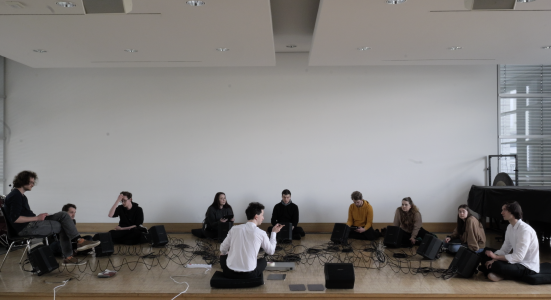
Rehearsal
New Media
This course explores the artistic, pedagogical and theoretical use of contemporary digital and analog media in music. Students will engage with technologies such as digital audio workstations, mobile devices, audiovisual interfaces, interactive systems, AI-powered tools, virtual and augmented reality, and metaverse environments. Through practical projects and critical reflection, they examine how new media technologies shape creativity, aesthetic experience, performance and music education today.
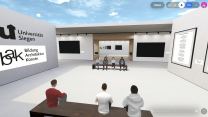
Digital Music Production
This course explores the creative, technical and reflective dimensions of music production using digital technologies. Students will work with recording, MIDI, sampling, sequencing, sound design, mixing, editing, arranging and digital production workflows. Through individual and collaborative projects, they will develop music productions while exploring how technology shapes creativity, authorship, collaboration and contemporary musical practice.
Composition
This course explores compositional practice in contemporary musical contexts. Students will explore instrumental and vocal writing, electroacoustic composition, improvisation, notation, sound design, multimedia approaches, and experimental forms of music making. By developing their own creative projects, they examine how musical ideas emerge, transform and take shape in artistic, technological and pedagogical contexts.
Music Theory
This course covers analytical, historical, creative and pedagogical approaches to understanding music. Students will study harmony, counterpoint, form, rhythm, notation, analysis, ear training and the interpretation of musical structures in different styles and media. By combining theoretical study with listening, composition, performance and music education, they explore how musical knowledge supports creative and reflective practice.
White, Charles, and Lawrence Wilde. 2026. "Postdigital Rituals in Laptop Orchestras: Human-Computer Interaction and Second-Order Resonance." Journal of Contemporary Rituals and Traditions 4 (1): 1-20. DOI: 10.15575/jcrt.3081. Open Access.
Wilde, Lawrence, and Charles White. 2025. "Laptop Orchestra: A Model Postdigital Resonant Educational Space." Postdigital Science and Education 7: 939-964. https://doi.org/10.1007/s42438-025-00567-8. Open Access.
Wilde, Lawrence, Charles White, and Petar Jandrić. 2025. "Postdigital Resonance." Postdigital Science and Education 7: 359-368. DOI: 10.1007/s42438-024-00516-x. Open Access.
White, Charles, and Lawrence Wilde. 2024. "A Resonant Learning (RL) Framework." Education Quarterly Reviews 7 (3): 76-96. DOI: 10.31014/aior.1993.07.03.597. Open Access.
Wilde, Lawrence, and Charles White. 2024. "TABstaff+: A Hybrid Music Notation System for Grid-Based Tangible User Interfaces (TUIs) and Graphical User Interfaces (GUIs)." In Proceedings of the International Conference on Technologies for Music Notation and Representation - TENOR'24, ed. by Philippe Kocher, 159-168. Zurich: Zurich University of the Arts. ISBN 978-0-6481592-7-8. Open Access.