Quantum science
Master of Science (M. Sc.)
The Master in Quantum Science is an international two-year degree program at the University of Siegen. It focuses on foundational and practical aspects of quantum science, ranging from basic research to applications and quantum devices. Current research topics of the involved scientists are
- Mathematical structures of quantum physics
- Quantum information theory
- Machine learning and quantum algorithms
- Complexity theory and cryptography
- Quantum computation with trapped ions
- Nano-photonics and enabling technologies
- Photonic and electronic components for quantum technologies,
The program is interdisciplinary at the border between physics, mathematics, computer science, and electrical engineering. It is open for students with a BSc in any of these four fields.

What awaits me in the Master's program?
In a Nutshell
The MSc Program in Quantum Science covers two years (120CP):
- 1st year: Students take several courses to ensure a solid background in general quantum science and to prepare them for actual research in their chosen specializations.
- 2nd year: Students take some courses and mainly carry out research and write their master thesis as a member of one of the associated research groups.
General admission is possible for winter semester (lectures starting in October); students with knowledge in quantum physics can also start in summer semester (lectures starting in April). The program does not require knowledge of the German language.
The following text gives a short overview of the curriculum; detailed information can be found in the Handbook of Modules. (German version, English translation can be found here.)
Possible specializations
In the first three semesters students learn the basic concepts of quantum science. Besides some mandatory courses, students can choose lectures according to their interests. We mainly offer courses focused around the following topics:
- Quantum information theory and foundations of quantum mechanics
- Experimental quantum optics and nano-optics
- Algebra, discrete optimisation, geometry and number theory
- Applied analysis and numerics
- Theoretical computer science
- Sensorics and Communication
- Machine learning
These themes correspond to the topics of our research groups. In addition to lectures, master students have to do a mini research project and a seminar.
The second year is mainly devoted to the MSc thesis, which is prepared in one of the research groups. The aim of the thesis is to deliver a contribution to current research in quantum science. The excellent student-to-staff ratio at the departments implies a direct supervision and it occurs regularly that results from MSc theses are published in international scientific journals.
In general, a MSc degree is a precondition to enter a doctoral program in Germany. The PhD research is performed in one of the research groups and prospective PhD students have to find a professor who is willing to supervise their work. Typically, PhD theses last 3-4 years and PhD students get financial support.
Further information about your studies
Details about the Application & Admission, lectures, internships and study plans to be completed can be found in the module handbook and the examination regulations. Our examinations office, the student advisory service, the department and the student council are always available to answer questions.
Admission requirements for starting in winter semester
- Bachelor of Science degree in physics, mathematics, computer science, or electrical engineering. Excellent students with a BSc degree in a related subject can also apply. Acceptance of related subjects depends on the transcript of records.
- Proficiency in English (e.g., TOEFL iBT 88; or IELTS grade 6.5 or equivalent; or English on level B2 of the CEFR; or a certificate showing that the previous courses have been taught in English).
Admission requirements for starting in summer semester
- Bachelor of Science degree in physics.
- Or Bachelor of Science degree in mathematics, computer science, or electrical engineering and 15 ECTS in lectures of quantum physics. Excellent students with a BSc degree in a related subject can also apply. Acceptance of related subjects depends on the transcript of records.
- Proficiency in English (e.g., TOEFL iBT 88; or IELTS grade 6.5 or equivalent; or English on level B2 of the CEFR; or a certificate showing that the previous courses have been taught in English).
Application documents
For the application to the MSc program in quantum science, you will need the following documents as pdf-files.
- Short motivation text, not exceeding 1000 characters. Please indicate your motivation and interests.
- Curriculum Vitae
- Certificate of the Bachelor of Science degree (see the admission requirements)
- Transcript of university education providing a list of all grades
- Proof of proficiency in English (see the admission requirements). Attention! Visa requirements are different. We cannot provide any legal document for visa applications regarding proof of English proficiency.
- Two letters of recommendation, indicating the students ranking in percent (e.g., best 10 %, best 10 - 20 %, best 20 - 30 %) of all students in the subject.
-
Certificate of the Academic Evaluation Center (APS) (Applicants from PR China and Vietnam must apply for APS, which should be filed together with the application documents or at the time of enrollment at the latest. For applicants from India APS certificate is required for German student visa. For details, please check the website of your local German embassy. Applicants from India can apply for admission without the APS but please note that it will take few weeks before the certificate is issued, so we advise to start the process at earliest convenience.)
- GRE physics test, GRE mathematics test or similar tests (as an additional supporting document, but not mandatory)
For deciding about your application, we may invite you for an interview via a teleconferencing systems.
Deadline
Admission for winter semester (lectures starting in October):
NEW Deadlines:
- 1st January until 30th April each year for general applications,
- 1st April until 31st August for applicants from EU countries.
Admission for summer semester (lectures starting in April):
- 1st August until 31st October in the preceding year for general applications,
- 1st October until 31st March for applicants from EU countries.
You are encouraged to apply earlier, especially if you need a visa for your stay. Typically, it will take about one month to notify you of our decision regarding your admission.
How to apply
Applications including all the application documents (pdf only) should be submitted via the Online Application Portal of the university. At this page, you have to do the "Self-Registration" first. Please do not send application documents via e-mail or regular mail.
For questions concerning the admission procedure you can also contact our advisors.
Expected previous knowledge
We expect some previous knowledge from the students who apply. This is, for example,
- Students with a BSc in physics: basic knowledge in quantum mechanics, experimental quantum optics, and linear algebra
- Students with a BSc in mathematics: basic knowledge in linear algebra, analysis, topology, differential equations, and basic number theory
- Students with a BSc in computer science: basic knowledge in discrete mathematics, theoretical computer science, linear algebra, and differential equations
- Students with a BSc in electrical engineering: basic knowledge in electromagnetic field theory, differential equations, signal and system theory, instrumentation and measurement science, and optical communication systems
Fees and living costs
Students of the University of Siegen are currently not charged tuition fees. However, there is a semester fee of approximately EUR 330 due before every semester start as part of (re-)registration. This fee includes a ticket for free public transport in the region.
The estimated average costs of living are EUR 950 per month, including rent, health insurance, food, clothing, learning materials, phone and internet, travel expenses, entertainment, and sports. These estimated costs of living could vary depending on lifestyle, type of accommodation, budget, and spending habit. Please note that additional one-time expenses for residence permit and deposit amount to approximately EUR 700.
Further information concerning fees, housing possibilities and administrative matters can be found at the website of the International Office of the University of Siegen. You may also contact our advisors.
Funding possibilities
There are several possibilities to obtain funding for studies in Germany
- The German Academic Exchange Service (DAAD) offers various grants for very good foreign students who want to move to Germany. Often these programs are tailored for students from certain countries. Detailed information can be found in the database of the DAAD, which also contains stipends from other foundations.
- Very good master students frequently work as tutors for younger students, especially when they are doing their MSc thesis in a research group.
- In addition, some students have side jobs to earn money. The DAAD web site provides further information about conditions and rules.
- Framework Examination Regulations (RPO-M) for the Master's degree program dated 28.02.2019
- Regulations amending the Framework Examination Regulations (RPO-M) for the Master's degree program dated 26.10.2020
- Second regulation amending the framework examination regulations (RPO-M) for the Master's degree program dated 24.06.2022
- Third regulation amending the framework examination regulations (RPO-M) for the Master's degree program dated 25.07.2023
- Fourth regulation amending the framework examination regulations (RPO-M) for the Master's degree program dated 12.06.2025
The master can be studied in two variations:
- with previous knowledge in quantum mechanics ("Q"),
- without previous knowledge in quantum mechanics ("NQ").
Depending on the variation, the master is structured as follows.
Variation Q:
- First year:
- Concepts of Quantum Science (6 CP)
- Seminar: Quantum Science (6 CP)
- Mini Research Project (9 CP)
- Electives (39 CP)
- Second year:
- Electives (12 CP)
- Preparation Project (18 CP)
- Master Thesis (30 CP)
Variation NQ:
- First year:
- Concepts of Quantum Science (6 CP)
- Seminar: Quantum Science (6 CP)
- Mini Research Project (9 CP)
- Quantum Phenomena (6 CP)
- Introduction to Quantum Theory (9 CP)
- Electives (24 CP)
- Second year:
- Electives (12 CP)
- Preparation Project (18 CP)
- Master Thesis (30 CP)
Example curricula can be found here
Quicklinks
Our campus management system unisono maps your entire student life cycle from application to examination and event planning to your degree certificate:
In our learning management system Moodle you will find the documents of your lecturers.
Advice and contact
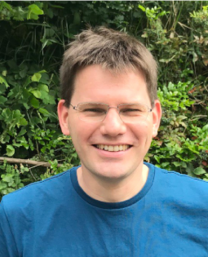
Prof. Dr. Otfried Gühne
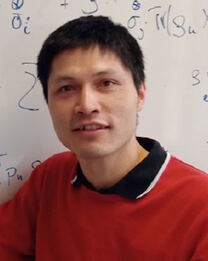
For specific questions concerning the admission process and the curriculum of the MSc program in quantum science, contact the coordinators of the program:
| Prof. Dr. Otfried Gühne | PD. Dr. Chau Nguyen | Dr. Patrick Huber |
|
|

|
Contact
E-Mail: quantumscience@uni-siegen.de
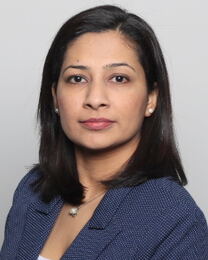
Faria Afzal
For general administrative issues (e.g., visa and housing) please contact the advisor for international students from the School of Science and Technology of the University:
Contact
E-Mail: igs.advisor@nt.uni-siegen.de
Sabine Grüber
Exam office

Contact
Сontact time
13:00-15:00
