Skip to main content

What I do

I investigate the characteristics of socially and environmentally sustainable economies and how we can organize the transitions from today's systems to new, sustainable ones. In my work, I combine quantitative and qualitative empirical research with inter- and transdisciplinary methods. My research focuses, among other topics, on green growth and degrowth, the digital transformation of the economy, and the political economy of right-wing authoritarianism.

Steffen Lange

My work is not only discussed within academia but also resonates with organizations such as the World Bank, UNEP, the European Commission, the European Environmental Bureau, and the German Federal Ministry for the Environment. I am a frequent public speaker and collaborate closely with policymakers and civil society actors - aiming not just to study sustainable economies, but to help bring them to life.

In addition to my position at the University of Siegen, I serve as the country representative for Germany at the European Society for Ecological Economics and as a board member of Common Future and Impact AI. Previously, I conducted research at the Technical University of Berlin, the University of Münster, and the Institute for Ecological Economy Research. I hold a PhD from the University of Hamburg.

Merz_Wachstumsbooster

Growth booster?

A commentary by Dr. Steffen Lange on the "growth booster/investment booster" from the German government.

https://www.instagram.com/reel/DMGJxHksi1p/?utm_source=ig_web_copy_link&igsh=MzRlODBiNWFlZA==

Steffen Lange
Research

Growth independence: New publication

New publication by Dr. Steffen Lange published

Together with Stefanie Gerold and Katharina Bohnenberger, Steffen Lange has published an article on the "Growth dependency of labor markets and strategies to overcome it". The text has been published in the anthology "Wirtschaftswachstum zwischen Fortschritt, Abhängigkeit und Zwang" (Metropolis-Verlag, Marburg 2025, ed. by Tobias Vogel).

The authors analyze why labor markets are so dependent on economic growth and discuss concrete strategies to reduce this dependency - from a reorientation of technological change to shorter working hours and job sharing to socio-ecological job guarantees and new forms of livelihood security.

👉 Link to the article.

Dr. Steffen Lange
General Public

Business is better!

Public event on 06.10.25 in Berlin, with Dr. Steffen Lange

https://www.eventbrite.de/e/wirtschaft-geht-besser-tickets-1670628247059?aff=dsl

Program:

My research profile

My research is on the economics and political economy of a social-ecological transformation. It starts with (1) environmental sustainability questions, such as which measures would mitigate climate change, how these can be implemented and what this has to do with economic growth. In parallel, (2) I examine how economic systems can be (re)structured to ensure social justice and enable a good life for all, while simultaneously confronting the rise of anti-democratic movements that threaten these goals. Finally, (3) I investigate how these challenges intersect with the ongoing technological revolution in digitalization and artificial intelligence.


(1) Economic Growth and the Environment: Climate Mitigation, Decoupling and Post-Growth Economics

The relationship between economic growth and environmental sustainability raises the question of whether growth helps reduce environmental throughput or whether there are inherent limits to growth. Since my early years as a student, I have been concerned with these issues, focusing in my dissertation on the macroeconomic conditions for sustainable economies without growth. Currently, I investigate how climate neutrality pathways intersect with economic growth. Climate change has made it clear that incremental adjustments are insufficient to prevent catastrophic consequences, which has created a high demand for transformative ideas. Post-growth economics, as the science of sustainable economies without growth, seeks to address this challenge by radically decreasing environmental throughput while fostering social justice and strengthening democracy in both economic and political institutions.


(2) The Political Economy of Right-Wing Authoritarianism: Causes and Policy Responses

In numerous countries, right-wing authoritarian parties have been gaining political prominence. Concurrently, discussions surrounding the concept of "anti-fascist economics" have garnered increasing attention. This study addresses two closely related research questions: first, what are the economic factors driving the rise of these movements, and second, to what extent-and through which mechanisms-can economic policies mitigate or counteract this trend?


(3) Digitalization, Artificial Intelligence and Sustainability

Does digitalization and AI make our economy more sustainable by increasing energy and resource efficiencies? Or is it the other way around - more digital devices consume more energy and additionally lead to rebound effects and economic growth? We also need to ask how social inequalities are effected and whether we face new challenges regarding concentration of economic and political power. In light of such analyses, I develop concepts how digitalization can be used for a social-ecological transformation.

In brief:

  • Digitalization, AI and Sustainability

  • Climate Mitigation, Decoupling and Post-Growth Economics

  • The Political Economy of Right-Wing Authoritarianism: Causes and Political Responses


Books

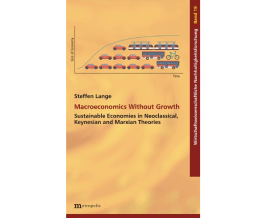
Macroeconomics Without Growth
2018

Macroeconomics Without Growth

Sustainable Economies in Neoclassical, Keynesian and Marxian Theories
How can we organize our economies without growth? "Macroeconomics Without Growth' provides a comprehensive understanding of how non-growing economies can be sustainable. With this book, Steffen Lange brings new momentum into the debate on post-growth, degrowth and steady state economies. The book delves deep into economic theory to understand how a macro-economy can operate without growth. By applying a highly diverse set of theories - from Neoclassical, Keynesian and Marxian traditions - the book is able to cover a wide range of macroeconomic aspects: Is zero growth possible in a capitalist economic system? What happens to aggregate demand and aggregate supply when economies stop growing? And what role do firms, markets and technological change play in post-growth economies?


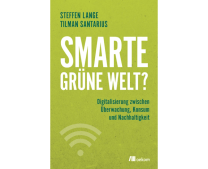
Smarte Grüne Welt
2018

Smarte grüne Welt

Digitalisierung zwischen Überwachung, Konsum und Nachhaltigkeit
Die Digitalisierung ist einer der gesellschaftlichen Megatrends - darin sind sich alle einig. Doch was bedeutet sie ganz konkret für Ökologie und Gerechtigkeit? Führt die Digitalisierung in eine smarte grüne Welt, in der alle vom technologischen Fortschritt profitieren und wir zugleich schonender mit der Umwelt umgehen? Oder steuern wir auf einen digitalen Turbokapitalismus zu, in dem einige wenige Geld und Macht in Händen halten und die Wirtschaft noch weiter über die planetaren Grenzen hinauswächst?


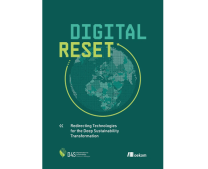
Digital Reset
2018

Digital Reset

Redirecting Technologies for the Deep Sustainability Transformation
Time seems out of joint. The world society has experienced a centennial pandemic, the global thermometer has displayed a sequence of hottest years on record, and Russia's war on Ukraine has shattered political order. Unsurprisingly, the economy is severely affected. Governments worldwide hope that digital technologies can provide key solutions. Yet this report shows that digitalisation, in its current and mainstream form, is rather aggravating than solving many of the pressing social and environmental crises at hand. What is needed instead is a deep sustainability transformation

Videos

Here you find a selection of videos.
You can find more here: Steffen Lange Youtube

Publications

Show more filters
Report
2023

Die Digitalisierung der Landwirtschaft nachhaltig gestalten.

Journal article
2023

The net climate effect of digitalization, differentiating between firms and households

Journal article
2023

Threat, fixable or opportunity? Contested smart home futures in the German social media debate

Journal article
2022

Economics of digital decoupling: a pluralistic analysis

Journal article
2022

Economics of digital decoupling: a pluralistic analysis

Journal article
2022

Designing effective and acceptable policy mixes for energy transitions: Countering rebound effects in German industry

Book
2022

Digital Reset

Journal article
2022

The growth rebound effect: A theoretical-empirical investigation into the relation between rebound effects and economic growth

Report
2022

Digitale Technologien für den Biodiversitätsschutz in der Landwirtschaft

Journal article
2022

Firm-level energy rebound effects and relative efficiency in the German manufacturing sector

Journal article
2022

Digital sufficiency: conceptual considerations for ICTs on a finite planet

Book
2022

Digitalization and Growth Independence: Utilizing Technologies for Environmental and Economic Resilience

Social Media
-

Transformative economics on social media

The research project examines how social media can be used in a targeted manner to strengthen the visibility and reach of plural and transformative economics in Germany. Based on an analysis of existing social media presences and interviews with representatives of pluralist study programs and the Pluralist Economics Network, strategic approaches will be developed and implemented. Strategy papers will be developed, cooperation between institutions will be intensified and further measures for implementation will be prepared. The findings will be published scientifically. The aim is to establish sustainable, professionally coordinated social media communication for plural and transformative economics in the long term.

ki_literaturrecherche
-

Impact AI: Evaluating the social impact of AI systems for sustainability and the common good

Impact AI - assessing the social impact of AI for sustainability and the common good
Artificial intelligence appears to offer enormous opportunities for the environment, social issues and the common good - but how sustainable and fair are these technologies really? Impact AI takes a close look at this. The project is developing an auditing method through a collaboration between science, NGOs and practitioners that can be used to systematically assess AI initiatives that are geared towards the common good: ecologically, ethically and socially. Practical, transparent and visible - so that AI is not just about innovation, but about taking responsibility. Dr. Steffen Lange is part of the advisory board of this project. More information here: https://www.hiig.de/project/impact-ai/

No person profiles available at the moment.

Contact us

Postal address

University of Siegen
Schools III
Kohlbettstraße 17
57072 Siegen

Visitor address

University of Siegen
Faculty III

US-G 115
Kohlbettstraße 17
57072 Siegen

Secretariat

Phone +49 271 740-5288

E-mail: lange@wiwi.uni-siegen.de