


Transformative economics on social media
-
I investigate the characteristics of socially and environmentally sustainable economies and how we can organize the transitions from today's systems to new, sustainable ones. In my work, I combine quantitative and qualitative empirical research with inter- and transdisciplinary methods. My research focuses, among other topics, on green growth and degrowth, the digital transformation of the economy, and the political economy of right-wing authoritarianism.

My work is not only discussed within academia but also resonates with organizations such as the World Bank, UNEP, the European Commission, the European Environmental Bureau, and the German Federal Ministry for the Environment. I am a frequent public speaker and collaborate closely with policymakers and civil society actors - aiming not just to study sustainable economies, but to help bring them to life.
In addition to my position at the University of Siegen, I serve as the country representative for Germany at the European Society for Ecological Economics and as a board member of Common Future and Impact AI. Previously, I conducted research at the Technical University of Berlin, the University of Münster, and the Institute for Ecological Economy Research. I hold a PhD from the University of Hamburg.
My research is on the economics and political economy of a social-ecological transformation. It starts with (1) environmental sustainability questions, such as which measures would mitigate climate change, how these can be implemented and what this has to do with economic growth. In parallel, (2) I examine how economic systems can be (re)structured to ensure social justice and enable a good life for all, while simultaneously confronting the rise of anti-democratic movements that threaten these goals. Finally, (3) I investigate how these challenges intersect with the ongoing technological revolution in digitalization and artificial intelligence.
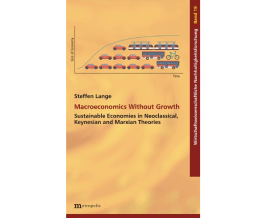
The relationship between economic growth and environmental sustainability raises the question of whether growth helps reduce environmental throughput or whether there are inherent limits to growth. Since my early years as a student, I have been concerned with these issues, focusing in my dissertation on the macroeconomic conditions for sustainable economies without growth. Currently, I investigate how climate neutrality pathways intersect with economic growth. Climate change has made it clear that incremental adjustments are insufficient to prevent catastrophic consequences, which has created a high demand for transformative ideas. Post-growth economics, as the science of sustainable economies without growth, seeks to address this challenge by radically decreasing environmental throughput while fostering social justice and strengthening democracy in both economic and political institutions.
In numerous countries, right-wing authoritarian parties have been gaining political prominence. Concurrently, discussions surrounding the concept of "anti-fascist economics" have garnered increasing attention. This study addresses two closely related research questions: first, what are the economic factors driving the rise of these movements, and second, to what extent-and through which mechanisms-can economic policies mitigate or counteract this trend?
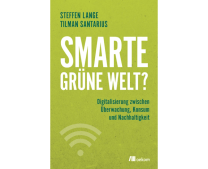
Does digitalization and AI make our economy more sustainable by increasing energy and resource efficiencies? Or is it the other way around - more digital devices consume more energy and additionally lead to rebound effects and economic growth? We also need to ask how social inequalities are effected and whether we face new challenges regarding concentration of economic and political power. In light of such analyses, I develop concepts how digitalization can be used for a social-ecological transformation.
Digitalization, AI and Sustainability
Climate Mitigation, Decoupling and Post-Growth Economics
The Political Economy of Right-Wing Authoritarianism: Causes and Political Responses
Here you find a selection of videos.
You can find more here: Steffen Lange Youtube
Chancen und Grenzen einer ,3-D-Ökonomie‘
Cornerstones and positions of a precautionary post-growth economy
Principles for sustainable digitalization
A Societal Transformation Scenario for Staying Below 1.5C
Digitalization and the Decoupling Debate: Can ICT Help to Reduce Environmental Impacts While the Economy Keeps Growing?
Disruption for a sustainable future?
Social justice through automation and algorithms?
Social well-being within planetary boundaries
Beyond a-growth Sustainable zero growth
Eckpunkte und Positionen einer Vorsorgeorientierten Postwachstumsökonomie
Saving nature with bits and bytes?
Raus aus dem Elfenbeinturm! Mit der “Third Mission” zur Wachstumsunabhängigkeit

